

The Old-School Way To Keep Meat Fresh Before Modern Fridges
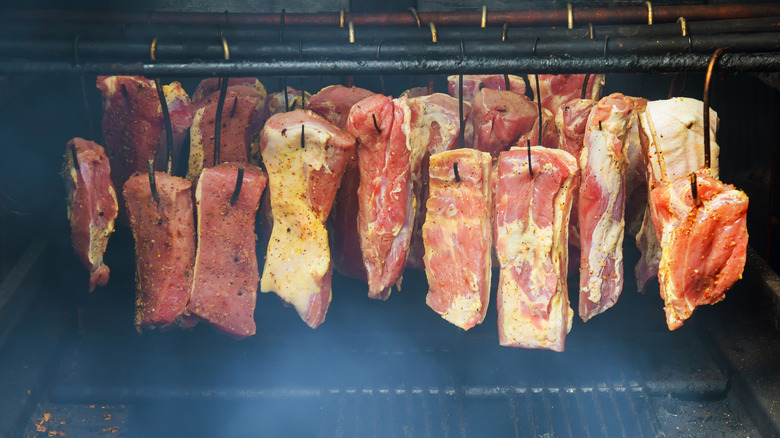
Beginning in the 1920s, keeping meat fresh has been easier since the modern refrigerator became a widespread household appliance in the U.S. However, you might wonder how people kept meat fresh prior to that time. Historically, there have been a number of techniques to ensure meat's safety before cooking it. But if you look further back into history, one method stands out as the most common way to preserve meat's freshness: cold smoking.
In addition to ice boxes that relied on shipments of ice, underground cellars, and immersing food in cold rivers, cold-smoking meat has served people since the discovery of fire and possibly dates back 1 million years ago, while smoking fish dates back hundreds of thousands of years. In early Colonial America, smoking meat in special enclosures and smokehouses became common and fish such as salmon was smoked for preservation by the Greeks and Romans, as well as among Indigenous people of the Pacific Northwest. Among all the things you need to know about smoked salmon, one is that it gets a smoky flavor from using the cold-smoking method. Though smoking was a necessity for preserving meat and fish, especially before winter, smoking meat is coveted more for the flavored smoke imparting a richness and depth to foods, and nowadays, you can also smoke cheese, tofu, nuts, and bacon to enhance their flavor.
What you need to know about cold-smoked food
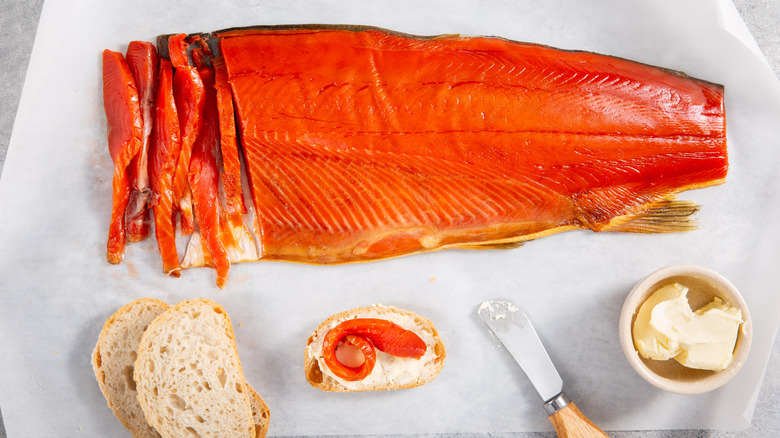
Before refrigeration was used to safely store and prepare meat and fish, people needed to prevent bacteria from spoiling it. That's how cold smoking began. With cold smoking, heat is kept below 90 degrees Fahrenheit, which doesn't do much to deter pathogens. However, preservation occurs by removing moisture. Instead of heat, cold smoking relies on salt curing first to remove some of the moisture and then using smoke to dry meat or fish to finish the job. Cold smoking often isn't the best idea for beginners because of the need for special equipment and inherent risk of pathogens in the meat. It's better to start with tofu, cheese, or nuts to learn how to successfully use cold smoking.
One important note is the difference between cold-smoked and hot-smoked meat. Essentially, cooking meat removes bacteria and pathogens from meat or fish, making it safe to eat while simultaneously tenderizing it. Hot smoking is a form of cooking that maintains a temperature greater than 140 degrees Fahrenheit, which is a safe heat level for consumption. Hot-smoked meat is typically cooked low-and-slow for many hours at about 225 degrees Fahrenheit. This allows you to make barbecue and brisket, and if you use clean smoke and watch the temperature, you can get the best results and avoid over-smoking barbecue meats. You'll get a similar smoky flavor from hot smoking meat as you will from cold smoking; however, cold smoking meat requires a higher level of skill to do it safely at home.