

Whiskey Doesn't Technically Go Bad, But Here's What Can Happen Over Time
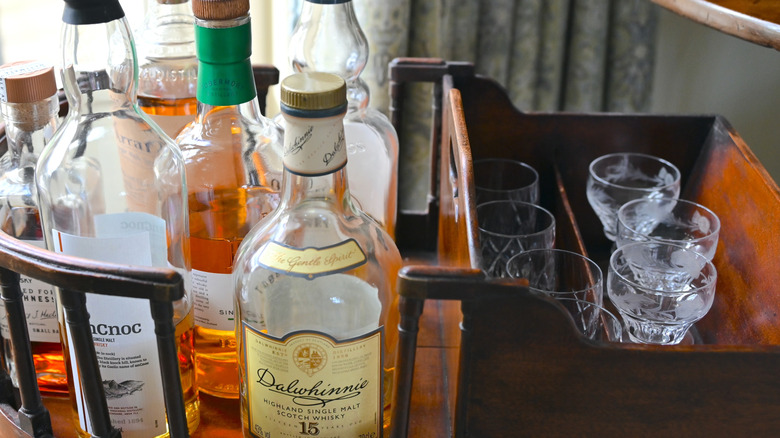
You probably know there's a right and wrong way to store your craft beer for optimal flavor and longevity. But what about that bottle of whiskey you keep around for a classic old-fashioned? Because of its high alcohol content, you needn't worry the spirits in your bar cart will spoil. In general, properly stored alcohol will never present as a safety hazard, even if kept for decades. But for the average home mixologist — perhaps nursing that same bottle of Jack Daniels you've had since two Christmases ago — how can you expect the flavor of your booze to change over time?
Chowhound spoke with Blake Johns, founder of Smokeye Hill Whiskey (@smokeyehill on Instagram), maker of award-winning bourbon and rye, to settle the question of whiskey aging. Johns explains, "All the whiskey magic happens when the whiskey is inside the barrel." Meaning, once bottled and sold, flavors are locked in — and shouldn't substantially change — so long as the bottle is unopened and stored properly.
Once uncorked though, Johns says, fresh oxygen mixes with the liquor, impacting its flavor, aroma, and mouthfeel. In general, time makes whiskey flavor somewhat flatter and perhaps a little muted, he says, "Not bad, just softer, sometimes smoother, and less harsh." How quickly this occurs depends on a range of factors — storage, proof of spirit, etc. — but changes typically become detectable within a year, or sooner if the bottle is less full.
Oxygen and time fundamentally impact overall flavor
Another expert on the topic of whiskey, Andy Nelson, founder of Belle Meade Bourbon (@bellemeadebourbon on Instagram), a Nashville bourbon distillery, echoes Blake Johns' explanation. He confirms that while whiskey will rarely, if ever, become unsafe, subtle changes set in due to oxygen exposure, and he advises any bottles with a cloudiness or chemical smell may not be worth drinking.
Factors like how tightly you reseal the bottle or if the cork degrades over time (the biggest whiskey storage mistake you can make, in fact) allow in varying amounts of oxygen — so proper storage is paramount. The more airspace inside a bottle or the more often you open it, the more pronounced the changes. "The early stages of this oxidation process give the whiskey a softer, rounder taste experience," Nelson explains, noting a fruitier, sweeter, and more mellow profile over time.
Ultimately, taste is subjective and both experts agree these changes are neither good nor bad. To understand firsthand how oxygen alters flavor, Nelson suggests pouring yourself a dram. Smell and taste it after a few minutes and then again after a half hour to appreciate the changing flavors. "It may be helpful to think of this like letting a wine 'breathe' for a few minutes," he explains. Whether your whiskey is more or less enjoyable is entirely up to you, but for those who appreciate the science behind the bottle, Nelson encourages a taste test for your own experience and knowledge.