

How To Repurpose That Old Teapot Into A Gorgeous New Home For Succulents
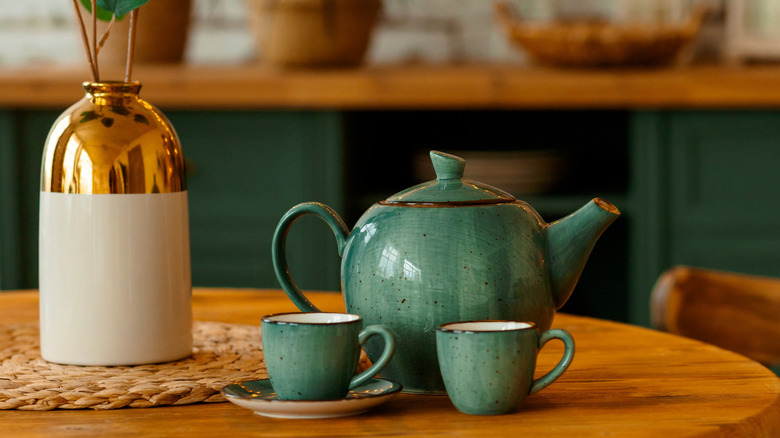
Though there's something to be said for having a stylish home, keeping up with trends to prevent your space from looking dated is nearly impossible. Finishes and paint colors that were popular months ago are out in favor of something that's often in direct opposition to your recent renovations. Fortunately, embracing meticulously planned clutter for a cozier space and filling your home with items that bring you joy never goes out of style — especially if they're items with memories attached.
This is especially true of defunct teapots. There's really no need to throw out your favorite ceramic teapot just because it's chipped or has a crack that prevents it from holding tea. You can still enjoy it for years to come by turning it into a cute succulent planter. Succulents are both low-maintenance and low-profile, so they don't overshadow your teapot's visual appeal or take up too much of your time.
To make the transformation happen, all you need is some cactus potting soil mix, small pebbles, and succulents of your choice. Line the bottom of the clean teapot with pebbles to help with drainage, add the cactus soil mix, then arrange your succulents in the opening of the teapot, ensuring that all of them have a little space to breathe. Water until the soil feels moist, but not soaking wet, and place your planter in a window that receives direct sun for several hours per day (and indirect sunlight the rest of the time).
The tea on successful succulent container gardens
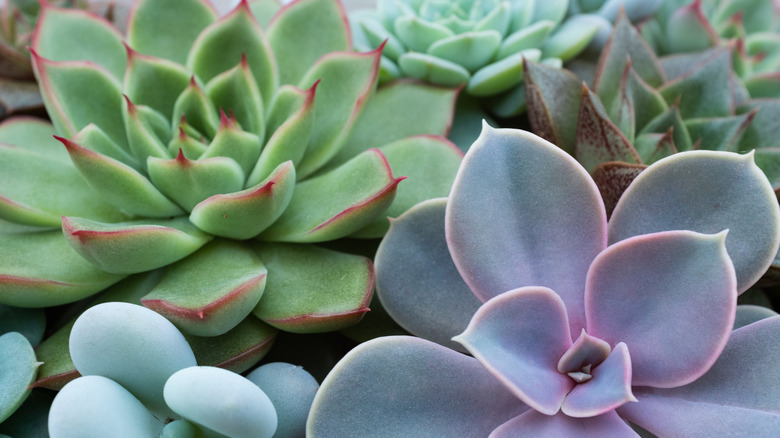
Ceramic teapots best suited for use as planters are those with squat bodies and relatively wide mouths. Succulents prefer well-draining soil and shallow containers since their roots spread rather than dive downward. However, you can use other shapes — provided you pay close attention to the size of your succulents. Smaller succulents thrive more easily in teapots with narrow openings, but may need to be repotted as they grow. Repurposing an old colander into a DIY planter not only gives growing succulents more space, but also matches the theme of creating cute, vintage, homemade planters.
Something else to consider is the soil's moisture content. While you can control this by watering only when the soil feels dry (but not desiccated and crumbly), drainage is also key. Some gardeners insist that drainage holes aren't necessary in succulent planters, while others claim it's a disastrous mistake not to have them. If you prefer to be cautious, you can use a masonry drill bit to drill a small hole through the center of the bottom of your teapot. This, combined with drainage stones and the right soil mix, should help protect your succulents from getting soggy roots and root rot.
Once your succulents are safe and settled, all that remains is displaying your new planter, perhaps among an herb garden planted in Trader Joe's-inspired canned goods planters, teacups full of microgreens, or an entire collection of teapots sprouting with a variety of beautiful plant life.