

The Gluten-Free Pasta Swap That's Also Packed With Fiber
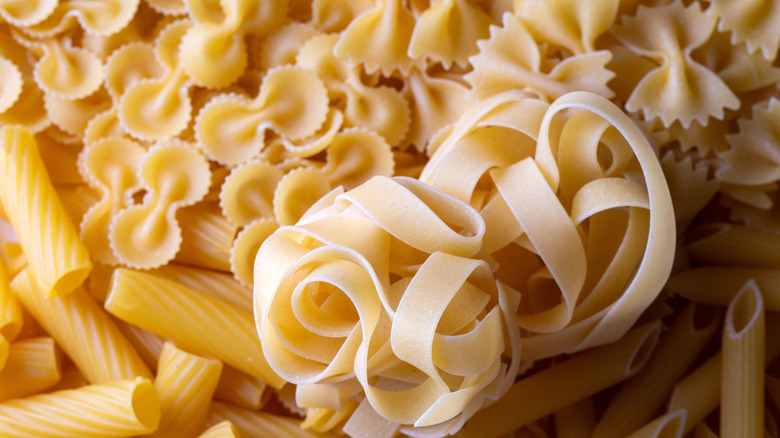
Ever since kale entered the spotlight in the early 2010s, a new veggie rises to popularity every few years — often one previously maligned for its bitterness, blandness, or simple confusion over how to use it. After kale came Brussels sprouts, followed closely by cauliflower, then sweet potatoes, with zucchini becoming our answer to low-carb pasta dishes in the late 2010s. Though carbs can (and often should be) part of a well-balanced diet, sometimes you just want something lighter that helps you get your veggies in — and limp, watery zucchini noodles just can't do the job.
Enter cabbage, the latest trendy veggie everyone's experimenting with. It didn't take us long to discover how to turn cabbage into nutritious dumpling wrappers or swap lettuce for cabbage leaves to make sturdy, low-carb wraps, so it's no surprise it also makes excellent gluten-free, vegan pasta. Sliced into strips and lightly sauteed in the fat of your choice, cabbage transforms from crunchy coleslaw staple into silky, slightly peppery, twirlable noodles.
Not only does cabbage pasta soak up flavors like a sponge, it's also packed with nutrients like calcium, vitamins C and K, and fiber, offering 2 grams per cup. Many of these nutrients are also fat soluble, so serving your cabbage pasta under rich sauce (hello cheesy Alfredo!) actually helps you reap the benefits of this humble brassica. Cabbage also mingles beautifully with other strong flavors, so feel free to douse it with your favorite beefy bolognese or garlicky, herby pesto as well.
Turning cabbage into pasta that's (almost) better than the real thing
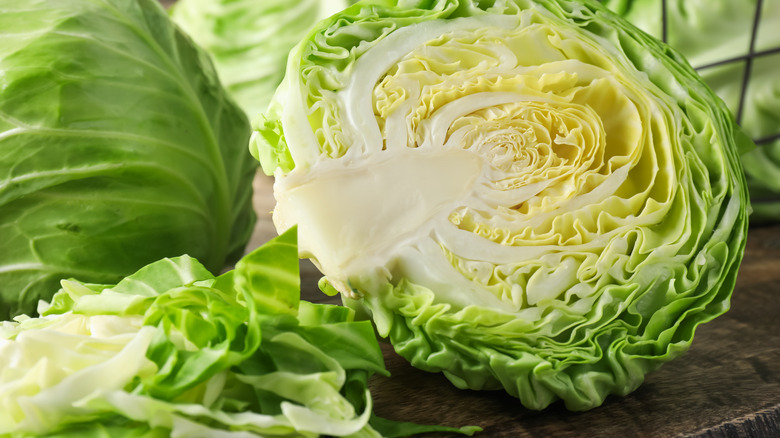
The first step to making cabbage pasta that you'll want to eat on repeat is choosing the right kind of cabbage for your needs. Napa cabbage's long, oblong leaves are perfect for rolling and wrapping, but aren't quite robust enough to hold up to sauteing and saucing without falling apart. Of course, if this is your favorite kind of cabbage, give it a shot, but you're more likely to have stellar results with green or red cabbage. Both varieties feature stiff, sturdy leaves that will soften up beautifully in a pan with butter and salt without dissolving into your sauce.
Another key part of executing delicious pasta-style cabbage is cutting it correctly. The idea is to quarter the entire head, remove the stem, and then slice each quarter lengthwise into long, thin strips. The strips won't be as long as typical ribbon pastas like tagliatelle or spaghetti, but you want the width to be the same to mimic your favorite traditional noodles as much as possible.
While some recipes call for boiling these noodle-shaped strips just like you would penne or angel hair, we recommend sauteing them instead. Not only does a good saute infuse them with flavor from the fat and seasonings you cook them in, it also makes it easier to monitor their texture so you can take them off the heat if they become too soft. You can also cook them right in the sauce of your choice to create a cohesive dish.