

Yes, You Should Cook Top Round Roast Differently Than Bottom Round Roast — Here's Why
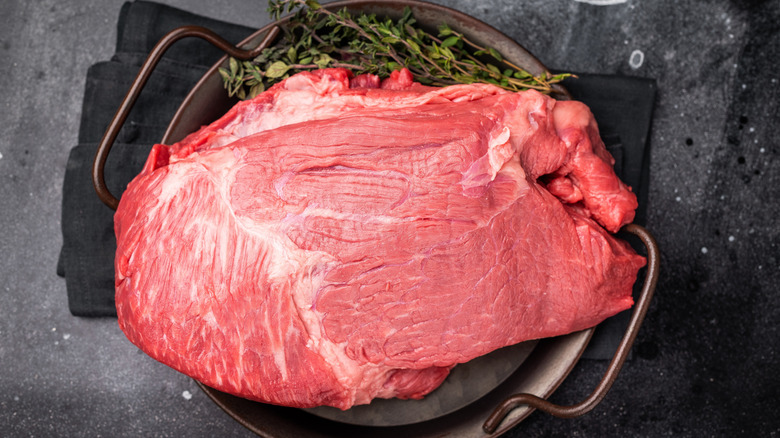
With all the cuts of beef available at the grocery store or butcher shop, it can be challenging to know the differences between them and exactly how to cook each cut. Consider two beef cuts that originate from nearby locations on the cow: the top round and bottom round. Though similar in many ways, these roasts are actually very different in key ways. This makes it important to know the best way to cook each roast to perfection, as well as why you need to cook them differently in the first place.
The top round is a lean cut of beef that is sourced from the inner thigh of the cow's hind leg. It's a muscle that doesn't work as hard and is thus a bit more tender than the bottom round, which originates in the heavily worked outer leg muscle. Both cuts are lean and have a low-fat content, but because of the difference in the muscles, the bottom round cut is less tender. It's best to cook a top round roast low and slow, which means cooking it in the oven for a longer time at a lower temperature. The bottom round roast, also called a rump roast, also needs to cook low and slow, like braising, which gelatinizes the collagen and makes it the best cut for pot roast, according to Julia Child.
Techniques for cooking top and bottom round roasts
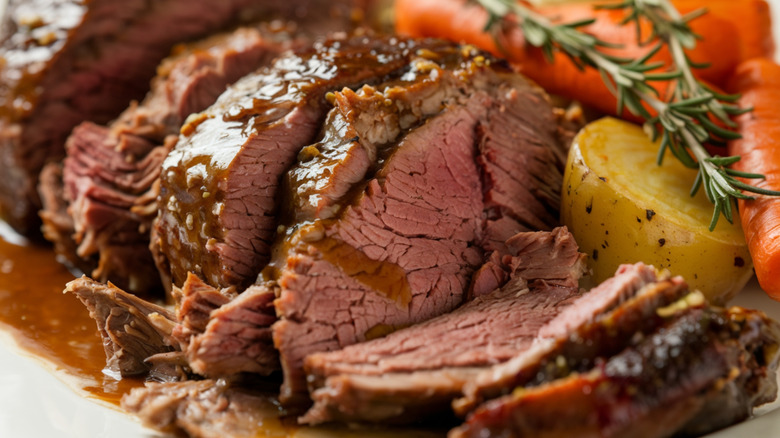
In considering the best way to cook top round versus bottom round, preparing top round roast is best accomplished in the oven. After patting the beef dry and coating it with olive oil and seasonings — using herbs that complement the strong beef flavor, such as basil, rosemary, or thyme — give the roast a good oven sear at 450 to 500 degrees Fahrenheit for about 10 to 15 minutes for each side. This gives the meat a good crust and helps seal in flavor. Reduce the temperature to about 325 degrees Fahrenheit and cook the roast for about 15 minutes per pound to create the finished dish.
There are a few tips you need to cook the best pot roast, which involve braising bottom round roast, also called rump roast, in a cooking liquid, such as broth or red wine. Braising the meat at 325 degrees Fahrenheit for two to three hours works because the cut's high amount of connective tissue breaks down, making the meat tender and juicy, especially after a good sear. Because it's a beefy-tasting cut, similar herbs used to season top round work for bottom round, though you can also be creative with herb and spice combinations or even throw in some bacon for a pop of umami. Braise bottom round roast in a Dutch oven or slow cooker, though an Instant Pot can save you time. Knowing the best methods for cooking top and bottom round roasts can ultimately provide you with a higher level of culinary knowledge and help you to prepare phenomenal dishes.