

You Need To Stop Buying The Wrong Parmesan Cheese (Your Pasta Will Thank You)
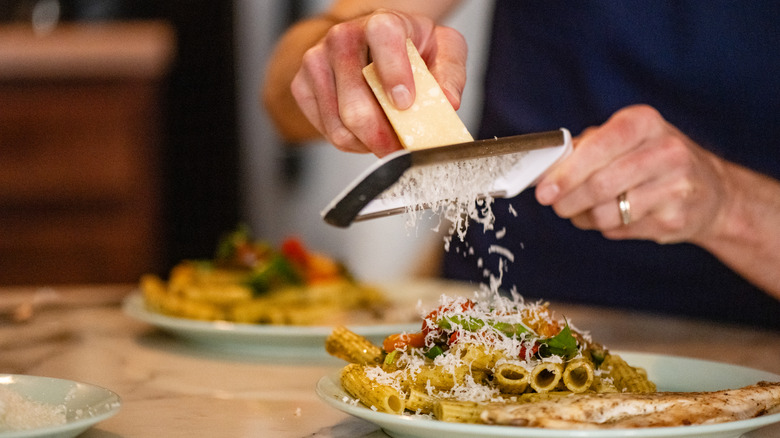
I grew up in Italy, the birthplace of Parmesan. A place where it is not just a generic cheese topping but a specific ingredient that you'll find on every Italian table come dinnertime. What many people may not realize is that "true Italian Parmesan" refers to Parmigiano-Reggiano, a cheese that is aged much longer than what you find in most American supermarkets.
Outside of Italy, "Parmesan" doesn't always refer to Parmigiano-Reggiano, but instead is a sort of umbrella term for any type of hard cheese people can grate on their pasta. And that's where things can go wrong, because there are actually key distinctions between the two that can make or break a dish, especially a dish like pasta. Supermarket Parmesan will almost definitely have been aged for much shorter time than Parmigiano-Reggiano and often comes pre-grated with additives, both of which can change flavor and texture. While buying the "wrong" Parmesan won't ruin your dinner, buying the right one could definitely make it better.
Not all grated cheeses are created equal
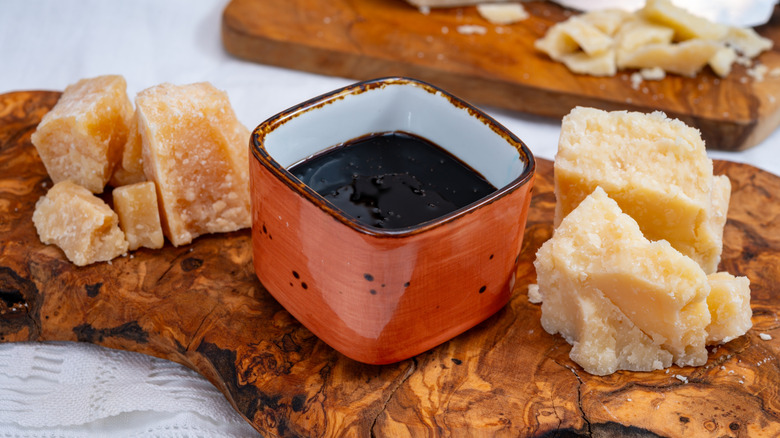
Outside the European Union, "Parmesan" can be used to refer to any Italian-style cheese that has been or can be grated, even if it was barely aged. But the real Italian Parmigiano-Reggiano is protected, which means the label can only be used for cheese made in specific parts of Italy where producers follow the proper techniques, such as aging it for at least 12 months (often much longer).. This process gives the flavors enough time to mature, and it's as a result, it's such a beloved part of Italian cuisine that it's often eaten on its own.
If you're partial to picking up some convenient pre-grated cheese, you may be wondering why it's recommended to avoid this type of Parmesan. It comes down to all the anti-caking agents present in these powdered types that keep them from clumping together, additives you'll never find in a block of Parmigiano-Reggiano. While this more processed cheese could be fine for quickly sprinkling over vegetables or improving a frozen pizza with a salty finish, these differences matter much more when it comes to making pasta.
For a good plate of pasta where texture and umami are much more important, Parmigiano-Reggiano just can't be beat. Because it is aged longer and made drier than supermarket Parmesan, it melts more smoothly into sauces and onto pasta without going grainy or lumpy, bringing a fantastically savory, rich, and nutty flavor. At the end of the day, it's about personal taste, but if you sometimes think your pasta comes out a little flat or one-note, then it could be time to upgrade to a real Parmigiano-Reggiano.