

The Everyday Protein Rule Not Enough People Know About
We may receive a commission on purchases made from links.
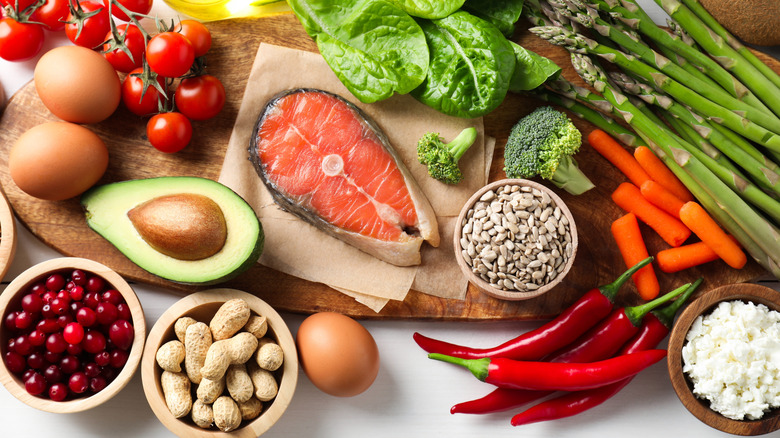
Protein is your body's building fuel. Just as you need water each day to stay hydrated and keep your systems running, your body relies on protein daily to repair and build muscle, oxygenate blood, and regulate satiety hormones. To support these functions, the average person should consume about 0.8 grams of protein per 2.2 pounds (1 kilogram) of body weight. Although some studies promote higher protein intake, in reality, more isn't always better — and yes, you can have too much protein. This is exactly why choosing the right types of protein for your daily diet, specifically complete ones, is the rule you should always stick to.
Complete proteins contain all nine essential amino acids your body needs. While they are present in certain plant-based foods like quinoa, soy, buckwheat, and chia seeds, they're most commonly found in animal-based foods like meat, fish, dairy, and eggs. Incomplete proteins are, in turn, found in plant-based foods like wheat, legumes, and nuts, among others. These foods provide valuable nutrients along with protein; their drawback, however, is that they lack one or more essential amino acids.
According to Dr. Gabrielle Lyon, a doctor of osteopathic medicine and board-certified and fellowship-trained physician, high-quality animal protein should be a daily priority, particularly at breakfast and dinner. "Animal protein is the most efficient nutrient delivery system we have," Lyon said in an exclusive conversation.
Jackie Newgent, a registered dietitian nutritionist and chef and plant-based nutrition expert, highlighted why complete, and therefore animal proteins, matter. "Some key nutrients that are found in animal-based foods yet more challenging to get on plant-based eating plans include vitamin B12, heme iron, and zinc," she told Chowhound — though plant-based eating doesn't have to mean missing out on your protein requirements.
Including one protein source in your daily diet isn't enough
Dr. Gabrielle Lyon, who is also a New York Times bestselling author of "The Forever Strong Playbook," noted that consuming different protein sources daily supports optimal nutrient absorption. That's precisely why knowing which ingredients are high in protein matters. "High-quality animal protein (beef, whey, eggs) is your 'anabolic anchor' because it provides the leucine required to flip the switch for muscle protein synthesis, which is nonnegotiable for maintaining muscle as the organ of longevity," Lyon highlighted. Leucine is an essential branch-chain amino acid (BCAA) naturally abundant in animal proteins.
To fuel your body with the right proteins, Lyon suggests consuming between 30 and 50 grams of high-quality protein for breakfast. "If you get this first meal right, you stabilize your blood sugar, protect your muscle mass, and control your appetite for the rest of the day," she stated. "If you miss it, you are playing catch-up." Dividing your plate into thirds, with equal parts of protein, fibrous carbs, and starchy carbs, is her approach to hitting your targets.
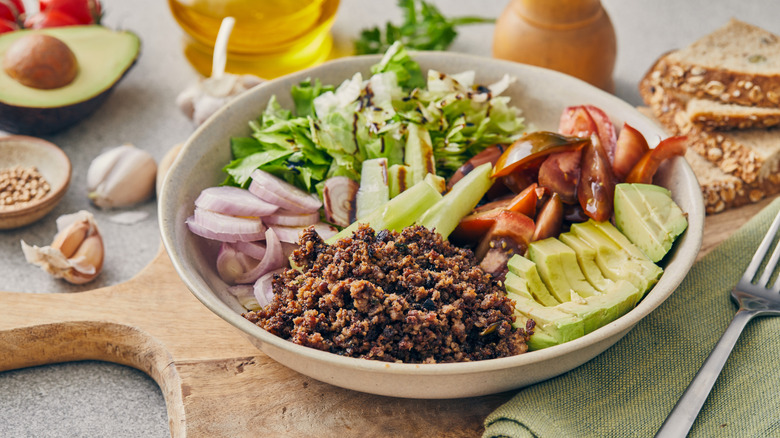
Sunny side-up eggs with tomatoes, mushrooms, and cottage cheese, avocado toast with a poached egg, or oatmeal with nuts and Greek yogurt are just a few simple examples that can help you hit your protein needs early in the day. "I consider animal protein the 'gold standard,' because it contains a complete, high-quality protein matrix," Lyon continued. " ... If you are avoiding red meat and animal products, you are at risk for specific deficiencies that impact energy, thyroid function, and muscle recovery."
Eating vegetarian doesn't mean compromising on complete protein
Dr. Gabrielle Lyon highlighted that, while it's possible to get by without animal protein, it isn't easy. "You aren't just fighting a nutrient gap ... but also a bioavailability gap," she said. As we age, building and maintaining high-quality muscle is easier with protein sources that are more metabolically efficient and bioavailable. "Supplements can help 'patch the holes' in a plant-based diet [with] B12, D3, and omega-3s, which are often lacking in plant-based diets (but bioavailable in animal protein)," Lyon said. "However, simply taking a multivitamin doesn't fix the amino acid profile issue."
This doesn't mean that plant-based eaters have no options besides meat; they just have to pay extra attention to their diet and lifestyle. Jackie Newgent, author of "The Plant-Based Diabetes Cookbook," stated that with targeted supplementation, a well-planned plant-based diet can fully meet an adult person's protein needs. "Choosing vegetarian doesn't mean missing out," she emphasized. "And adding meat or other animal-based protein sources isn't mandatory." The Vegan Society agrees with Newgent's perspective, noting that older adults can preserve their muscle mass by staying physically active and adding extra protein — particularly complete sources.
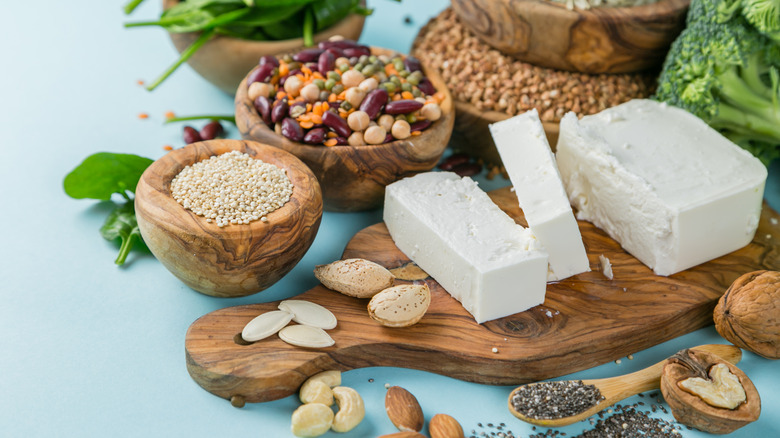
Complete vegan proteins include pseudo-grains like amaranth and buckwheat, hemp seeds, spirulina, and Ezekiel bread, as well as smart pairings like grains and legumes (think hummus and pita). Variety is key, Newgent explained. "Try a tofu scramble at breakfast, lentil soup for lunch, tempeh tacos for dinner, and nuts at snack time," she said. And don't hesitate to try the high protein vegetables you might be overlooking, like broccoli and spinach.
Whether you choose plant or animal protein ultimately comes down to personal goals and preferences. However, following a plant-based diet requires variety and complete protein know-how.