

Stop Getting On Your Hands And Knees To Scrub Kitchen Grout: Just Use This Cleaning Tool
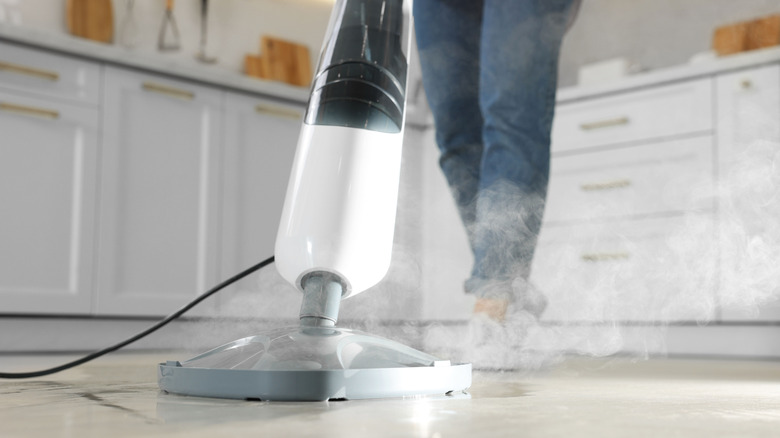
Nobody likes cleaning, especially when it comes to wiping filthy kitchen floors. It's the last thing you want to be dealing with on what's supposed to be a relaxing Saturday morning. And just the thought of getting on your hands and knees to scrub kitchen grout makes it sound even worse. But instead of spending hours to scrub grout tile by tile, here's an easy hack for cleaning your dirty kitchen floor that'll save both your time and your back: use a steam mop or a steam cleaner.
Now, there's absolutely no denying that tiles belong in the kitchen. They're stylish, elegant, make small spaces feel bigger, and even add visual harmony to a room. However, depending on their size, they can also mean more grout lines to clean. Using small tiles in your kitchen is actually one of the biggest design mistakes that make your kitchen look dirty.
While steam mops or steam cleaners tend to be more expensive, they're very effective at removing germs stuck in the spaces between the kitchen tiles. They actually work by heating water stored in inner reservoirs to nearly 250 degrees Fahrenheit. When the water reaches the desired temperature, it gets released as steam into the cleaning pad below. Once the intense heat of the steam touches the floors, it will destroy all the bacteria and easily break down the stubborn grime trapped in the grout.
Try a steam cleaner and never go back to scrubbing by hand again
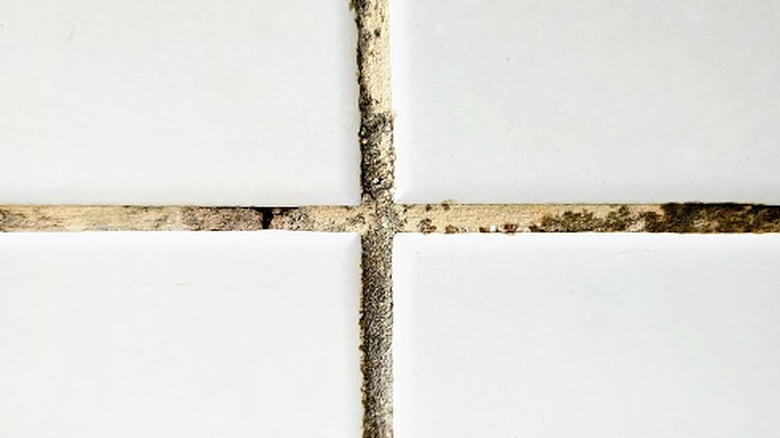
Before using a steam mop or a steam cleaner, make sure to first remove dirt and other debris from your floor by sweeping or vacuuming it. That said, if you opt for the second option, don't forget to switch your vacuum cleaner to tile mode to avoid damaging it. Once that's taken care of, fill the steam mop's reservoir with water and let it heat up fully before you use it.
When possible, always use distilled water, because it will protect your steam cleaner from corrosion. Prolonged usage of tap water can actually lead to the formation of a foamy substance, which can contain bacteria. Meanwhile, distilled water will also prevent mineral residue from accumulating inside the device.
When ready, move the mop or the cleaner across the tiles, and let the steam do the work in the porous grout lines. Not only will it soften the stuck grime, but it will also sanitize the spaces as a result of the intense heat. The before and after results will likely be better if your grout color isn't white. Choosing this grout color for your kitchen is a huge design mistake and can make a massive difference from the start, as it tends to look dirty even when clean.