

The One Mishap That Can Make Shrimp Unsafe Before You Even Cook It
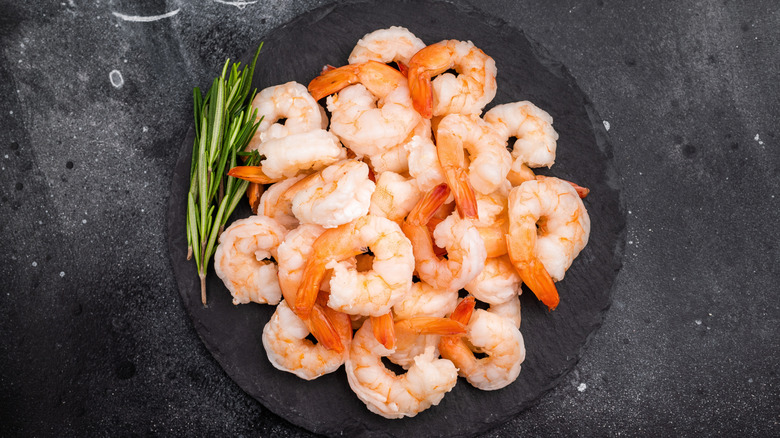
Shrimp is often the star of easy and fast meals because they cook so quickly. Unfortunately, shrimp can become unsafe long before it hits your pan for a delicious shrimp scampi, shrimp tacos, or shrimp gumbo. Have you ever noticed your shrimp getting mushy or developing an off smell before you're about to cook them? One of the mistakes you should avoid when cooking shrimp is thawing them wrong. The seafood is highly perishable, and the problem is defrosting shrimp at room temperature or using warm or hot water to defrost them.
It might seem harmless to allow your bag of shrimp to sit on the kitchen counter to defrost, but once the temperature is 40 degrees Fahrenheit or higher, you're entering, what food safety experts call, the danger zone. When shrimp sits at room temperature the outer layer thaws quickly while the center remains frozen. The same thing happens when using warm or hot water. It might feel only slightly warm to you, but it's likely warm enough to enter the danger zone. If raw or cooked shrimp ever smells fishy, rancid, sour, or has an ammonia odor to it, don't eat it. Sometimes the odor of ammonia can seem to go away, but it's still important that you do not eat it.
The other issue is moisture. Shrimp loses moisture when thawed improperly, and that causes a mushy texture or just completely dries it out. It's important to defrost shrimp the right way so you don't get sick, but it's also important for good texture and taste.
How to thaw shrimp safely
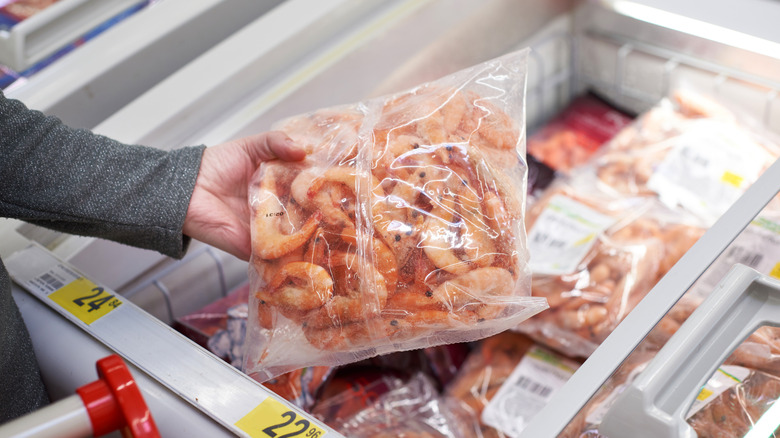
The good news is avoiding room temperature thawing is easy. The safe alternative is keeping shrimp cold enough and out of the danger zone of 40 degrees Fahrenheit or warmer. The FDA recommends putting your bag of shrimp in the fridge overnight to thaw slowly. Since your fridge is below 40 degrees, it will stay out of the danger zone. It will take about 12 to 24 hours to defrost, depending on their size.
Although the recommended thawing method is in the fridge overnight, if you need to safely thaw your shrimp a little faster, make sure your shrimp is in a sealed plastic bag. Fill a bowl with very cold water and submerge the bag in the water. Replace the water every 30 minutes. Shrimp is ready when still icy but slightly pliable.
Alternatively, when you want to cook your shrimp in as little as five minutes but don't have time to defrost via fridge or submersion, there is another option. How long it takes depends on how much shrimp you have and how big they are — but it shouldn't take longer than eight minutes. Place individual shrimp in a colander and hold under cold, running water. Move them around every minute until thawed. Pat them dry with paper towels and cook away.
Defrosting shrimp properly means they'll taste fresh and tender, not mushy or dry. Enjoy your shrimp dish, whether you're prepping some shrimp cocktails or cooking up some baked stuffed shrimp scampi.