

15 Types Of Pasta Shapes, Explained

When I first packed my bags and moved to Florence, Italy, five years ago, I came as a culinary student ready to learn just about everything in Italian cuisine, from tiramisu to tortellini. However, it didn't take much time to realize that the real education wasn't happening in the classroom — it was actually happening in the old-school restaurant kitchens I worked in throughout the city. During my time as a sous chef, I learned the true essence of Italian gastronomy that can't be taught in the classroom, from proofing Roman-style pizza dough to hand rolling pici with nonnas who've been doing it practically since they were born.
For the past few years, I've not only discovered the most underrated Italian comfort foods you should try, but I've also been perfecting my fresh pasta skills by hand, learning recipes and regional specialties from Florentines, and of course, eating my way through the Italian peninsula. What I've come to learn is that pasta isn't thought of as a carbohydrate or dish — it's a micro culture and strong culinary identity that's been perfected through multigenerational practice. So, if you are a pasta fanatic like me, here are 15 of the most important pasta shapes and their traditional sauce pairings you should know about.
1. Spaghetti
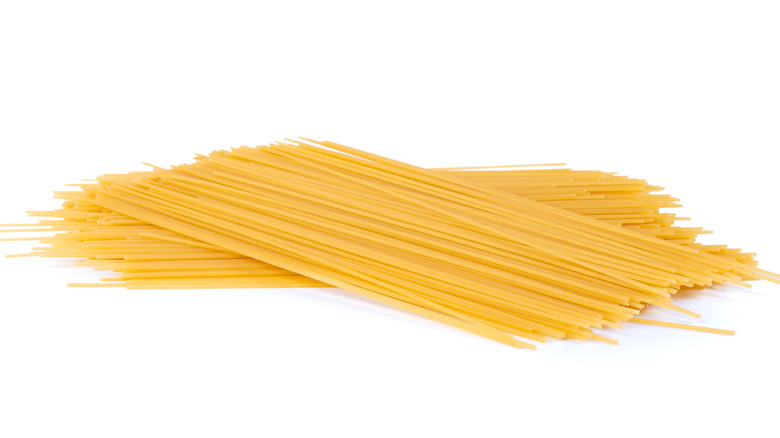
Spaghetti is a long, thin pasta traditionally made from a combination of durum wheat semolina flour and water. It is arguably one of the most popular pasta shapes, with a multitude of different recipes calling for it, from the iconic Italian-American dish spaghetti and meatballs to the classic Neapolitan dish featuring spaghetti with clams, garlic, and olive oil, spaghetti alla vongole.
In some recipes, you can find the dough being made with eggs to enrich its color and flavor; however, the key ingredient in spaghetti is the durum wheat semolina flour, which is made from the mild endosperm of the durum wheat grain. This flour is widely used in pasta production due to its high protein and gluten content, creating a strong and elastic dough that will hold its shape during cooking. It also helps provide the pasta with a firm, "al dente" texture desired in pasta making, unlike other wheat-based flours that can become mushy and soft when cooked.
2. Bucatini
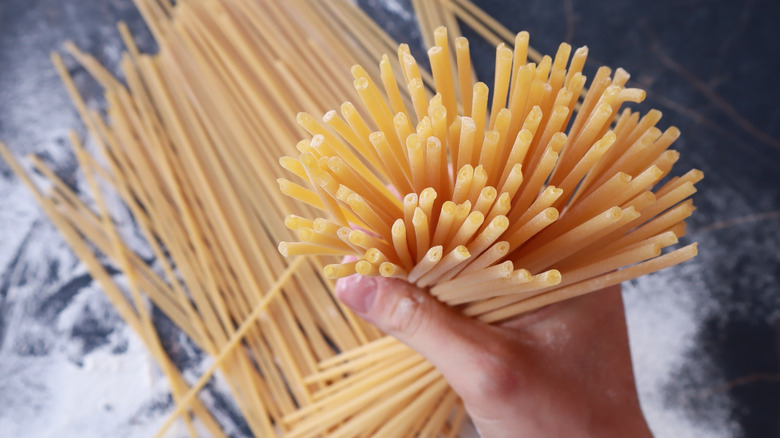
Bucatini is basically spaghetti's cool cousin — it has that same long, stranded shape with a hollow, straw-like center that runs through its length. Like many long pasta shapes, it's made from a combination of durum wheat semolina flour and water. The pasta shape originates from Italy's capital, Rome, and its name derives from the Italian word "buco," translating to "hole" in English. It was specifically designed to capture more sauce from both inside and out, providing a satisfying, chewy texture and a unique appearance.
Traditionally, the four classic Roman pasta dishes — amatriciana, carbonara, cacio e pepe, and gricia — primarily use bucatini or spaghetti due to their long, string-like shape, which is perfect for holding sauce with a rich, fatty, and creamy consistency. Beyond the Roman pasta dishes, you can also find bucatini being used in meaty ragù sauces and simpler dishes like aglio e olio.
3. Penne
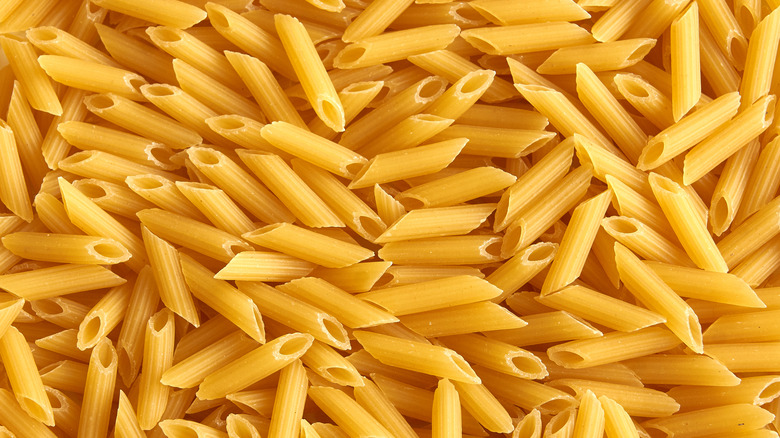
Penne is a short, cylindrical pasta with angled, quilled edges and it originated in the port city of Genoa. The pasta is called "penne" because its unique shape and angled cut resemble a quill pen, as "penna" in Italian translates to pen. The dough is made from a combination of durum wheat semolina flour and water, forming a firm dough that is extruded through tubes into its hollow, angled cut. You can find three variations of penne in Italy: penne rigate (ridged), penne lisce (smooth), and mezze penne (short), which is half the length of normal penne, helping it cook more quickly.
Penne's hollow, tubular shape makes it ideal for holding hearty, chunky, and clingy sauces such as pasta alla vodka, ragù, basil pesto, and marinara. Oftentimes, it's used in baked pasta dishes since its thicker walls hold its shape much better than other pasta shapes when cooked in a high-heat environment and prolonged cooking times. The ridged exterior gets completely covered in sauce while the hollow tube perfectly traps it inside without becoming too mushy.
4. Fettuccine
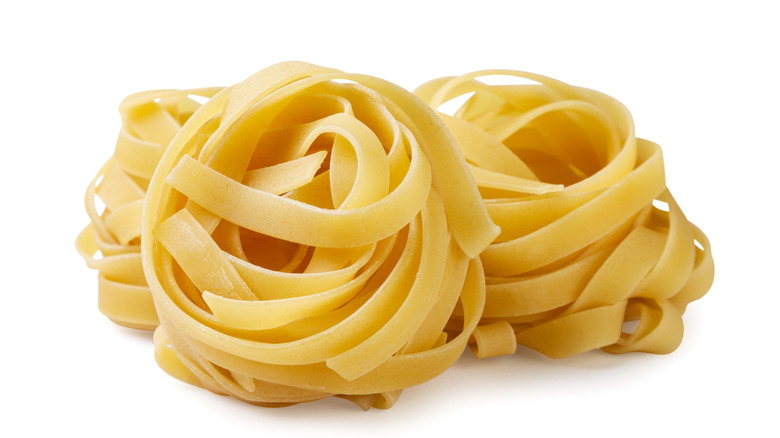
Fettuccine is another popular pasta shape often characterized by its long, flat ribbon-like strands. It is most famously used in a creamy fettuccine alfredo recipe, which is a dish consisting of pasta tossed rapidly with butter and grated Parmigiano Reggiano cheese. The dough is traditionally made from eggs and 00 flour, which is a finely milled Italian flour renowned for its silky, powdered texture that's perfect for pasta and pizza preparations. The flour is typically used in egg-based pasta doughs and is made from soft wheat that has a slightly lower protein content than its counterpart, durum wheat semolina flour.
Fettuccine is often confused with tagliatelle, which has a similar long, flat shape, but the main difference is their origin and width. Fettuccine typically is around 5 to 7 millimeters and originates from the Lazio region, while tagliatelle is slightly wider and thinner at about 7 to 8 millimeters and is from the Emilia-Romagna region. Both are often used interchangeably, with the pasta shapes pairing well with heavy, meaty sauces like Bolognese and creamier sauces like alfredo.
5. Rigatoni
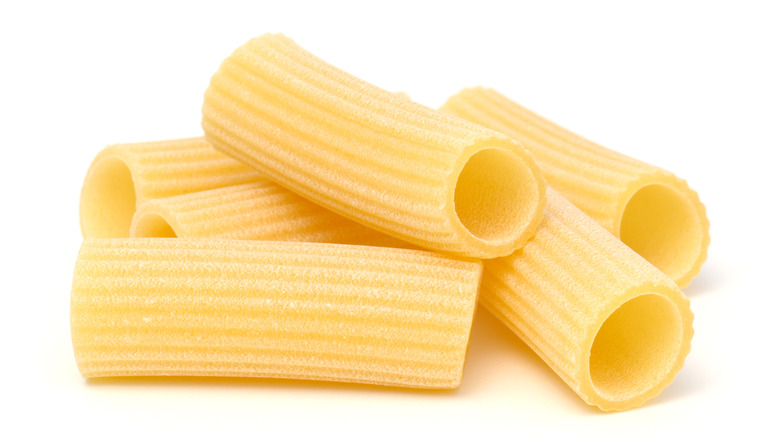
Rigatoni is a chunky, ridged tube pasta that's wider than penne but has a straight-sided cut. Other than penne, it is one of the most popular tubular pasta shapes. It originated in Rome and is deeply rooted in the city's food culture. You can find it being used in place of bucatini and spaghetti in pasta dishes like carbonara, gricia, and cacio e pepe. However, it's also used in pasta dishes found outside of Rome, like the Sicilian pasta alla norma. Unlike most pasta shapes, rigatoni emerged later and became widely popular with the development of industrial extrusion machines during the 19th and 20th centuries.
There are four variations of rigatoni commonly used: standard rigatoni, mezze rigatoni (short), rigatoni giganti (large), and rigatoni bronzo (bronze-cut). The latter is extruded through bronze plates, giving it a rougher, textured surface that helps in gripping sauces better. Rigatoni's tough exterior makes it able to withstand various preparations from baked pasta to hearty sauces.
6. Linguine
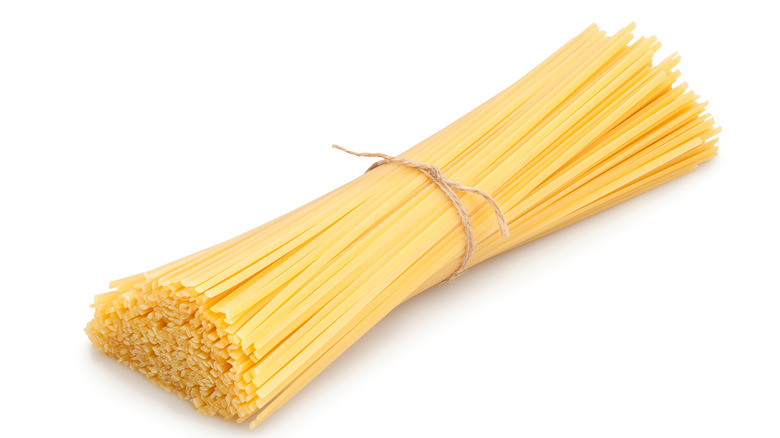
Linguine, meaning "little tongues" in Italian, is a long, flat, elliptical-shaped pasta hailing from the coastal Liguria region. It's similar to fettuccine and tagliatelle but is much more narrow, offering a satisfying chewy texture. The dough is traditionally made from a combination of durum wheat semolina flour and water; however, you can also find linguine being made in Ligurian homes with a mixture of durum wheat semolina and 00 flour with eggs instead of water for a tender texture and rich flavor.
The most classic pairing sauce with linguine is Pesto alla Genovese. This delicious sauce is traditionally made in Genoa by smashing fresh basil leaves with pine nuts, garlic, extra-virgin olive oil, and Pecorino Romano in a marble mortar and pestle until it reaches a bright green and creamy consistency. Across the Liguria region, you can find coastal trattorias and osterias where the linguine is practically drowning in basil pesto. Beyond Pesto alla Genovese, it's also commonly used in seafood and fish-based sauces, where the oily, slightly creamy sauces easily cling to the exterior of the ridges.
7. Ravioli
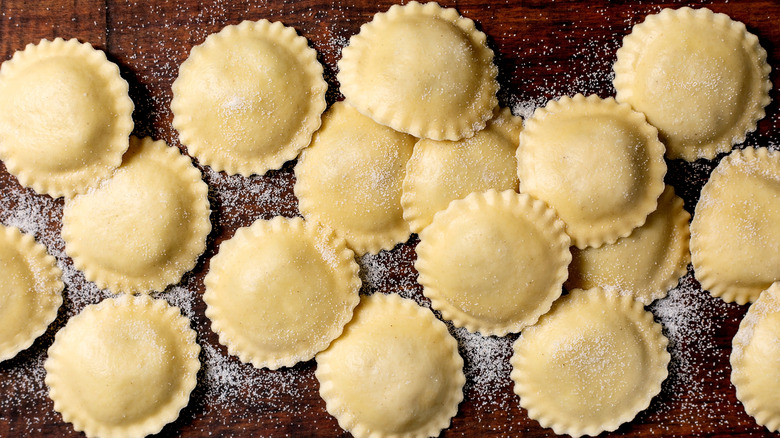
Ravioli (not to be confused with pierogi) is basically a little pasta pillow filled with various ingredients, such as cheese, meat, vegetables, and seafood. Its structure consists of two layers of thin pasta sheets, encasing the filling, similar to a dumpling. The dough is made from a combination of 00 flour and eggs, providing it with a bit more pliability compared to pasta shapes made with durum wheat flour; this makes it easier to fill and seal without tearing. They are typically cut into squares but can also be circular, half-moon, or triangular.
While there are probably hundreds of different ravioli fillings chefs around the world have created, the most popular filling nationwide is ricotta and spinach, often seasoned with a sprinkle of nutmeg and black pepper. In Northern Italy, you can find ravioli filled with meat like beef, pork, or veal, while the southern coastal regions favor seafood. Other popular fillings include burrata, truffle, mushrooms, potatoes, and various cheeses.
8. Farfalle
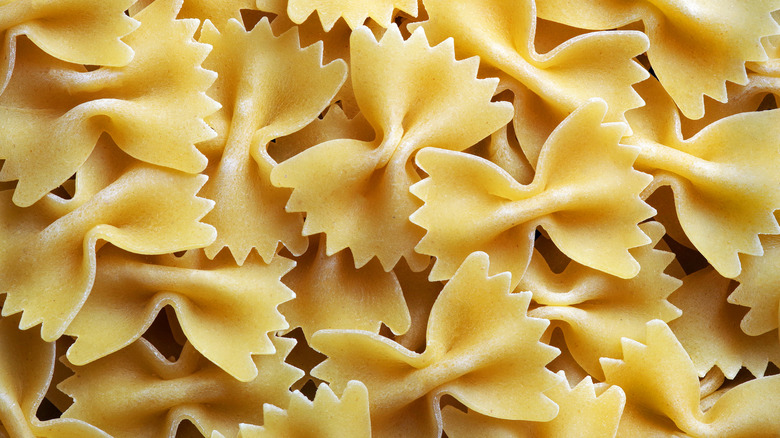
Farfalle, meaning "butterflies" in Italian, is a bow-tie pasta shape characterized by its pinched center and ruffled edges. It is made from durum wheat and water dough, giving the pasta a firm and chewy texture with that delicious "al dente" bite. Originating from the Northern Italian regions of Lombardy and Emilia Romagna, it is often featured in rich meat sauces such as Bolognese or rabbit ragù, which is native to the region. However, you can also find it served with Pesto alla Genovese or an oil-based sauce, where it clings to ruffled edges and tiny crevices in the center.
It was born from resourcefulness by 16th-century Lombardy and Emilia Romagna housewives as a creative way to use up leftover sheets of pasta after making ravioli and cappelletti. The dough is typically cut into small squares with a crinkled pasta roller, then pinched tightly in the center, creating its signature whimsical shape.
9. Lasagna
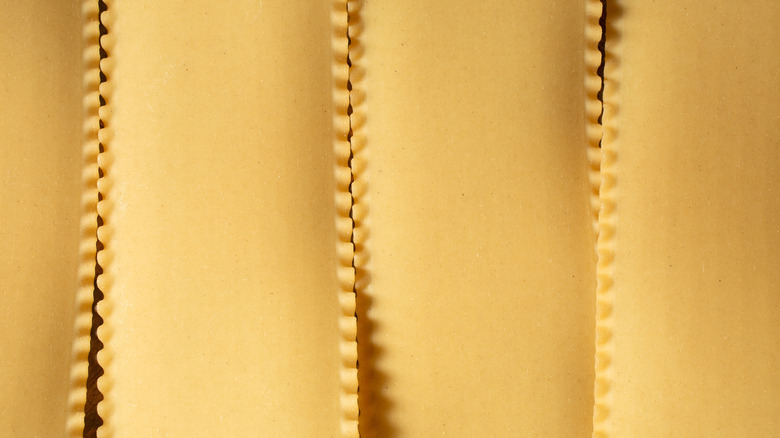
Lasagna is flat, wide rectangular sheets of pasta used to create layered pasta dishes. The dough is egg-based and made with 00 flour. Oftentimes, commercially-made lasagna sheets are extruded to have a wavy edge and thick width — however, traditionally, authentic fresh lasagna is made into thin, delicate sheets. It is believed to have been invented during the Middle Ages in Naples, although its roots can be traced to the Greek and Roman flatbread called "laganum."
The noodle is inseparable from the classic pasta dish lasagna itself, consisting of lasagna sheets layered with rich ragù, creamy béchamel sauce, which is one of the mother sauces, vegetables, and various cheeses, then baked until bubbling and golden brown. It's arguably one of the most popular baked pasta dishes. Various regional adaptations of the Italian-American version feature ricotta instead of béchamel, as well as green lasagna sheets made with a spinach-based dough from Emilia Romagna called "lasagne verdi."
10. Fusilli
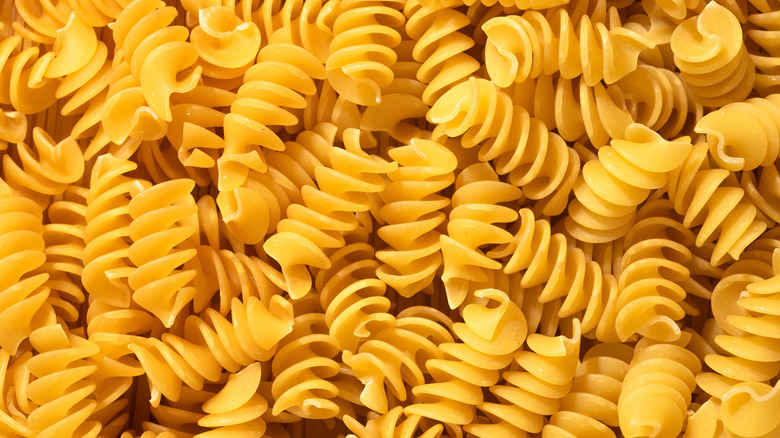
Fusilli is a unique Southern Italian corkscrew-shaped pasta that's made by hand-rolling strips of dough and twisting them around a thin rod to create its quirky shape. The dough is made from durum wheat semolina flour and water; it is firm, puffy, and won't get stuck to the coil when shaping. Most fusilli is now made using an industrial extrusion machine, which pushes the dough through specially designed dies to create its signature shape. After it's extruded, the pasta is dried, often at low temperature to preserve the flavor and ensure it has a firm, chewy texture when cooked.
Its small, bouncy, spiraled design holds sauce extremely well, making it ideal for creamy and thick sauces, like ragù or alfredo. It's also excellent in pasta salads and baked pasta dishes, where it's often substituted for or alongside rigatoni and rotini. Traditionally, it's made with Southern Italian-style sausage ragù, or it's often paired with cauliflower, ricotta, and crushed chili flakes in regions like Puglia and Basilicata.
11. Pappardelle
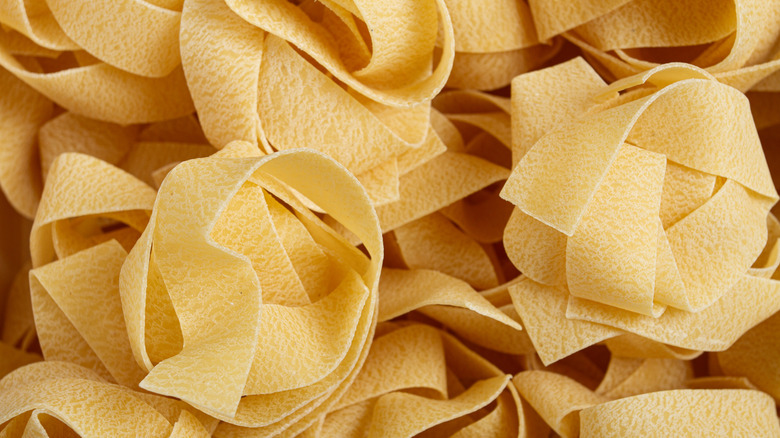
Pappardelle is super wide, flat ribbons of pasta similar to fettuccine but used much more frequently in central regions of Tuscany, Umbria, and Emilia-Romagna. It is typically 2 to 3 centimeters in width and has a slightly rough texture that's perfect for capturing bits of sauce and meat. The dough is made from a combination of eggs and 00 flour, with some chefs adding in a small amount of finely-ground semolina flour for texture.
The pasta shape originates in Tuscany, where it's often paired with cinghiale ragù — a hearty ragù made from stewed wild boar or porcini mushrooms when in season. Both are regional specialties of Tuscany, and can be found on menus from Florence to Siena. Its name, "pappardelle," is derived from the Italian word "pappare," meaning to "gobble up" in English — and if you're ever visiting the birthplace of the Renaissance, be sure to gobble up a few bowls while you're there!
12. Orecchiette
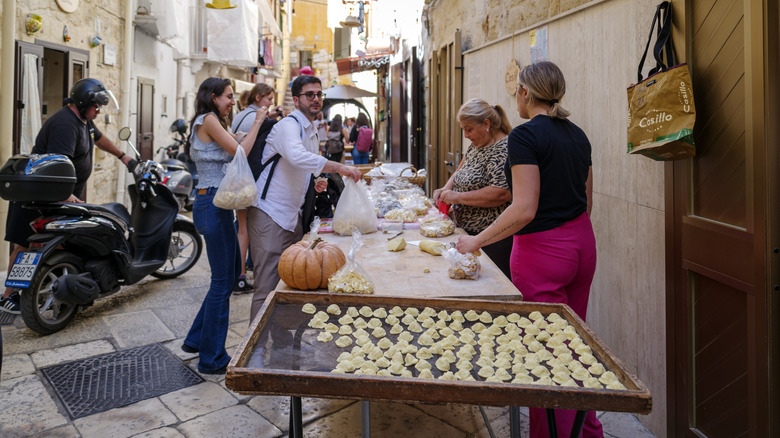
Orecchiette is probably one of the most unique Southern Italian pasta shapes out there and is shaped to resemble its name — little ears. It has a unique concave shape with a thin center and thick rim. The dough is made only from durum wheat semolina flour and water, giving it a rough surface that's perfect for capturing sauces.
Throughout the twisting streets of Puglia's capital city of Bari, you can find housewives handmaking orecchiette pasta on wooden tables right on the street. These ladies are typically found in the historic Arco Basso area of Bari, and if you're ever visiting, you can purchase a bag of fresh or dried orecchiette and help preserve this unique generational tradition.
The most popular traditional recipe combines orecchiette with cime di rapa (broccoli rabe), a vegetable used frequently in Southern Italian cuisine consisting of thin stems and tiny broccoli florets, which are quickly boiled then sautéed with olive oil, garlic, red chili pepper flakes, and anchovies. The cime di rapa has a lovely earthy flavor when paired with freshly-made orecchiette, which is the perfect match. Occasionally, people will add crumbled pork sausage or ground lamb into the sauce for a richer and heartier flavor.
13. Stelline
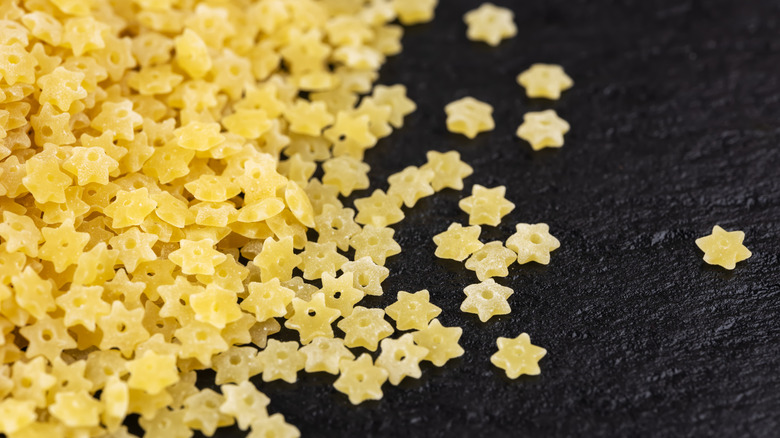
By far the cutest pasta shape coming from the Italian peninsula, stelline are teeny tiny star-shaped pasta that's mostly used in broths and soups, or served with butter and cheese for children. It's considered an Italian comfort food; people will make it with chicken broth and Parmesan Reggiano when under the weather, and it's often referred to as the "Italian penicillin." The stelline is great at soaking up broth, creating a warm, comforting dish that will surely help knock out any cold.
Stelline falls in the category of pastina, which refers to any tiny pasta shape that cooks quickly. Pasta shapes like orzo, acini di pepe (dots), and ditalini are all considered pastina alongside stelline. You might be wondering, how in the world these adorable little edible stars are created. Well, the dough is made from durum wheat semolina flour and water, giving it a firm and pliable texture, so it can be passed through an industrial extruder similar to how fusilli is made.
14. Pici
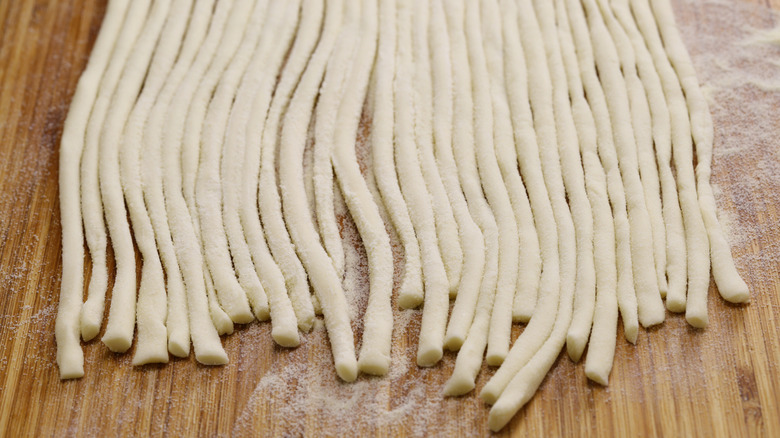
Not only did Tuscany give us delicious Chianti red wine and Renaissance artists like Michelangelo and Brunelleschi, but it also gave us the legendary hand-rolled pasta shape pici. If you haven't had the pleasure of trying it before, pici is a thick pasta known for its irregular, rustic shape that resembles fat, long spaghetti. The dough is made from a combination of durum wheat semolina flour and water, and is often considered "cucina povera" (poor cuisine) due to its minimal ingredient list. It's roughly the thickness of a pen and is entirely handmade, where the dough is rolled into flat sheets, cut into strips, then rolled up into thick strands.
Pici is chewy and hearty, perfect for soaking up rich meaty sauces like cinghiale and coniglio (rabbit) ragù, which are native to the region. It can also be served simply with a tomato-based or oil-based sauce. Across the countryside, you can find roadside restaurants hand-rolling pici on wooden tables right in the dining room — another pasta-making tradition that has been unchanged for generations.
15. Tortellini
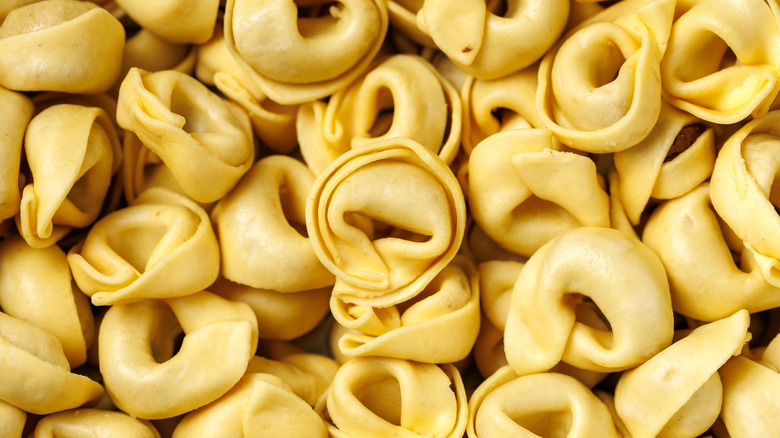
Last but surely not least, tortellini are tiny folded pasta parcels filled with a savory filling consisting of ground pork, veal, prosciutto, and grated cheese. This adorable pasta shape is meant to resemble a belly button and is often served in a rich pork broth (brodo) or creamy white sauce. Tortellini are basically like ravioli's tiny younger brother; however, they're shaped more like rings rather than the typical square cut the ravioli is known for.
Originating from the Emilia-Romagna region, cities all over the area have their own variations with subtle differences. City of Bologna in the region claims its birthplace with their distinct bolognese tortellini filled with ground pork loin, mortadella, prosciutto, Parmigiano Reggiano, and a sprinkle of nutmeg, and is traditionally folded around the pinky finger. About an hour away from Bologna, the city of Modena has its own variation called Modense tortellini, which is similar to Bologna's but often folded around the tip of the index finger, resulting in a larger ring.