

Stop Using Harsh Chemicals On Quartz Countertops: Here's The Right Way To Clean Them
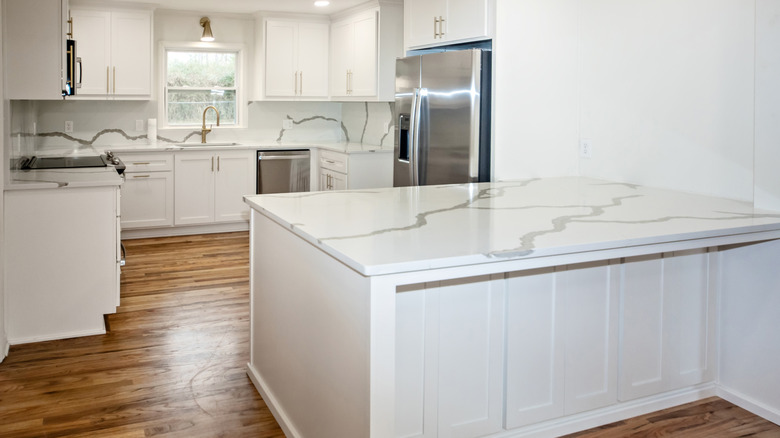
So you've recently remodeled your kitchen and went with quartz countertops. Now, they might not be the best countertops for adding resale value, but honestly, who could blame you? Not only is quartz incredibly stylish and elegant, but it's also waterproof, nonabsorbent, and highly resistant to chips and scratches. So, if you're unsure about the type of stone you should use for your kitchen countertop, quartz is undoubtedly one of the most durable choices available and can last more than half a century with proper care. That is of course, as long as you avoid cleaning it with abrasive or harsh chemicals.
Quartz countertops are quite simple to clean and maintain. Daily cleaning is recommended because it usually helps keep them looking their best. With that in mind, instead of using harsh cleaners such as ammonia, abrasive pads, bleach, or strong solvents for the job, there's a smarter and more affordable option you could go with. Mild dish soap and a microfiber cloth are, as a matter of fact, the magic duo you need to keep your quartz countertops sparkling clean, without worrying they'll damage the surface or ruin their shine.
To do it right, take a microfiber cloth and remove any leftover food particles or spilled liquids from the countertop. Afterward, take warm water and add a bit of mild dish soap to it, or mix them together into a spray bottle for an easier approach. Then simply wipe the surface once again, using gentle, circular motions. Once that's done, wipe the countertop dry with a clean microfiber cloth to keep it looking shiny and spotless.
There are plenty of simple hacks to get rid of quartz countertop stains for good
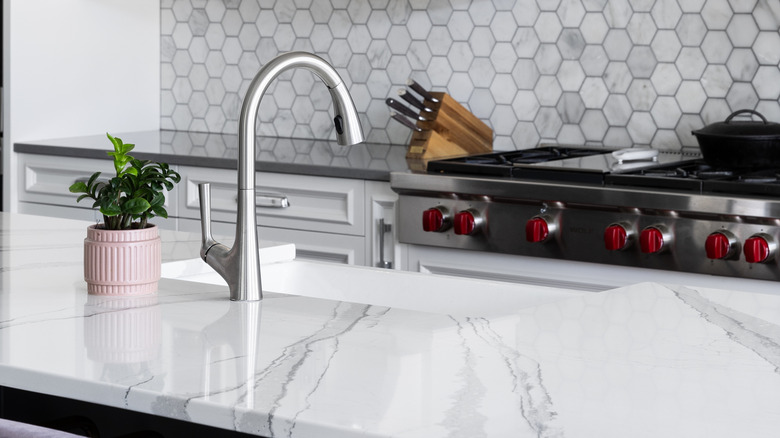
When it comes to quartz countertops, make sure to always wipe them after each meal. Keep in mind that mild household cleaners are also a great alternative to dish soap for keeping them neat. If you spill liquids like coffee, wine, or tea, which are rich in stain-causing compounds called tannins, on top of your countertops, clean them immediately to prevent discoloration. Still, if you notice any discoloration, then it might be time for a rather different approach. In such cases, a simple hydrogen peroxide and water solution is often effective in removing it.
While vinegar and lemon are two regular pantry ingredients often used to clean common food stains, it's crucial to dilute them in water before applying them to the surface of your quartz countertops. This solution is safe to remove tougher stains, and at the same time, it will keep the quartz intact. Both ingredients are acidic and have a pH between 2 and 3. Despite being considered weak acids, their improper application on quartz countertops can dull the finish and weaken the resin that binds the stone, in addition to causing discoloration. That's why you should dilute them first.
The same dilution method can be applied when using baking soda or alcohol. That said, if you don't feel like experimenting with kitchen staples and would rather be on the safe side, you can always opt for a specialized quartz cleaner to remove those stubborn stains without risking surface damage.