

Restaurants Can Fail Health Inspections If They Don't Follow This Food Storage Rule
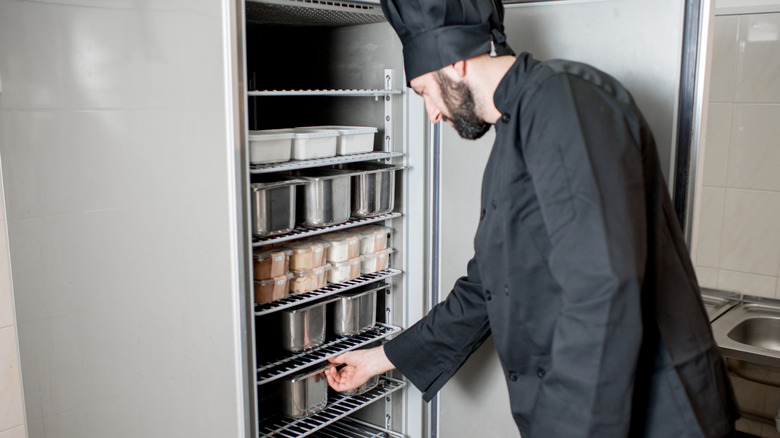
We all know restaurants are required to pass regular health inspections in order to make sure the food they serve is safe to eat. But what you may not realize, however, is how detailed those rules actually are and what it really means if a restaurant fails inspection. Inspectors look at everything from the cleanliness of countertops to the number and placement of hand-washing stations, and even small mistakes like a dirty knife in a prep sink can lead to a violation. One of the most common food safety mistakes a restaurant can make — resulting in failing a health inspection — is through improper food storage, particularly when raw meat is stored next to ready-to-eat foods.
While this rule might not seem like a big deal, especially when compared to how we store things in home refrigerators, bacteria from raw meat can easily migrate to foods meant to be eaten as-is, which can make multiple people sick. In a commercial kitchen, food is prepared in large batches, so a small contamination of raw chicken with a bowl of prepared salad, for example, can expose dozens of people to E. coli or Salmonella in a single day. This is known as cross contamination. Even worse, one contaminated ingredient thought to be safe, like mayonnaise, can go unnoticed and spread through other parts of the kitchen, exposing even more people to potential illness.
Training prevents cross contamination
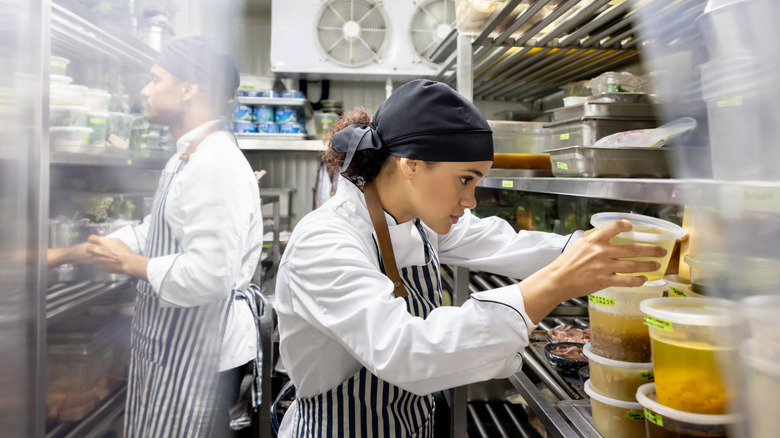
Storing raw meat next to ready-to-eat foods is hardly the only way cross contamination can occur in a kitchen, unfortunately. In fact, there are lots of common meat handling safety mistakes. However, most states require training for foodservice workers to prevent risks in commercial kitchens, covering everything from sanitizing cutting boards and tools between tasks to enforcing hand washing rules. For food storage, a big rule is to keep raw meat on lower shelves in refrigerators and walk-in coolers, while storing prepared, ready-to-eat foods on higher shelves. This prevents contamination from liquid possibly dripping down onto foods that won't be cooked before serving. While it's arguably not as easy to cross contaminate foods stored on the same shelf, it's still possible if raw juices spill onto the shelf itself or hands touch multiple items (like a busy line cook searching for a container).
Cross contamination isn't just a problem in restaurants, of course, but we don't get visits from health inspectors at our homes. Food safety is just as important on a smaller scale, so it's smart to adopt some of the same habits at home that commercial cooks use so your family doesn't get sick. Always store raw meat on the bottom shelf of your home refrigerator, away from prepared foods like sandwiches and leftovers, and it'll go a long way toward preventing harmful bacteria from spreading.