

The Cooking Error Giving You Tough, Flavorless Chicken Thighs (And How To Avoid It)
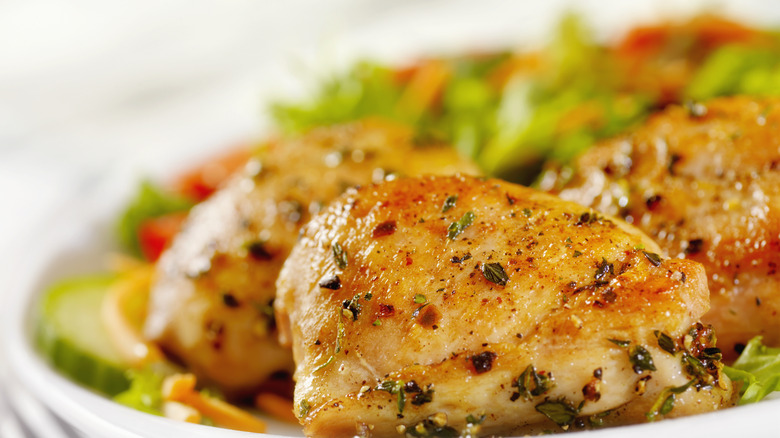
Though chicken is one of the most popular proteins in the United States, it has an unfairly bad reputation when it comes to texture. Sure, chicken breasts can dry out fairly quickly, but that just means you have the opportunity to learn how to grill chicken breasts to keep them moist and juicy. However, chicken thighs and other dark meat cuts are higher in fat than the breasts, which practically guarantees a deliciously tender bite. Some even claim that it's almost impossible to overcook them — but the sad truth is that there's one mistake you can make that will dry chicken thighs out every time.
Unlike chicken breasts, which should be seared quickly and rested to retain their juices, chicken thighs should almost never be exposed to direct heat. Pan searing or grilling chicken thighs over high heat is a good way to melt all that lush fat and cause it to drain away, leaving nothing behind but dry, hard meat that's difficult to chew and has very little flavor. Instead, it's best to stick to dishes like honey soy marinated baked chicken thighs — not necessarily because they're marinated, but because they're baked.
Low-and-slow cooking methods like gentle oven roasting, braising, and grilling over the cool side of the fire are perfect for chicken thighs, since cooking them for longer means more time for all the flavorful fat to melt. Meanwhile, the lower cooking temperature helps keep the meat from seizing up and squeezing all the moisture out.
Techniques for developing moist, juicy chicken thighs
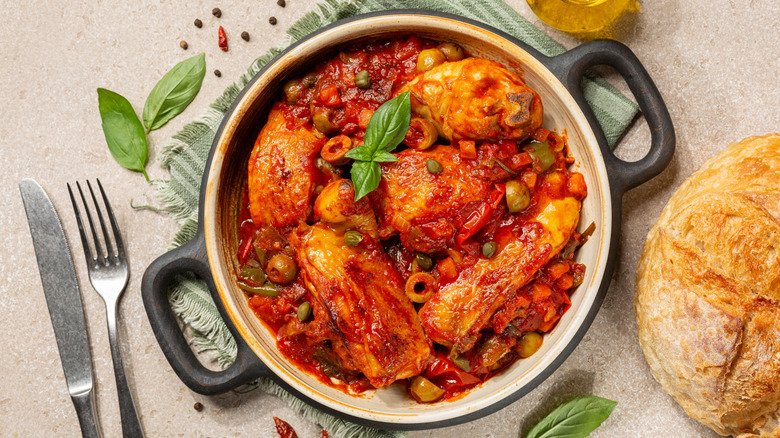
Understanding the higher fat content of chicken thighs is the key to cooking them properly. Long, slow cooking times that would turn chicken breasts to dust, unless they're draped in cream-of-something soup, turn thighs delectably tender and perfect for shredding into chicken adobado street tacos or serving alongside buttery mashed potatoes. For this reason, it's perfectly okay to cook chicken thighs past the general guideline of 165 degrees Fahrenheit, allowing them to work their magic in an uncovered baking dish with very little extra moisture for up to 45 minutes.
Of course, it's also perfectly okay to braise them in a thick sauce or deeply seasoned jus, especially since braising leaves the top of the meat exposed to develop a bit of a crust. In fact, chicken thighs are usually the star protein in chicken cacciatore because they can handle the long, slow cooking times this flavorful braised stew requires. You might even try your hand at making a chicken-centered pot roast-style dish or reframe chicken pot pie as a braised dish, served with biscuits on the side rather than stacked on top.
The only potential problem with using these methods to cook chicken thighs is that none of them are good at creating a crispy skin. Fortunately, if you understand how to reverse sear a prime rib, you can do the same to chicken thighs by searing the skin after they're fully cooked, or simply brush them with oil and crisp them under the broiler.