

The Reason Scrambled Eggs Always Taste So Much Better At A Restaurant
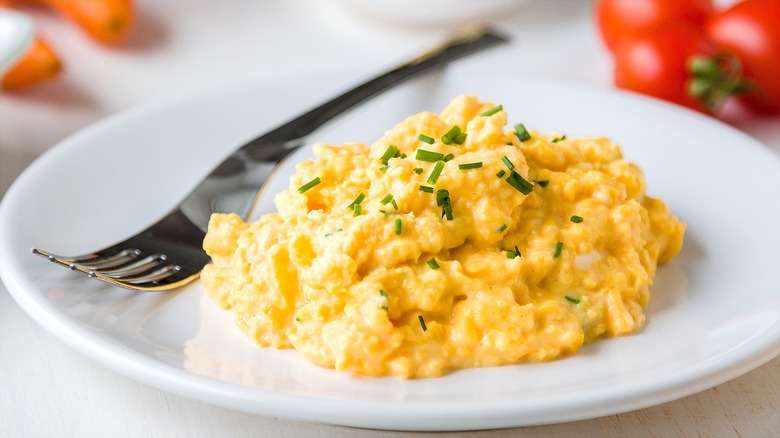
For many foodies, breakfast is the most rewarding meal of the day. Yet, you may avoid cooking scrambled eggs at home because they don't match the soft and tender eggs served at your favorite restaurant. Fortunately though, if you're hoping to unveil the most coveted secrets for making the best scrambled eggs at home, Chowhound secured advice on the subject from two separate culinary experts: Kory DePaola, the executive chef at Toasty Badger (@toastybadgeratx on Instagram), and James Junge, the culinary director at Urban Egg (@urbanegg on Instagram and TikTok). Both DePaola and Junge agree that scrambled eggs taste better in restaurants because they're made to order, cooked to perfection, and seasoned with care.
More specifically, when it comes to the cooking process, beyond excessively whipping your eggs in a separate bowl, cooking them in butter is necessary for top-notch flavor. According to DePaola, "Butter adds a richness and slightly sweet, nutty note that oil just can't compete with." He also recommends seasoning scrambled eggs more than once and serving them with a touch of flaky salt. Another crucial factor in making restaurant-style scrambled eggs is using the right cooking temperature.
DePaola and Junge agree that cooking eggs with low and slow heat produces the best results. Junge explains, "Lower, steadier heat gives you time to develop soft curds without drying them out." However, cooking scrambled eggs with the right amount of heat is only part of the equation. In order to achieve restaurant-worthy results every single time, avoid over-cooking scrambled eggs at all costs.
More tips for preparing restaurant-style scrambled eggs at home
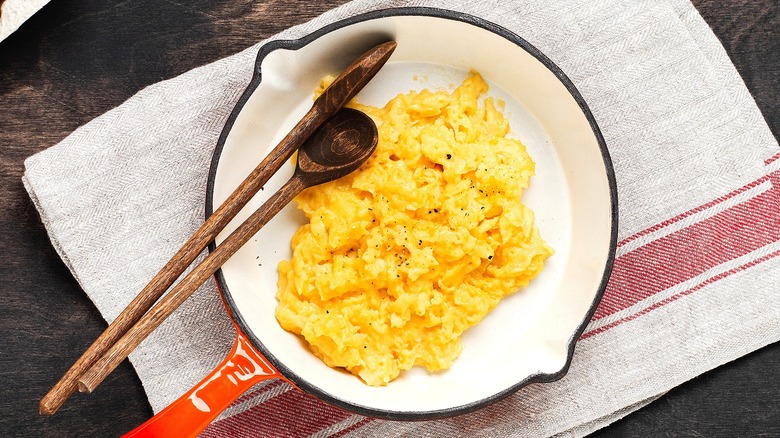
Culinary experts Kory DePaola and James Junge claim the biggest difference between eggs prepared in restaurants versus eggs prepared at home is their overall cooking time. Instead of waiting for your eggs to completely firm up while cooking, you're guaranteed to see better results when you pull them off the heat while they're still soft. However, this doesn't mean you'll be sitting down to a plate of runny eggs for breakfast. Surprisingly, eggs continue cooking even after they're removed from heat. DePaola suggests allowing your eggs to finish cooking directly in the pan after moving it off the stovetop or on your plate before digging in.
Once you master this delicate cooking process, feel free to add unconventional ingredients to your scrambled eggs for extra flavor. For an extra salty bite, try mixing in some sardines or capers. Or, make your next batch of scrambled eggs extra creamy with a small amount of ricotta cheese. As a matter of fact, Gordon Ramsay's foolproof technique for fluffy scrambled eggs includes constant stirring plus a dollop of sour cream or crème fraiche.
That being said, Junge specifically recommends adding dairy to scrambled eggs when you want a creamier end result. "When it comes to dairy, milk or cream is all about texture," he says. "The more you add, the more tender and luxurious the egg clouds become." However, if all you're after is a bangin' pan of flavorful scrambled eggs, all you need is a good amount of butter, precision, and timeliness while cooking for the best results.