

The Best Way To Shop For Shrimp Is To Ignore Their Labels
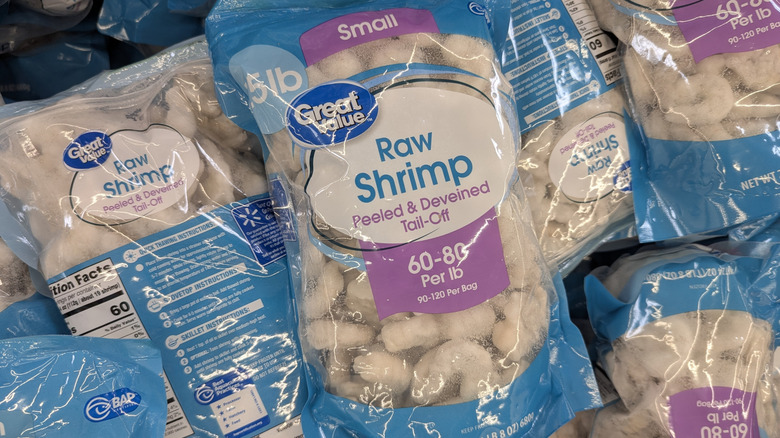
Shopping for shrimp at the grocery store can be unnecessarily confusing. Blame the producers, but there is a lot of different information printed on every package, from wild caught to farm raised, pink or white, peeled, deveined, and even EZ-peel. That's not even touching the size labels, which can vary from cocktail to jumbo, and those designations don't always mean much. One way to cut through all the noise is to ignore most of those sizing terms and choose shrimp by the count per pound, which is far more consistent.
If you're not a regular shrimp shopper, you may have never noticed the count-per-pound number, but it's usually printed on the front of every package and looks like a fraction. That fraction tells you roughly how many shrimp of that size make up a pound, for instance, 16/20 means that 16 to 20 of those shrimp will weigh one pound. There are several different count-per-pound ranges, and unless you're a chef or eat shrimp all the time, it's not especially important to memorize them. The basic concept to remember is simple: the smaller the number in that fraction, the larger the shrimp. This will help you make a much more informed decision when it's time to shop, especially when comparing the value between packages.
Shrimp size and cooking method go hand in hand
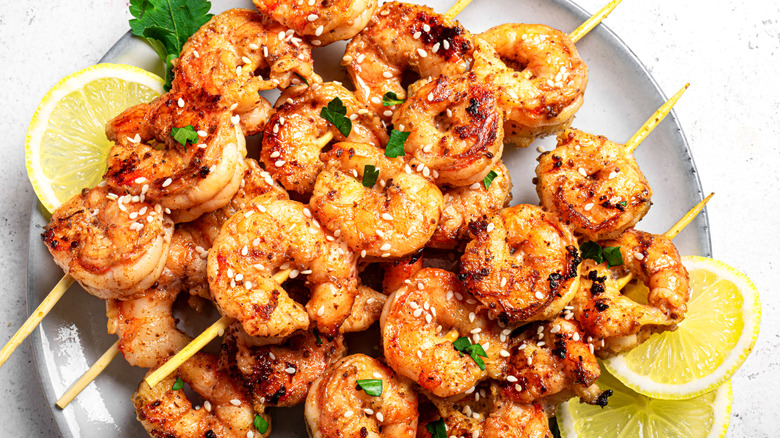
Once you have an understanding of how shrimp size works, choosing the right fish for your dish comes down to how the shrimp will be used. Big shrimp are best used for recipes that call for searing, grilling (just be sure to skewer), and making baked stuffed scampi, because their large size will prevent them from overcooking. Smaller shrimp, which cook faster, work for quick-cooked dishes like salads, fried rice, or grilled shrimp tacos.
Choosing shrimp by size also makes a big difference in the price. Larger shrimp with lower count-per-pound numbers are typically more expensive. Keep in mind that you're also getting fewer shrimp in the package, which makes the cost per shrimp pretty high, so save the big guns for dishes where the shrimp is the main event. Smaller shrimp, even those just a size down, usually cost less per pound and are often a better value. If the size of the shrimp isn't all that important, especially for recipes where shrimp is mixed with other ingredients like pasta or vegetables, the smaller size is almost always a better choice and can actually make the dish look more abundant since there are more pieces in each bite.
Once you learn to shop by the count-per-pound system, you'll remove a lot of the guesswork when it's time to shop. You'll also intuitively begin to gravitate toward the right size shrimp for each recipe, and get a better value for your money.