

Don't Throw Out Your Fish Bones. Use Them To Make This Pantry Staple Instead
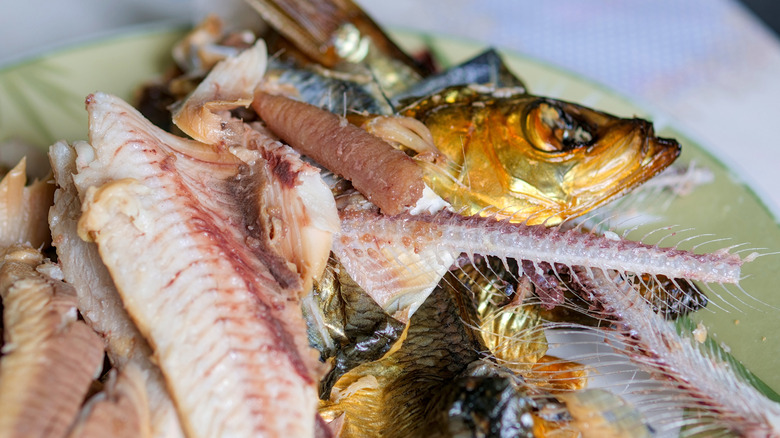
Chefs are big fans of bones. They do a lot more for us than you might think, from adding collagen to soups for a luxurious mouthfeel to insulating meat from the searing heat of the grill to help prevent overcooking. Of course, they're packed full of flavor, too. If you're a keen cook, you've probably roasted them to make stock at one point or another. But, while our love of bones runs deep, chefs are almost always talking about big, hearty bones taken from beef or chicken. Fish bones don't get anywhere near as much love, which is a shame. They're equally useful when used in the right way. Making delicious fish bone salt, for example.
If you're not familiar with fish bone salt, it's an intensely savory seasoning with a surprisingly clean finish. Fish salt takes a little effort, sure, but it's well worth it. You're left with a versatile, shelf-stable ingredient that's packed with umami without being overpowering. Plus, it's free! A great substitute for ingredients such as bottarga or furikake, but with a slightly subtler palate, fish bone salt makes for an awesome savory foundation for seasoning a dish — plus it's an excellent source of omega-3 fatty acids. You can use it on just about anything, from finishing fish dishes to seasoning sushi rice to mixing into a simple homemade compound butter. You could even shake it over your popcorn for a fun snack or as an easy amuse-bouche at a dinner party.
How to make fish bone salt

The process of making fish bone salt is a little time consuming, but very easy once you know what you're doing. For the best flavor, use the freshest bones possible, so make your salt immediately after you finish with your fish. Start by cleaning your bones. You essentially dehydrate them during the process, so you don't want any goop or flesh left on them, which could turn a little funky and affect the flavor. Give your bones a good scrape with a paring knife to remove the aforementioned unpleasantness, then quickly blanch them for a minute or so in boiling water for an even cleaner flavor. Boil the bones longer if necessary to remove any lingering pieces of flesh, then dry them thoroughly.
You really want to avoid moisture here, so pat them dry with a paper towel and begin dehydrating them. You have a couple options here: The simplest is to leave them out in your kitchen on a dish, uncovered, for a day or two. If you're in a hurry, though, you can always use your oven. Set it to a low heat (around 150 degrees Fahrenheit) and spread your fish bones on a lined baking sheet before placing them in the oven for around an hour. When they're brittle and fully dry, they're ready to go. For an even richer flavor profile, you could roast them until golden. Once dehydrated, it's as simple as grinding the bones in a spice grinder or mortar and pestle (or a blender if you don't have one), mixing them with some salt, and you're good to go!