

5 Fast Food Chains That Dominated The 1970s
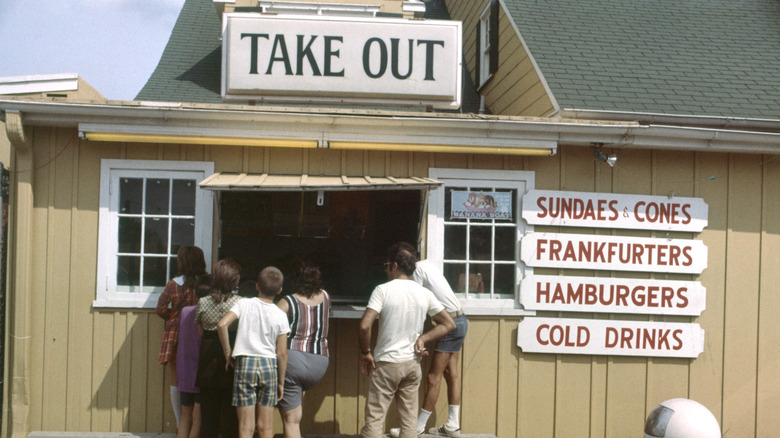
Fast food is such a fundamental part of food culture in the United States that it's almost impossible to imagine a time where there wasn't a pair of Golden Arches on every street corner. But the integration of fast food into the wider cultural conscience is perhaps a more recent phenomenon than you might realize. Indeed, it was only in the 1970s that fast food stopped being just a convenient way to grab a quick bite on the road and became one of the country's most famed culinary traditions — the stuff of family meals, friends' hangouts, and teenage date nights.
The suburban expansion of the post-war period, together with an increase in dual-income households and a surge in car ownership made quick, drive-thru meals an attractive proposition to the average American family. By the early 1970s, rapid expansion turned a few fast-food giants into global icons, as they made quick, consistent, and satisfying food available from coast to coast. The diversity of the products was changing too — gone were the days where the only thing you could get at a drive-thru was a hamburger. Now, Mexican, Italian, and Chinese food entered the fray, as well as modern fast-food staples like fried chicken. Through the 1970s, five fast-food powerhouses changed the landscape forever.
McDonald's rapidly expands
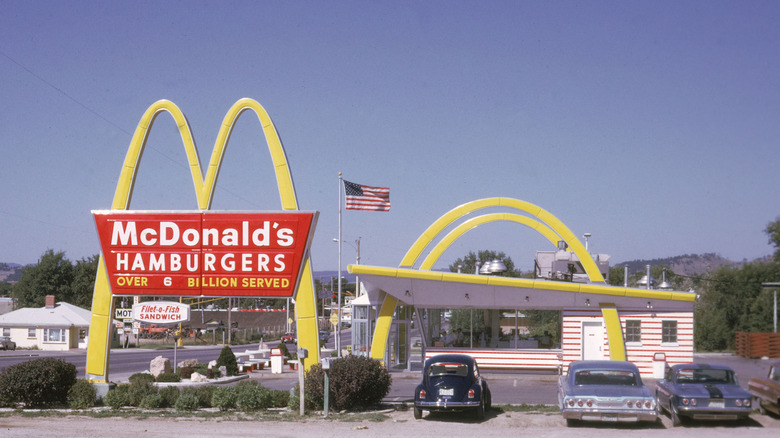
When it comes to fast-food chains, there's McDonald's, and then there's everyone else. By the 1970s, the fast-food powerhouse had already sold billions of hamburgers to hungry Americans, and the decade continued to bring rapid expansion, with franchises opening up nationwide, the first McDonald's restaurant breaking ground outside North America, and the rise of McDonaldLand. In the early years of the decade, franchises started to trial various breakfast options and in 1971, a man by the name of Herb Peterson invented the now iconic McMuffin. This, in turn, led to the nationwide introduction of a breakfast menu in 1977, including the aforementioned breakfast sandwich, hotcakes, pastries, and hash browns.
Drive-thru service also became a staple of the restaurant's offering in the 1970s, as car culture boomed. The signature Golden Arches went from a piece of clever marketing to a universally recognized symbol of satisfaction, and marketing initiatives branded McDonald's as a family friendly, reliable, and convenient option with the introduction of the Happy Meal in 1979. By the end of the decade, the company had set a blueprint for fast food domination, setting an industry-wide precedent for pricing, expansion, and consistency.
Pizza Hut becomes America's favorite pizza chain
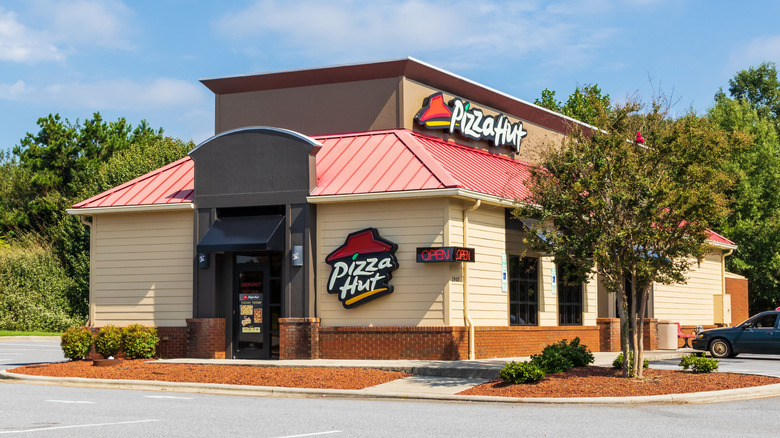
In Wichita, Kansas, in 1958, brothers Dan and Frank Carney borrowed $600 from their mother and opened a pizza restaurant. Thanks to a rapid period of franchising throughout the 1960s, alongside the introduction of the instantly recognizable red-roof design, the chain became the world's most popular pizza chain by 1971.
For many families, the iconic red roof became a symbol of a fun, casual night out: It was more of a dine-in destination than other fast-food spots (perhaps because it was, by nature, a little less fast), and it became a go-to for kids' birthdays, as well as celebratory meals. In contrast to the dominant drive-thru burger chains like McDonald's, Pizza Hut put the emphasis on sit-down dining, table service, and big, family-style plates: Think pitchers of soda and shareable pies. Pizza consumption skyrocketed in the United States in the 1970s and Pizza Hut represented an accessible, affordable entry point for a food that was, for a lot of people, still a relatively new experience.
Burger King was hot on McDonald's heels
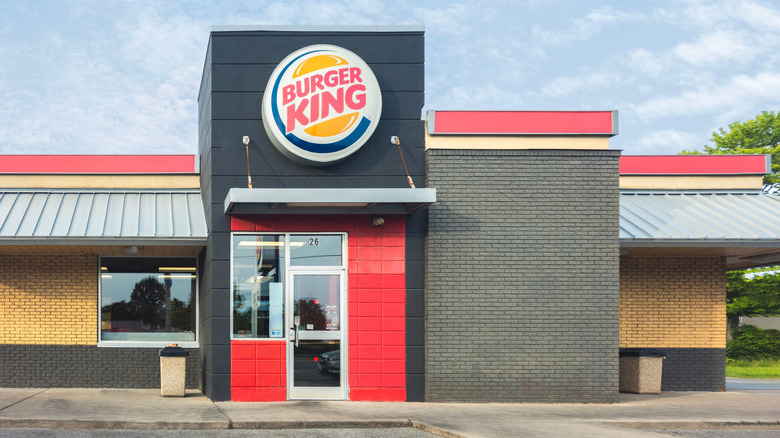
Much like its (golden) archrival, McDonald's, Burger King entered the 1970s already well-established as a fast-food icon, with more than 250 restaurants having opened by the late 1960s, and rapid franchising strategies speeding up domestic and international growth. Though it was introduced over a decade earlier in 1957, the Whopper continued to hold space as a legendary burger during the 1970s, as the King's marketing strategy increasingly centered around its size, quality, and customizability thanks to the hugely successful "Have It Your Way" campaign, launched in 1974.
The classic flame-grilled aroma also set it apart from the rest — another 1950s innovation paying dividends. The secret to that signature Burger King taste is a flame broiler that is used to cook the burgers, rather than simply frying them on a flat top. The 1970s was a decade defined by huge growth: In 1970, the store had 350 locations, and by 1977, that number had grown to 2,000. The franchise continued to grow, ending the decade as a true fast-food powerhouse.
Burger Chef had its day — and then it didn't
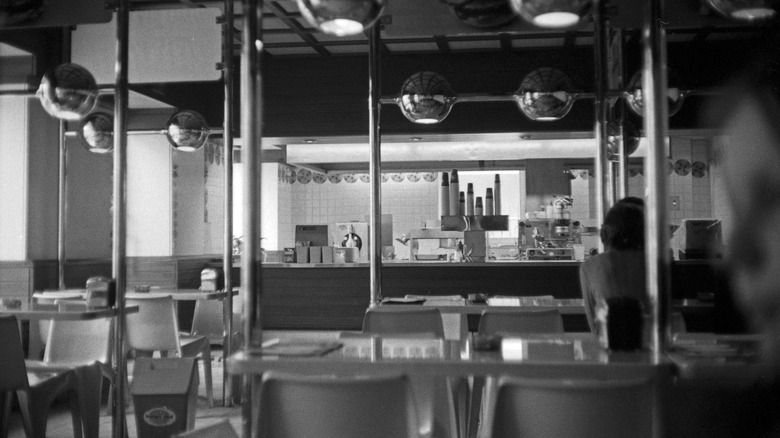
While the rest of the chains on this list remain household names, Burger Chef might be a little less familiar. It might sound like an off-brand alternative to Burger King, but in the 1970s, it was a big dog in the fast-food scene. In fact, in terms of numbers, it was bigger than Burger King.
Founded in the 1950s by Robert Wildman and brothers Frank and Donald Thomas, Burger Chef had over a thousand locations across the United States by the '70s, a number surpassed only by McDonald's — and not by much! It offered a menu not all that different from its biggest competitor, albeit with the "works bar" — a condiment bar where customers could customize their burgers with condiments of their choice.
In the early '70s, Burger Chef revealed the Fun Meal — a kid's meal that paired food and toys — a precursor to the Happy Meal. In fact, when McDonald's introduced that product in 1979, Burger Chef sued a couple of years later but lost, and by the end of the decade the chain was already in decline. Hardee's bought the chain in 1982, and before long, Burger Chef was consigned to the annals of history: fondly remembered by a few but long forgotten by most. Despite its untimely demise, though, the chain laid the groundwork for features considered standard today, including Burger King's signature flame broilers, which were patented and manufactured by Burger Chef.
Taco Bell brought Tex-Mex cooking mainstream
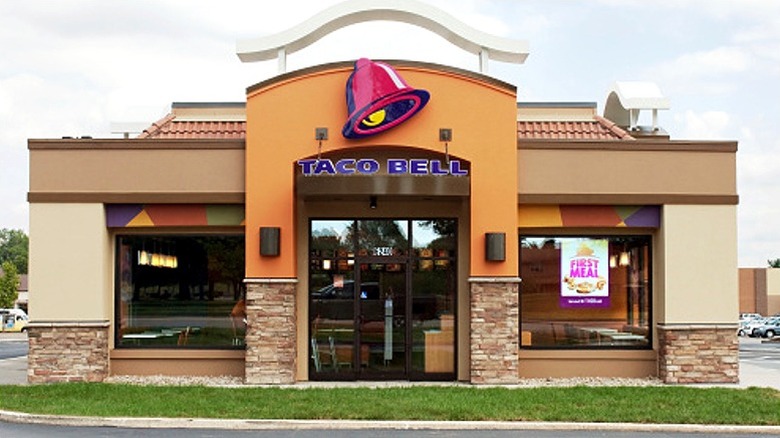
Taco Bell, founded by Glen Bell, exploded in popularity during the 1970s, beginning the decade with 325 locations and ending it with about five times that number. A low-cost buildout model meant expansion of the Tex-Mex takeout spot was fast, simple, and cheap. Meanwhile, a standardized menu across the chain (that while simple, was still satisfying and distinctive enough to earn Taco Bell a reputation) was enough to propel it to iconic status, competing with the likes of Burger King and Chi Chi's.
Bell was something of a shrewd businessman and he knew when to sell up. In 1978, PepsiCo bought the brand, which immediately injected the chain with a huge amount of money and a ready-made supply chain that positioned it to expand at an even faster rate, which helped it rise in popularity nationwide. Taco Bell was set apart by its menu, which offered something different from a typical fast-food burger — and importantly, at a very low price, making it a hit among students, kids, and young families alike.