

The Hot Pan, Cold Oil Method That Will Make Your Metal Pans Act Like Nonstick
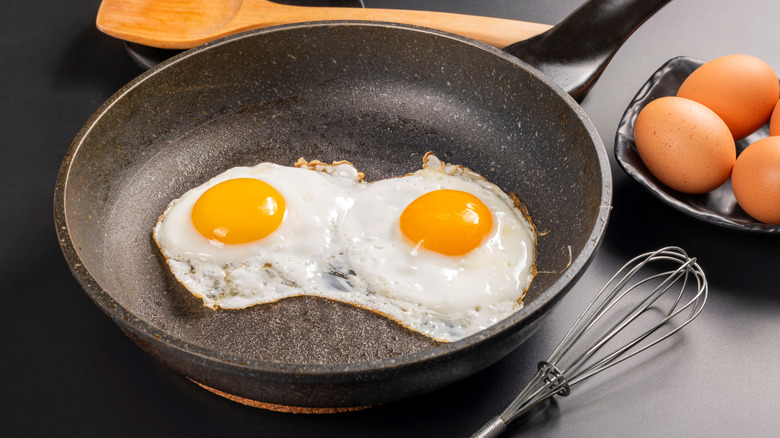
Whether you're partial to nonstick, cast iron, or stainless steel pans, even the most high-quality cookware can start behaving unpredictably over time. Or perhaps you wish your metal pans were just better suited for frying. The good news is there's a simple, technique-driven fix that doesn't involve going out and buying a new pan. Even your metal pans are up to the task with the right treatment. The wok-seasoning technique is called longyau and originates from China, and may be referred to as hot pan, cold oil. It is designed to keep food from sticking by temporarily creating a slick, nonstick surface on bare metal cookware and the process actually starts before you even get to frying.
The longyau or hot pan, cold oil approach kind of flips the usual advice on its head — instead of the typical order of operations where you heat oil in a pan and then start frying, you actually get the pan really hot with oil until it just starts smoking, carefully discard the oil, and then add fresh cold oil right before cooking. At that point, adding oil creates a stable barrier between the pan and food, and it works even if you have a pan that's not considered nonstick.
Longyau is good for delicate foods like fried eggs
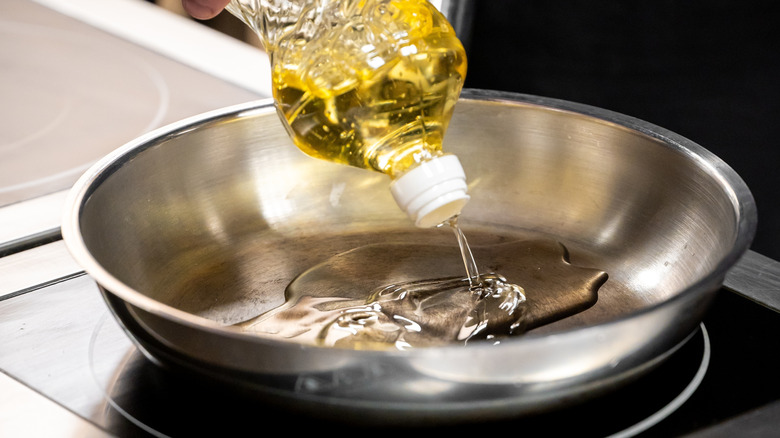
To make this method worth your while, use it to fry foods that tend to expose flaws in your pan, such as with fried eggs, tofu, or pancakes — foods that need a crispy exterior and clean release. Choose an oil with a high smoke point since the oil needs to get so hot it smokes before you discard it to add cold oil. Oils with lower smoke points, such as coconut or olive oil, may start smoking before reaching the desired temperature.
Then once the fresh oil is in the pan, lower the heat slightly, and add your food with confidence — you'll end up with a perfect fried egg with crisp edges every time, even on a pan that's been known to stick. The egg (or whatever you are frying) will set on contact as opposed to sticking to the cooler spots on the surface. Because the pan is already evenly heated, the egg's proteins coagulate quickly, which reduces the time they have to bond with the surface. This trick is similar to other methods claiming you should heat your pan dry before adding oil, but this method uses oil to make the pan extra hot.
It's also worth noting this isn't about overheating your pan — timing matters. The goal is to heat, reset, then cook efficiently. And when done correctly, the hot pan, cold oil method should extend the life of your nonstick cookware and restore the reliable performance you might have thought was gone for good.