

Smell, Taste, And ... Siwonhan-Mat? Another Way To Experience Food, Korean-Style
Japan gave the world umami and forever changed how we perceive and taste food. Considered the fifth primary taste, along with sweet, sour, salty, and bitter, umami is the savory depth you're looking for in your pasta dishes or that unmistakable complexity that makes your vegetable stock incredibly satisfying. But umami is not the only original food idea to come out of Asia. You see, there's also Korea's siwonhan-mat. However, this "third sense" concept, which traces its roots back to the 15th century, has less to do with the flavors that actually hit your taste buds and more to do with how the food affects your digestive system.
Eric Shin, founder and chief executive officer of SeoulSpice, a fast-casual chain that serves Korean comfort food, revealed in an exclusive conversation with Chowhound that siwonhan-mat is the sensation felt through your body (across your tongue, stomach, and gut) as the food breaks down. "It awakens the senses in an unexpected way, is a reset for your palate, and leaves you wanting more," Shin said. "It challenges your senses — you need to give it time to appreciate the subtlety and flavor."
"Koreans view siwonhan-mat as something that is comforting, refreshing, and encourages being present," Shin continued. While Western cultures tend to associate refreshment with cold, icy beverages, Koreans, in contrast, reach for savory and complex flavors. "There is more emphasis on invigoration and cleansing, not just flavor," Shin said. "It creates a soothing feeling that evokes that 'ahhh' feeling when something hits just right."
Siwonhan-mat feels different in summer and winter
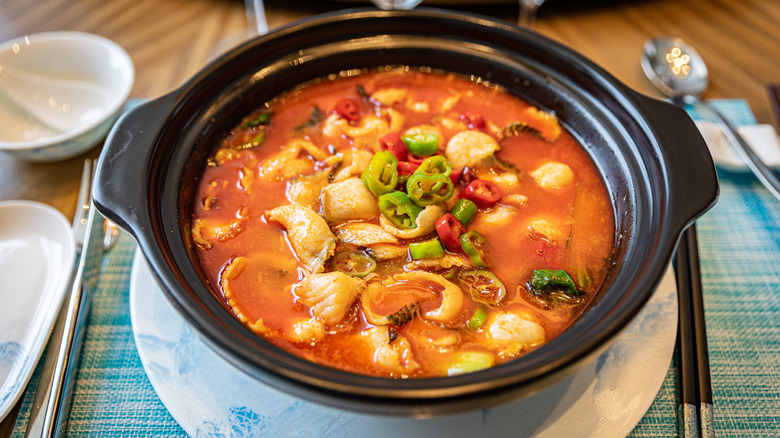
Siwonhan-mat stands out because it isn't linked to any specific dishes. It's rather about achieving seasonal balance in a particular recipe, which is why it can range from ice-cold soups to warm, comforting stews that can even help relieve hangover symptoms. "Siwonhat-mat is not limited to a certain season, temperature, or dish," Eric Shin stressed, adding that cravings and comfort change depending on the time of the year. "Siwonhat-mat is an emotional experience that almost balances your senses with the climate — like the coziness of something warm on a chilly day, and the refreshing feeling of something ice-cold on a hot afternoon."
On which dish best represents siwonhan-mat, Shin pointed to naengmyeon, a traditional cold noodle dish that originates from North Korea. "Naengmyeon is a quintessential siwonhan-mat dish," he pointed out. Served in a tangy, cold broth with long, chewy buckwheat noodles and topped with ingredients such as beef, fermented radish, or boiled eggs, naengmyeon is refreshing and incredibly delicious. "Another is kongguksu, a cold noodle soup in a creamy, refreshing, nutty broth," Shin added. "Both have a complexity that is equally surprising and beautiful."
When asked how people can recreate this "third sense" at home, Shin emphasized the importance of knowing which ingredients bring comfort and balance to a meal. He encouraged home cooks to think about what they can add to a dish that would build depth of flavor and naturally make them want to slow down and appreciate each bite. "Think of a soothing, refreshing feeling," Shin concluded.