

Here's How To Grow Your Own Pomegranate Tree Indoors
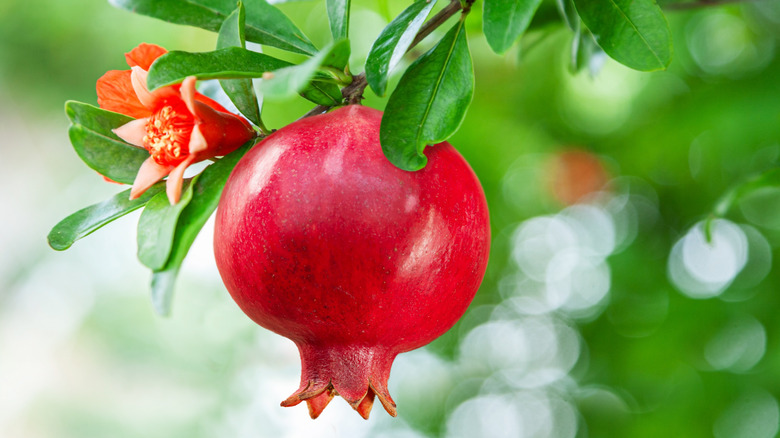
There are a number of benefits to growing your own food, from slashing your grocery bill to enjoying the freshest possible produce and interacting with nature. Of course, not everyone has even enough room to build a clever raised garden with spare patio chairs. However, if you have a sunny window and a little bit of determination, you can still cultivate a fairly productive garden. Many vegetables are easy to grow inside, as well as specific cultivars of warm-weather fruits, such as pomegranates.
While growing your own pomegranate tree indoors may seem like an intimidating project for beginner gardeners, it's really just a matter of efficient pruning and TLC. Native to the warm, dry climate of the Mediterranean, pomegranate trees typically thrive best with lots of direct sunlight and moist, well-drained soil. Though they can withstand temperatures as low as 10 degrees Fahrenheit in the winter, these trees prefer hot, dry climates, often bearing fruit in 80 degree summers. But if you keep your house at a reasonably warm temperature, you may even see it bloom year-round. Though it's important to note that these trees do not like humidity, so it may be best to invest in a dehumidifier or keep it in a drier area.
Since pomegranate trees planted outdoors can grow up to 12 feet tall, you'll also need to take specific steps to keep your indoor plant manageably short. First, it's important to choose a dwarf variety, such as the Provence, State Fair, Nana, or Red Silk. You'll also want to carefully prune your tree to keep it short to help redirect the plant's energy into producing fruit rather than branches and leaves.
Do's and don'ts of cultivating a healthy pomegranate tree indoors
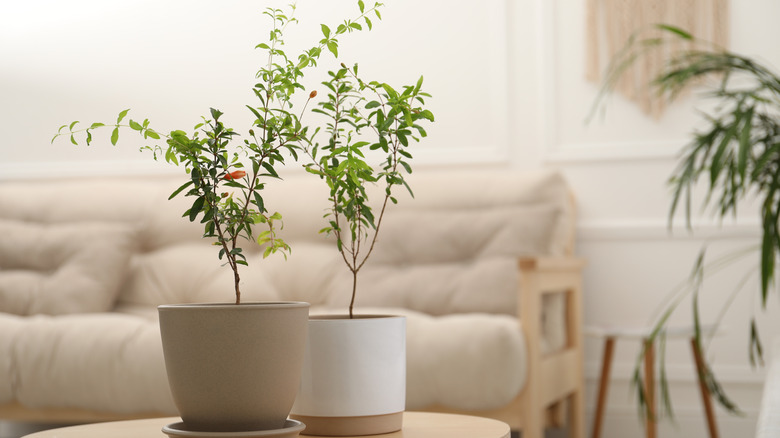
Especially if you're a newbie to indoor gardening, experts suggest starting your pomegranate tree by cutting or purchasing an established sapling. Not only are they both easier to care for, but they'll also produce fruit much sooner than attempting to grow your tree from a seed. In either case, your tree will need a nice, big pot (about the size of a wine barrel) filled with loamy, acidic soil well-mixed with perlite and pebbles. This ensures the soil remains light, airy, and drains easily, as pomegranate trees can't tolerate soaked roots.
If growing from a cutting, keep your little tree in indirect light and cover with a tent of cling wrap held up by skewers or a plastic bottle with the bottom cut out. Once it roots, gradually move it into direct sunlight, as pomegranate trees prefer slow transitions. Water the tree only when the top layer of soil feels dry to the touch — but don't wait until it's crumbly and cracking, or your tree may become stunted or die from stress.
Something else to keep in mind is that pomegranate trees in the wild rely on bees and other pollinators to produce fruit from their flowers. So, much like growing sweet strawberries indoors, you'll need to pollinate your tree's flowers by hand. Use a very soft, natural-bristle paint brush to transfer pollen from the male flowers to the female flowers, which are recognizable by the round, bulbous base beneath their petals.