

Give Your Kitchen The Illusion Of More Space Using Cabinet Pediments
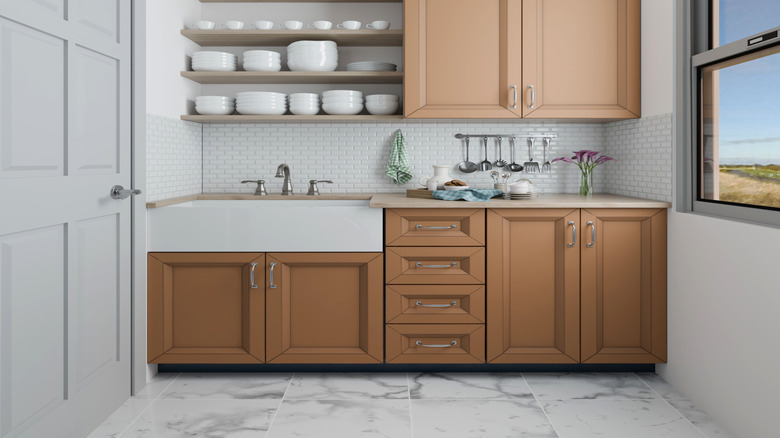
Just because your kitchen is smaller than you'd like doesn't mean it can't be stylish, functional, and feel spacious and cozy at the same time. While there are certainly practical steps you can take to save room, such as installing half-depth kitchen cabinets for safer walkways, there are also several visual tricks to create the illusion of more space. One clever way to do this is to avoid having dark upper kitchen cabinets since the dark colors can feel oppressive and make your kitchen feel cramped. You can also try adding pediments to the tops of your cabinets to draw the eye upward, toward the ceiling, rather than stopping at the dead space just above the cabinets. Additionally, pediments are generally decorative, so they also add visual interest to your kitchen without taking up valuable room — especially since most standard kitchen cabinets don't stretch all the way up to the ceiling.
Even if you've never heard the word "pediment" before, it's very likely you've seen them without knowing what they were called. Pediments are essentially fancy sections of crown molding that were originally meant to display the crests or symbols of important families. Eventually, they became solely decorative. They're usually made of wood and feature carved flowers, scrollwork, or stately slanted moldings framing a central decoration, such as a fleur-de-lis, pineapple, or a decorative keyhole-style opening. They're usually painted or stained the same color as your cabinets, blending into them to create a tidy, uniform look.
Choosing the right pediments for your predicament
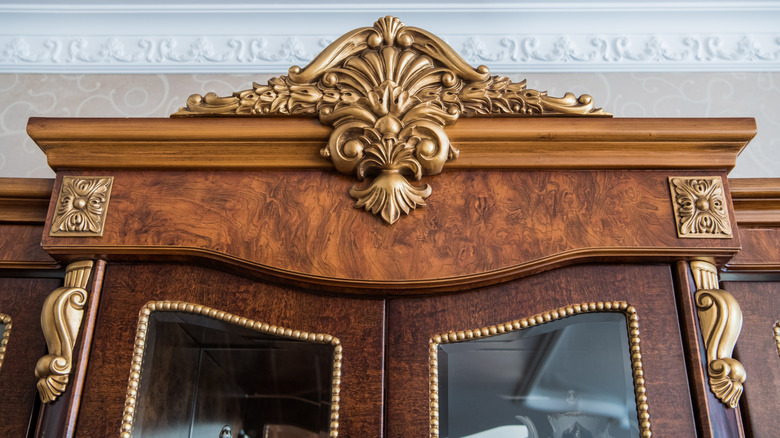
Like every other decor choice in your kitchen, not all pediments are suited for all aesthetics or styles of cabinet. For instance, if your cabinets feature an old-school, mid-century modern design complete with sleek hardware and cheerful pastels, you may want to skip pediments with lots of complicated frills and florals. Instead, look for more understated pieces with geometric designs, such as simple triangular toppers lined with a touch of decorative trim. If you'd like something a touch more whimsical, look for pediments with scrolled edges and flat fronts, which add visual interest without feeling out of place.
There's also the risk of pediments feeling overbearing, similar to having dark upper cabinets. This is usually a problem when the pediment style is complicated and overworked, with lots of intricate carving and details that can't really be seen from the floor. Even if you're a hardcore cottagecore fan whose dream is to essentially live in a Hobbit hole, it's always best to choose a slightly more pared down design. Think a single flowery vine that's easy to follow with the eye — and easy to clean with an extendable dusting wand.
It's also important to consider other elements in your kitchen when choosing pediments. If your space is full of natural textures and botanical wallpaper, then pediments with carved ivy and blooming roses work perfectly. However, simpler designs work better with sleek, modern spaces, and are more versatile when you decide to redecorate.