

Why You Should Avoid Buying Peeled Garlic From The Grocery Store
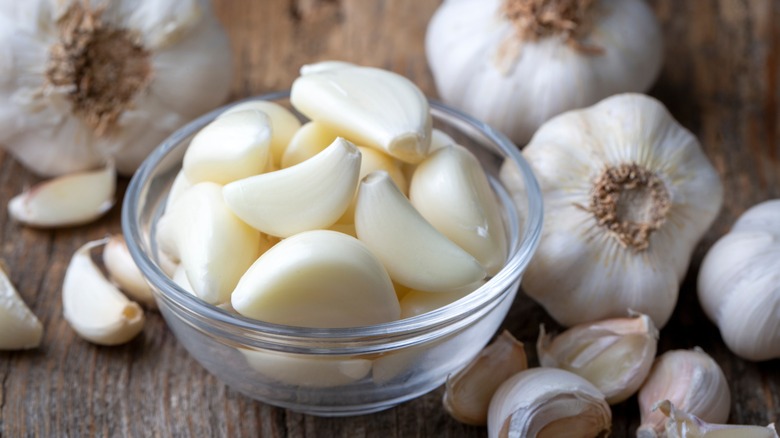
Whether slathered on ultra-flavorful garlic bread or stirred into a deliciously simple aglio e olio on those nights you just don't want to cook, garlic seems to go into just about every meal we make. But it's such a sticky, stinky pain to peel, especially when you need several cloves at a time. That can make those bags of seemingly endless peeled garlic look like the perfect solution to your kitchen trouble.
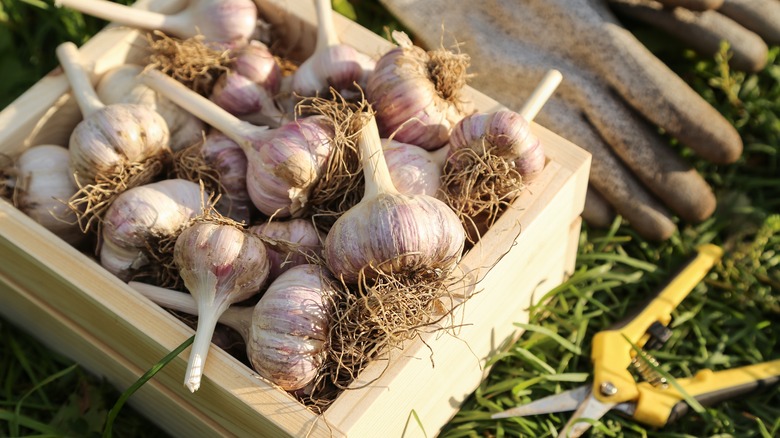
However, this convenience comes at the cost of a shorter lifespan compared to the unpeeled kind. Garlic's skin helps regulate respiration and slows down the natural metabolic processes that continue for weeks after it's harvested. It also acts as a natural barrier, protecting the cloves from oxygen, moisture, and microorganisms. Removing the clove's outer layer exposes it to these environmental factors, making it more vulnerable to spoilage. That means that compared to unpeeled garlic, which can last for almost six months when stored in a cool, dry place (the best way to store garlic), a peeled garlic clove must be stored in the fridge and even then, only lasts about a week.
Peeled garlic's shorter lifespan has ramifications beyond the amount of time you have to use it. Firstly, it's a lot more expensive for what ultimately turns out to be an inferior product. It's often up to three times more expensive per ounce than unpeeled garlic. And in exchange for that, you get less flavor for your meals. That's because the peeling method matters when it comes to garlic flavor.
Manufacturers are really rough when they're peeling your garlic — why that's bad
Crushing the cloves can damage garlic's cell walls, which promotes the rapid release of a sulfur compound called allicin, increasing the release of other volatile bitter compounds by 40%. While allicin gives garlic its pungent aroma, it's highly unstable, breaking down within minutes. Nearly a third of garlic's aromatic compounds are lost within a day of peeling.
That's probably not a huge deal at home. But the machines manufacturers use to peel garlic use rubber rollers (called "crackers") to break apart the heads. Then, they get spun at 1,200 revolutions per minute while being blasted with compressed air to remove the skins before bagging. That makes machine-peeled garlic milder. Peeling by hand or with a knife is gentle by comparison, especially if you use it immediately after peeling. But it doesn't end there. That bag is part of the problem. That's because any kind of moisture, including the natural moisture released by the clove, combined with heat and lack of airflow can make garlic go bad faster. Manufacturers have ways to slow spoilage involving vacuum sealing and gases that replace oxygen to increase the garlic's shelf life, but once you open the bag, the clock starts.
And all that can be avoided if you just leave the garlic heads and cloves intact until you need them. So just a few extra minutes of prep time can actually provide fresher, more flavorful and longer-lasting garlic in the long run. That said, if you've bought pre-peeled garlic or peeled too much at home, refrigerating it is your best choice. Peeled garlic can last as long as 10 days in the fridge when sealed in airtight containers below 40 degrees Fahrenheit. You can also safely freeze garlic for up to a year.