

How Grocery Store Facial Recognition In China Turned Into The 'Smile To Pay' Concept
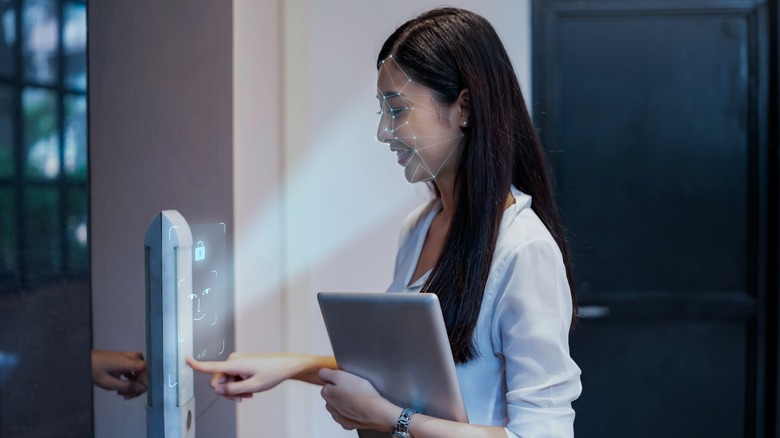
It's super convenient to use your phone to check out at the grocery store, and it's tough to imagine that as recently as a decade ago the idea of checking out without your wallet seemed like a far-off futuristic concept. From online grocery shopping options that may be more pricey to smart carts that add up your bill as you shop, there's no way around it — grocery shopping is undergoing some serious evolution. Turns out, China has embraced a new form of technology that takes the ease of the checkout process to the next level. Smile-to-pay facial recognition allows customers to simply stand in front of a screen that recognizes their face (much like the face ID feature that works on most mobile phones now). This means that shoppers don't need to bring anything to the store with them to pay — after their facial recognition data has been saved, their face is as good as gold (literally).
Shoppers say that the system eliminates checkout lines, as faces are scanned when they walk into the store to pick up their groceries, and then scanned again when they check out. The checkout scanning device looks similar to an iPad — customers click the "pay with face recognition" option, their face is scanned, and they receive confirmation that their payment has been processed. While some feel that using the system protects their privacy (as they don't need to enter a card PIN during the payment process), others disagree. Some fear that sharing their facial data with large companies could result in unwanted tracking. Their nervousness is understandable, as a 2019 database leak revealed that China's government was using a facial recognition system that took nearly 7 million surveillance images and videos of citizens in a day (via CNET).
How shoppers feel about smile-to-pay technology
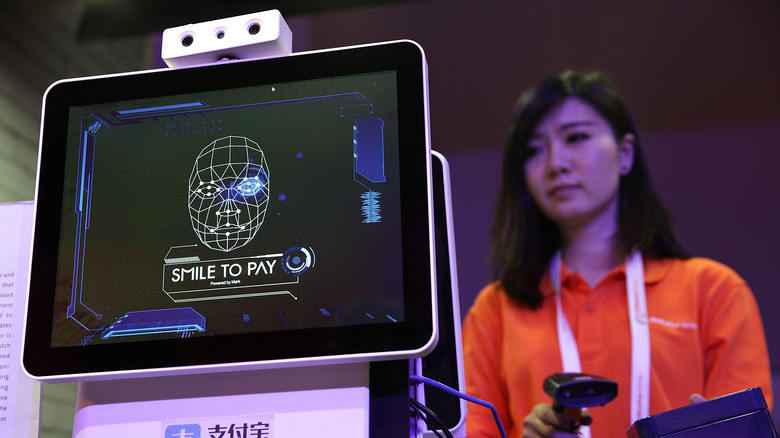
Smile-to-pay technology is shockingly simple. The first time a customer wants to use a smile-to-pay system, they're required to enter their phone number to link their face with their bank account. For future transactions, they simply need to look at the screen and tap a button to confirm their payment. It's a much faster system than standard self-checkouts (which are slowed down even further when shoppers don't follow self-checkout etiquette).
While smile-to-pay systems are becoming more and more commonplace in China, shoppers have mixed reactions to the service. A study published in 2020 by the Nielsen Norman Group showed that while users felt smile-to-pay was convenient, they still felt like the interaction was a bit unsettling — it was almost too simple. That being said, it's estimated that about a third of the Chinese population used the technology in 2021, and that number is growing. While smile-to-pay technology hasn't become widespread in the U.S., you may begin to see the option at checkouts in the near future. In 2024, face ID payment systems began to roll out for testing throughout the United States. Consumer reactions were similar to those when the tech first rolled out in China — people felt that it was invasive and a little too simple for comfort. Remember, if smile-to-pay technology pops up at your favorite grocery store, you don't have you to use it — it's totally okay to stick to the payment method you feel comfortable with.