

Why You Should Never Put Leftovers In A Plastic Container Like This
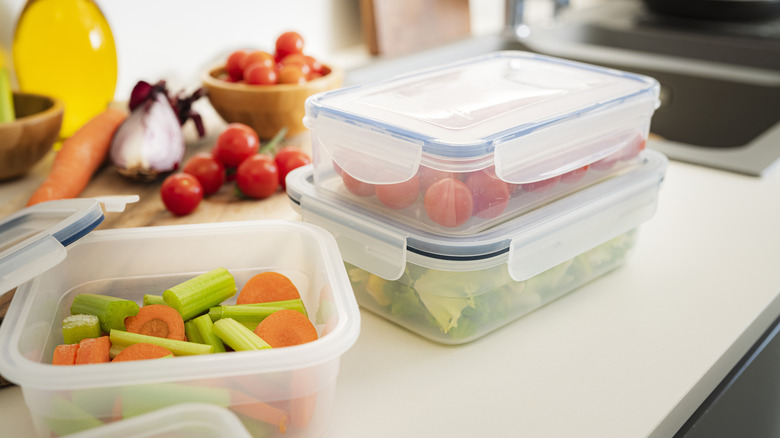
It goes without saying one of the perks of having leftovers is knowing you have a snack or small meal that is ready to go in a pinch. Repurposing leftovers and making savvy culinary creations ought to be among the best ways to reduce food waste. It not only allows for creativity but also helps keep your kitchen as planet friendly as possible. But before you decide to use plastic takeout boxes or sturdy Tupperware containers to store your leftovers, hold that thought because there is one key factor to consider, and that is the temperature of the food. This is because when plastic is exposed to extreme elements, which includes high temperature, it starts to release harmful chemicals, including microplastics, that can leach into your food. Depending on the quality and durability of the plastic, the temperature that triggers this unwelcome onset varies.
This is one of the reasons why you may want to consider ditching your plastic food storage containers altogether. However, if you end up with your takeout order or leftovers packed in a plastic container, reusing them is a smarter alternative to using plastic wrap to store food, and it helps minimize waste. That said, it's worth reiterating that storing hot food in plastic is a default "no!" Let the food cool down before safely storing your prized leftovers for later.
Safe ways to store leftovers in plastic containers
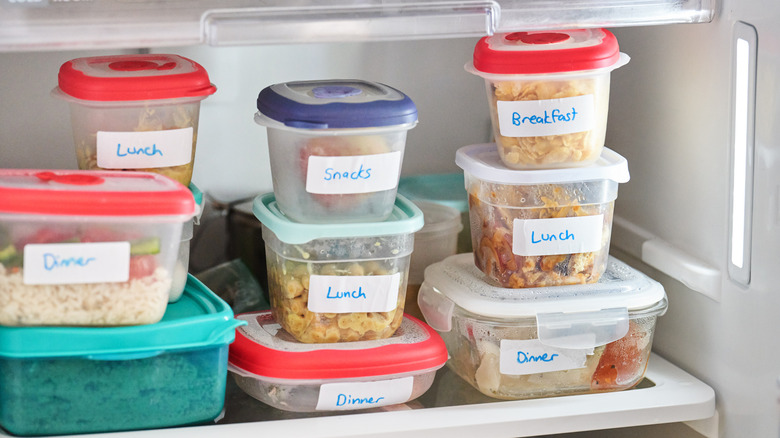
There are certain things to keep in mind when storing leftover food safely, especially in plastic containers. Prioritize storing your food in certified, food-grade containers, and if you're able to, transfer leftovers from your takeout boxes into these food-safe boxes before refrigerating them. It's important to use airtight containers, which have a sealing mechanism that helps mitigate unwanted microbial growth, keeping these spoiling agents at bay. If you have a large batch of food, it will take a considerable amount of time for it to cool down before you can safely store it in the refrigerator. In this case, portion out large batches into smaller portions to accelerate cooling. Once cooled, you can safely store your leftovers in the fridge.
But regardless of the container's material, you want to let the food cool down sufficiently before you pack and refrigerate it. This is because excess heat from your leftovers can affect the functionality of your refrigerator by increasing the temperature inside. Not only will this negatively affect the quality of other consumables in the fridge, but it will also overwork the fridge's compressor, which can cause serious damage and as a result, could necessitate expensive repairs or even total replacement. However, bear in mind safe storage does not mean infinite lifespan; finish up your leftovers sooner rather than later to avoid food waste and minimize putting your health at risk with food that may have passed its prime.