

This Old-School Cast Iron Refurbishing Method Will Give Your Thrifted Cookware New Life
We may receive a commission on purchases made from links.
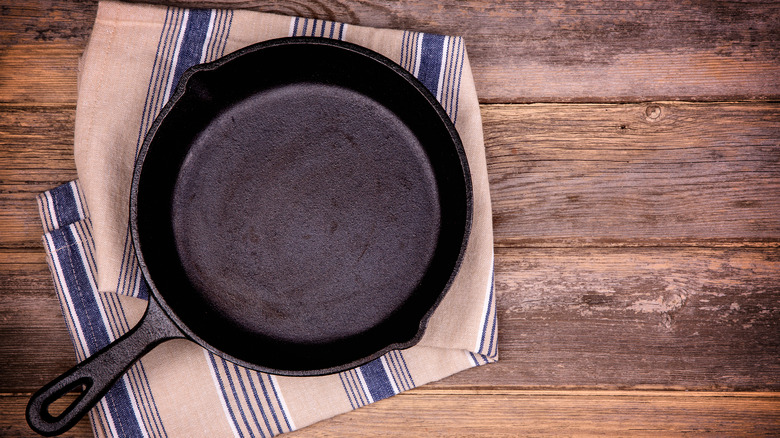
It's hard to name a piece of cookware that can stand the test of time like a good cast iron skillet. A well-cared-for cast iron is excellent for frying everything from proteins to pancakes, while imparting some health benefits straight into your food. It also adds rustic charm to your kitchen and can last lifetimes.
Emphasis on "well-cared for," though, as anyone who's used a cast iron pan knows. Regular maintenance like gentle cleaning and keeping it re-seasoning are critical – but sometimes you need to pull out the big guns to rehab a damaged pan. That's where lye baths come in, says cast iron expert Chris Wing, aka Cast Iron Chris. Wing helms a popular Instagram where he educates cast iron enthusiasts, debunks common cast iron myths, and shares his impressive wisdom on all things restoration.
For bringing even the most seriously gunked-up old pans back to life, he recommends soaking the cookware in a mixture of water and the chemical compound sodium hydroxide, also known as lye — which is an incredibly alkaline substance. "It excels at stripping off thick, stubborn buildup that other chemicals barely touch," Wing told Chowhound.
To get rid of particularly tough build up, Wing advises to start with a 24-hour lye soak. After that, check to see if it needs more time, and let it soak until the pan is clear of buildup. As powerful as lye is at stripping, a cast iron piece could hypothetically spend months submerged the bath without becoming damaged, he explains.
How to safely use lye on cast iron skillets
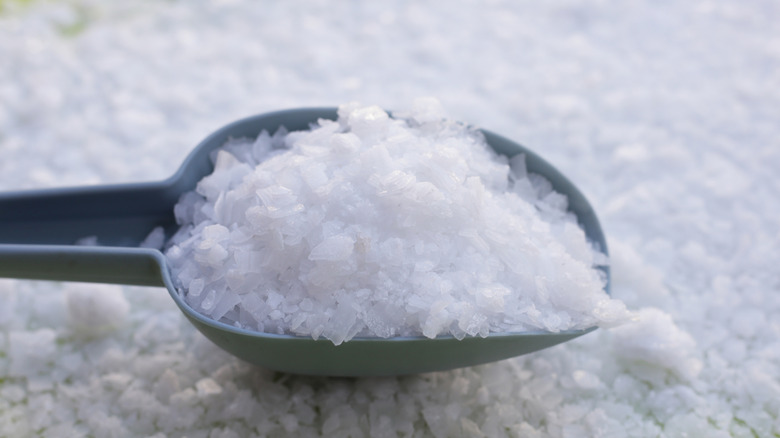
When it comes to lye and cast iron, it's all about knowing when to use it, and how to do so properly. The substance is not a magic fix-all, nor is it an ingredient to use flippantly or without following instructions or taking the proper safety precautions. So before you buy a bottle of lye on Amazon to try out this hack, bear in mind, this is no daily maintenance cleaner. It's a potentially dangerous substance that can cause chemical burns when coming into contact with uncovered skin — so always use gloves and eye protection.
When preparing the bath, most instructions advise a ratio of about 5 gallons of water to 1 pound of lye in a chemical safe plastic tote. Crucially though, Chris Wing also warns that "adding water to lye can cause a violent eruption." Wing instructs to always add lye to water — not the other way around — and to do so slowly and gradually. It's also important to let the lye bath cool down before putting the pan in. Once your cookware looks good as new, rinse and scrub it, let it dry, and it's ready to use.
Though it's important to note, while Wing claims lye is "essentially unrivaled" at removing even ancient layers of built-up gunk, it won't touch rust. Wing prefers electrolysis for removing, but since it's an expert-level method using live electricity, he recommends a much safer 45-minute vinegar and water soak for DIY-ers.