

The Pantry Ingredient That Mimics Cake Flour Better Than You'd Expect
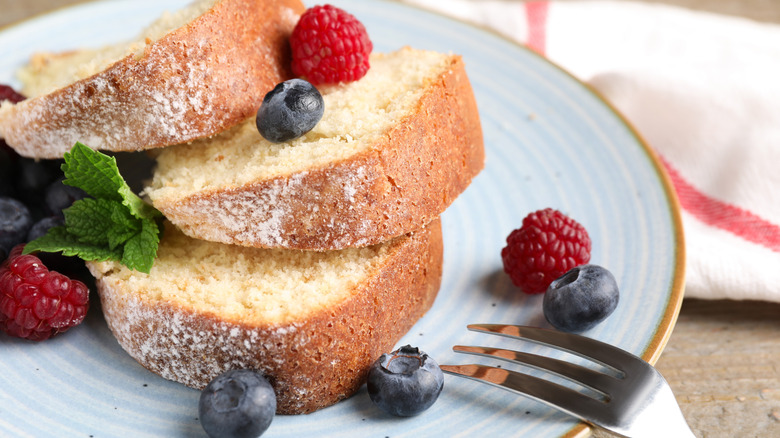
Let's say you've gotten the urge to bake a fluffy cake, only to check the pantry and find that you have pretty much every type of flour except for cake flour. What would you do? Make a quick trip to the grocery store? Abandon your baking ventures? Before you consider either option, we're here to grace you with a third choice that saves you a trip to the store and ensures that your kitchen is filled with the divine aroma of a bakery. All you need is some good old all-purpose flour and arrowroot powder or cornstarch, and voila, just like magic, you'll have a solid stand-in for cake flour, especially if baking cakes isn't a regular feat for you.
Now, for the trick to swapping cake flour in a pinch: simply add 1 cup of all purpose flour to a bowl and remove 2 tablespoons of the flour. Replace those 2 tablespoons with the same amount of arrowroot powder (or cornstarch, the same ingredient that can deliver the chewiest and softest cookies). Once sifted, everything will be properly and evenly combined, and ready to use. This hack works as both cornstarch and arrowroot powder prevent the formation of gluten, which in turn, delivers a delightfully spongy cake as opposed to an overly dense one. One key difference is that arrowroot starch will facilitate a faster cooking time, so keep an eye while the cake is baking. And, if you prefer your cakes to be on the moister side, arrowroot powder (as opposed to cornstarch) would be the way to go. It all boils down to chemistry in the kitchen, so read along for a mini science lesson that underscores why and how this hack works.
What makes cake flour different from other types of flour?
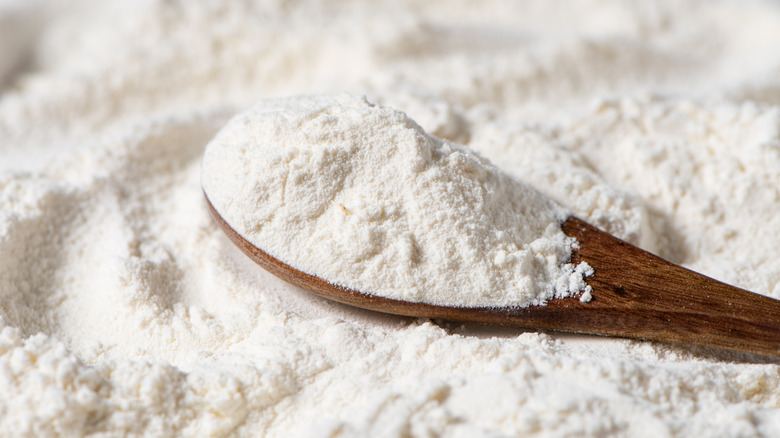
Just because you don't have a designated cake flour doesn't mean that all-purpose flour isn't up for the task. While you can go ahead with all-purpose flour as the base, the texture will be notably different in that the crumb will be coarse and dense. On the other hand, cake flour yields a finer crumb texture and a much more airy feel, and there is one key contributing factor: protein content. This component is intricately tied to gluten formation, the same phenomenon that underlies the making of the popular plant-powered meat replacement for vegetarians, seitan.
Depending on what you're baking, gluten formation can be very beneficial. Say you want a bread with a satisfying chew to it, preparing the dough in a manner that allows for optimal gluten formation is essential. However, if you want a soft and light cake with a delicate crumb, less gluten is better. Cake flour has a lower protein content when compared to conventional all-purpose flour, which means there will be less gluten formation, ergo, a fluffier cake. So, how do cornstarch and arrowroot starch help mitigate the onset of a durable gluten network? Since the two are pure starches, they don't contain any gluten in them, thereby reducing the relative protein content once combined with all-purpose flour. Reducing the protein concentration counters the toughening effect of the gluten network and results in a softer, more crumb-like texture in your baked treats. With this tidbit of culinary knowledge, a fluffy angel cake or a delightfully moist sponge cake is just a handy hack away.