

Should You Ever Defrost Frozen Vegetables?
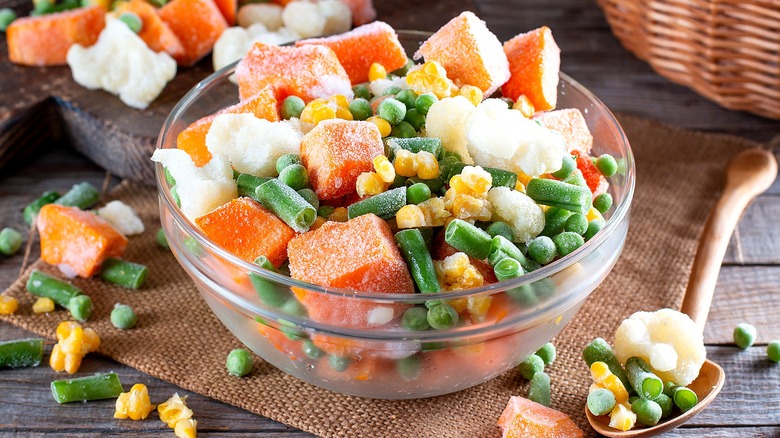
If you enjoy whipping up fresh-tasting meals daily, then you already know stockpiling your freezer with frozen produce is a genius hack. Not only are most frozen vegetables just as nutritious as raw ones, but they're also pre-cut, which makes them easy and convenient to consume. However, for the most enjoyable eating experience, following certain preparation guidelines is key. Unfortunately, most of the time, the mistake that's ruining your frozen vegetables is thawing them before cooking.
More specifically, defrosting frozen vegetables often leaves them with an undesirable, mushy consistency. The freezing process creates ice crystals which, more often than not, compromise the structure of many high-moisture vegetables like mushrooms, asparagus, and in some cases, heartier varieties like broccoli and carrots. As a matter of fact, when it comes to cooking, the easiest way to make frozen vegetables crispy is to cook them while they're still frozen.
Especially if you prefer more high-moisture vegetables, such as bell peppers and squash, cooking them straight from your freezer is most recommended. While you can certainly decide whether or not to defrost your selection on a case-by-case basis, most frozen vegetables are best consumed straight from your freezer. That being said, there are a few vegetables (like peas and corn) that taste comparable to fresh when thawed from frozen.
When and how to defrost frozen vegetables
If you want to enjoy more thawed frozen vegetables, your best bet is to choose starchy varieties that don't contain a lot of natural moisture, such as corn, edamame, lima beans, and potatoes. Surely, while potatoes may be considered the frozen breakfast favorite that serves as a perfect casserole topper, they're also delicious thawed and fried on the stove or in an air fryer. However, before you add more thawed, starch-filled vegetables to your favorite dishes, defrost them properly and remove any excess moisture.
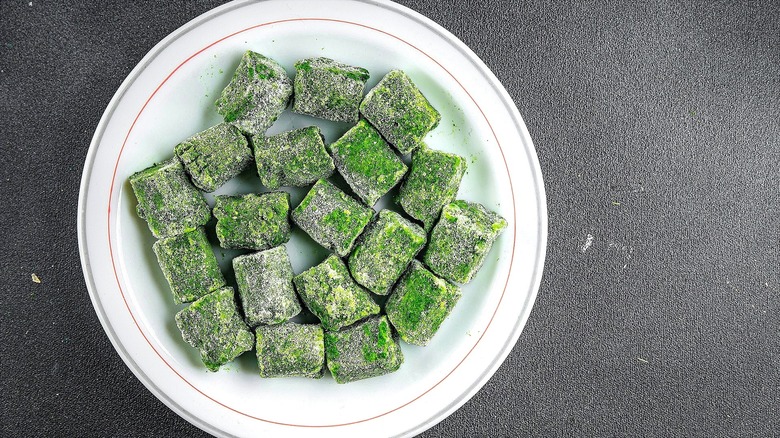
Undoubtedly, the best way to thaw frozen vegetables is in your refrigerator. When thawing, place them in a container or resealable plastic bag. You can also defrost them in a strainer strategically positioned over a plate. For a quicker alternative, use your microwave on the defrost setting and stir your vegetables every 30 seconds. Though, depending on which vegetables you're defrosting, you may need to take one additional step before consumption. Upon thawing, consider removing any excess moisture with paper towels. In fact, when defrosting spinach, squeezing out every last drop of liquid is a must.
To heat your thawed vegetables to perfection, sautéing or roasting helps to evaporate moisture and make them crispy. Once your vegetables have been properly thawed and cooked, feel free to add them to all sorts of fresh green salads, afternoon snack plates, and creamy, refrigerated spreads. Thawed frozen veggies also serve as a versatile topping for protein bowls, tacos, and sandwich wraps.