

The Controversial Way Some People Preserve Cheese, And Why You Should Probably Avoid It
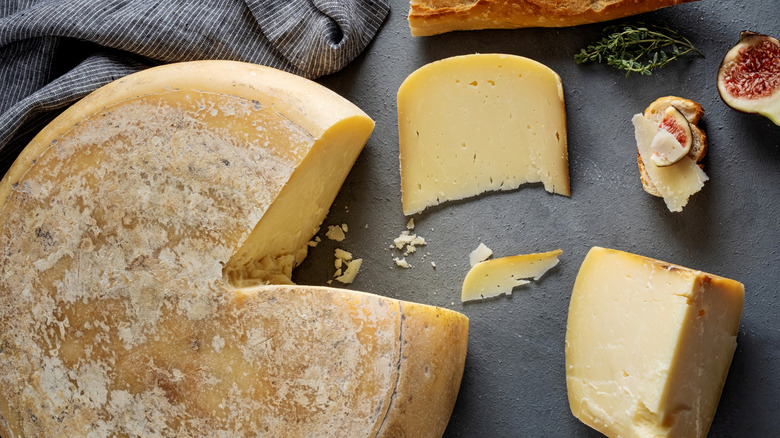
Whether it's creamy, buttery cheddar, rich and earthy Brie, or sweet, nutty Gouda, cheese is a kitchen staple in many households. According to the International Dairy Foods Association, the average American ate roughly 42 pounds of cheese in 2023, which is approximately the weight of half a wheel of Parmigiano Reggiano. Because of its popularity and versatility, it's no surprise people have spent ages trying to come up with various, and sometimes rather unconventional, ways to extend its shelf life to keep it from going moldy.
One unusual method includes covering cheese in a generous amount of butter. The technique itself is, as a matter of fact, surprisingly easy — just let a stick of butter soften at room temperature before spreading a good layer of it on the cheese's surface, including the cut edges. After that, wrap the cheese in parchment paper and let it sit until you're ready to use it again.
This approach, however, doesn't appear to be new and likely dates back to the 18th century. Allegedly, U.S. cheesemakers began coating whole cheese wheels with melted butter or lard to create a protective layer between the cheese and its surrounding environment. This apparently reduced heat exposure, preserved the cheese's original flavor, and protected it from drying out and coming into contact with mold spores. However, this is generally not recommended anymore, as there are far better and safer ways to preserve cheese.
How to properly store cheese
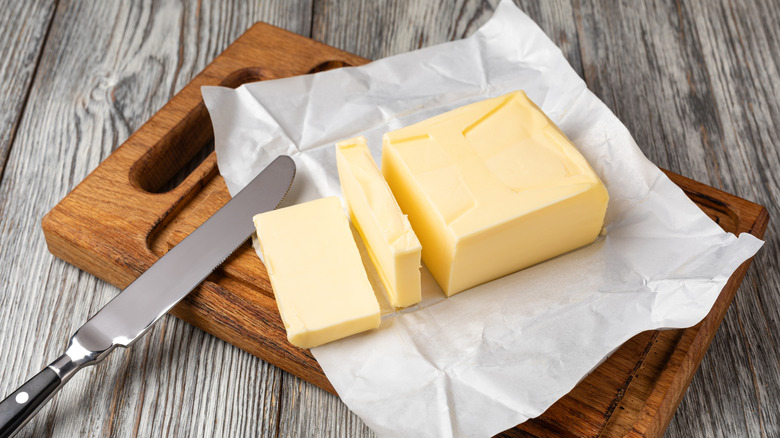
While the butter method might have made sense in the past, today it raises food safety concerns. Since the butter barrier traps moisture inside the cheese and creates an oxygen-poor environment, it can easily cause spoilage from the inside out. The reason for this is microbes, such as bacteria, thrive in humid conditions (especially when humidity levels reach over 60%). At the same time, the butter's outer layer that's exposed to oxygen can become rancid and develop unpleasant flavors and aromas that can eventually transfer to the cheese itself.
Instead, a more effective way to preserve cheese and maintain its best qualities is to wrap it in a breathable material, such as parchment or wax paper. Both options maintain the cheese's original flavor and prevent bacterial growth, while simultaneously providing just enough airflow. That said, another effective way to preserve cheese is to store it in the freezer, although not every cheese type does well this way. Varieties such as American or hard-aged are among the best types of cheese to freeze. On the other hand, cheese with a high moisture content, like cottage cheese, Brie, or Camembert, are best kept out of the freezer. What's more, using plastic wrap or airtight containers is another effective way to keep cheese fresh.