

How To Safely Transport Raw Meat For Long Drives
We may receive a commission on purchases made from links.
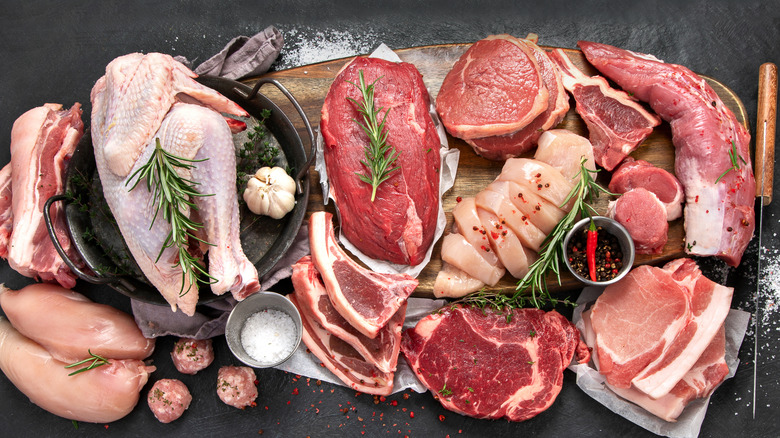
Raw meat, such as chicken, should always be kept in the bottom of the refrigerator. But what if you have to transport it to a friend, or you're grocery shopping before a road trip to your favorite vacation spot? Depending on the duration of the trip, you might need to take extra safety precautions to ensure raw meat doesn't spoil on the drive. The best way to pack it up is to put it on plenty of ice and store it in a cooler, where it isn't so easily exposed to room temperature.
Perishable food, such as raw meat, cannot be left out in the temperature "danger zone" for more than two hours per U.S. Department of Agriculture guidelines, or it can develop bacteria that can lead to food poisoning. This "danger zone" is anywhere between 40 and 140 degrees Fahrenheit. If you have a two-hour drive, the food should be fine on ice, but make sure it's refrigerated immediately upon arrival. Anything longer than two hours, though, and you need to essentially mimic a refrigerator's ideal temperature and keep it below 40 degrees Fahrenheit. This means a sealed environment and plenty of ice.
The best method for transporting raw meat
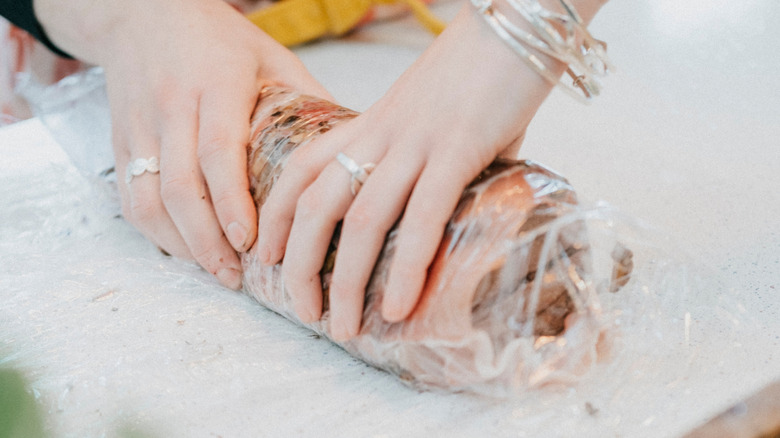
There are three factors to consider: oxygen exposure, cross-contamination, and temperature. Start by sealing the raw meat to create as airtight of an environment as possible. Plastic wrap is a great way to do this; wrap the meat thoroughly to prevent it from drying out. Plastic wrap plays another role by helping prevent cross-contamination from leaky juices. If you're transporting anything along with the raw meat, store the meat as separate from other foods as possible. Ideally, after wrapping it, place it in a bag or container that can further confine any juices that might leak from the meat on the trip.
Finally, pack the meat in a cooler. Coolers prevent the heat transfer process by keeping heat out of the enclosed space. This helps your ice stay frozen and your raw meat stay ice-cold. If you pack the meat on ice but store it in an open container, nothing is preventing that heat transfer, meaning your ice melts much quicker.
Use the right products for safe transportation
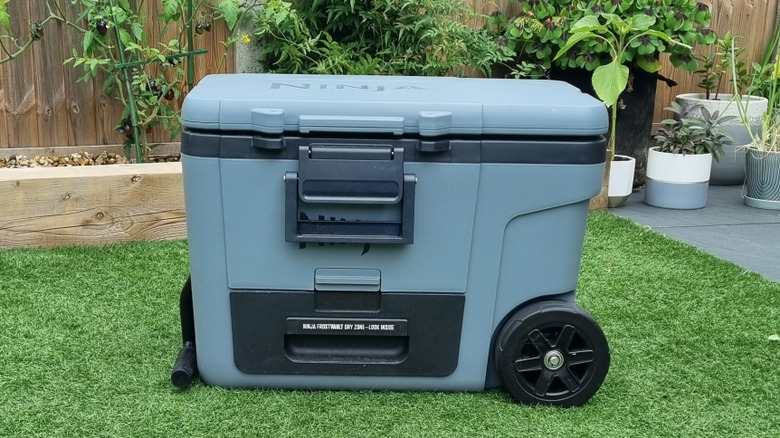
The length of the drive determines what you need to properly store the meat. Plastic wrap is generally the same across the board, but there are big differences when it comes to coolers. Inexpensive, disposable coolers are often made from spray foam or polystyrene, which provides temporary insulation. If you're taking a one-day trip, a Styrofoam cooler works just fine.
However, if you're transporting meat further — maybe you're making a cross-country trip — consider a higher-quality, more durable cooler made from a polyethylene shell. These coolers, such as Yeti or Kong brands, usually have a dense layer of polyurethane foam, meaning they can keep food on ice for days. While Yeti is expensive, it's worth the investment if you use it a lot.
Lastly, don't forget a thermometer. The best way to ensure meat stays cold is to purchase a good-quality thermometer and regularly check the air temperature in the cooler to ensure it's below that 40 degree Fahrenheit safety guideline. You can snag a cheap digital one from ThermoPro, or an analog one from Pecula for about half the price.