

Parchment Paper Vs Silicone: What's The Better Baking Option?
We may receive a commission on purchases made from links.
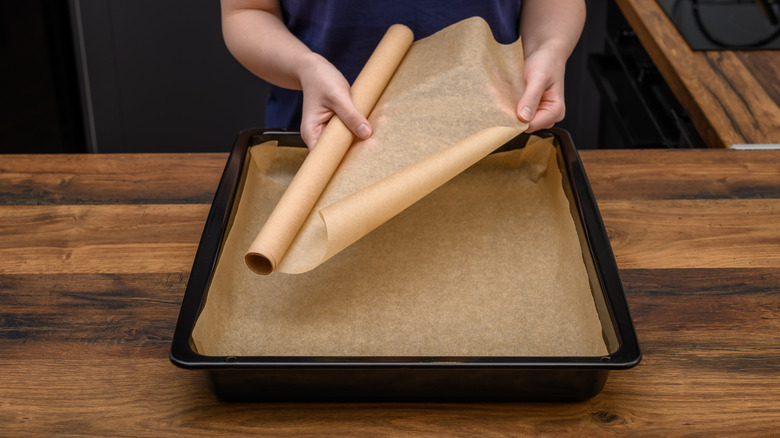
If you're a semi-regular home baker, chances are you've at least briefly pondered whether it's better to bake with single-use parchment paper or invest in reusable silicone mats. Unfortunately, there's no simple "one is better" answer. Each has certain pros and cons, and your baking style may lead you toward one or the other. Parchment paper is malleable, single-use, and helps browning in baked goods, while silicone is tear-resistant, reusable, and hydrophobic.
Parchment (not to be confused with wax paper) is cheap — a box costs as little as $2 and is easy to find in any supermarket. Most brands are coated with silicone, so you're often getting the same substance as with a silicone mat. The silicone prevents baked goods from sticking or burning. Cleanup is minimal: You can just trash it once you're done. But you'll spend more on single-use parchment over time, and it's not recyclable, so some environmentally minded bakers may baulk at this wastefulness. However, it can be reused a few times if you don't go past its heat limit of around 420 to 450 degrees Fahrenheit (depending on the brand).
Parchment may have some benefits for your baked goods. It promotes slightly better browning and crisping than silicone mats since it allows more moisture to escape. This is particularly notable when baking cookies. If you prefer crispy-edged cookies or golden-crusted bread, parchment makes more sense.
The pros and cons of silicone
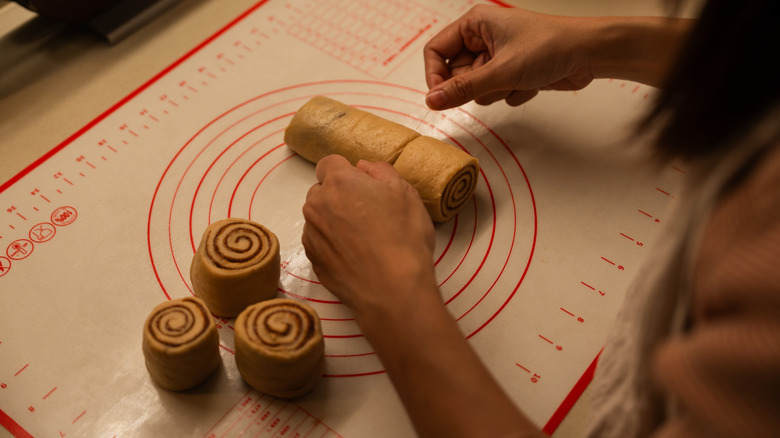
Silicone is reusable — possibly for decades. The price tag is higher (a quality Silpat mat can cost up to $30 online), but it's a one-off investment compared to repeatedly buying parchment. Made from food-grade silicone reinforced with fiberglass, these mats are nonstick and can typically withstand higher temperatures than parchment paper, sometimes over 500 degrees Fahrenheit, depending on the brand. That means they can be better for things that need a hot oven, like pizza and some breads.
That said, if you're using them mostly for baking, you may not want to plop some herby, garlicky roasted potatoes on a silicone sheet. They can retain odors and grease if you don't clean the mats thoroughly. Because silicone mats don't absorb moisture, they can reduce browning on the bottoms of cookies and pastries, leading to paler, softer results compared to parchment, and their slipperiness makes cookies spread out more. This may be a pro or a con, depending on your cookie preferences.
There are some minor logistical annoyances with silicone, too. Their bulkiness means they won't work in cake pans, loaf tins, or any setting where they won't be fairly flat. You're also stuck with one size once you buy them, unlike foldable and cuttable parchment. Storage may require more effort as they should be laid flat or rolled carefully to avoid creases. Overall, parchment has the edge in convenience and its effect on most baked goods. However, silicone has its place for bakers who want to save money and avoid single-use products.