

The 10-Minute Rule For Cooking Fish, Explained
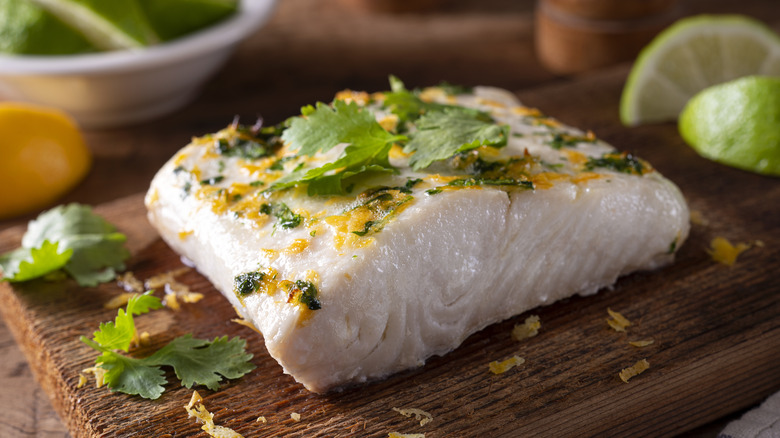
Cooking fish might seem difficult for novice chefs, as the cook times are so different from other meats, such as chicken and beef. However, making fish can be easy if you follow a few simple guidelines. One such guideline that could be a lifesaver for nervous cooks is a little something called the 10-minute rule.
The 10-minute rule for fish states that, for every 1 inch of meat, add 10 minutes onto the cooking time, flipping the fillet once in the middle of the allotted period. This means, when you are ready to make fish, no matter the recipe, you should measure the thickest part of the flesh with a clean ruler and set the cooking time based on that measurement.
This may seem counterintuitive at first, as the cooking time can be very short, even just a few minutes. However, one of the big mistakes to avoid when cooking fish is overcooking. Fish is so delicate that it tends to require much less heating than other meats to bring it up to its recommended internal temperature. For fish, that's often around 145 degrees Fahrenheit. Once you apply this rule to your fish preparation, there are some other tips that can help you know when the fish is done, as well as other considerations to keep in mind to make the rest of your dinner prep a breeze.
Things to consider when cooking a variety of fish
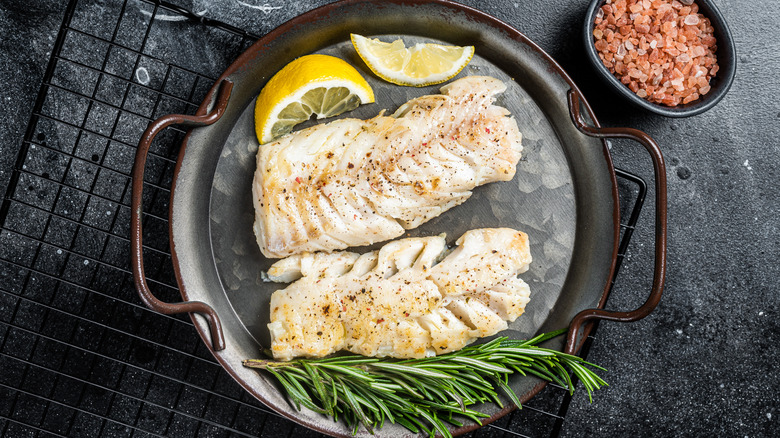
Knowing the proper temperature at which to cook your fish is also important; however, there isn't a one-size-fits-all temperature for all dishes. In general, the temperature chefs recommend baking fish is between 350 degrees Fahrenheit and 450 degrees Fahrenheit. Still, it will always depend on your cut of fish, and there are even exceptions to the 10-minute rule. If you're preparing fish in foil or sauce, add five minutes to the cook time.
Temperature is one factor to consider when deciding the best way to cook different cuts of fish, but a variety of methods are a better fit for different species. Each kind of fish may have a specific fat content and level of firmness that will affect your preparation. If you're baking a whole fish, such as one including the head and tail, fish steaks like tuna or salmon, and fillets like tilapia or cod, opt for a higher temperature of around 450 degrees Fahrenheit. You should use a lower temperature of about 350 degrees for pan-dressed fish, which is a whole fish with its extremities, scales, and organs removed.
To test if your fish is done, look for flaky flesh that's also a bit firm, crispy skin, and white juices flowing from the flesh when it is sliced. Otherwise, you can rely on a quality meat thermometer to check the internal temperature. Then, remember to never skip the final crucial step: resting your fillet.