

Make The Best Baked Potatoes Of Your Life With This Simple Change
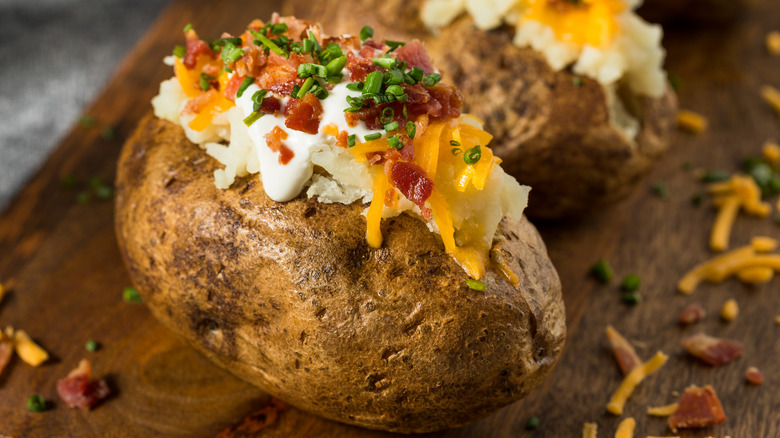
The humble baked potato is a staple of easy home cooking, whether as a side (more common in the U.S.) or as the main event (a comforting meal that's iconic in the U.K.). But although you've certainly eaten one before, chances are you've never put much thought into the best way to make one. Most of us just throw our spuds in the oven or microwave for a few minutes, returning to them when we remember they exist and make the best of it. But the baked potato is a severely underrated dish, and with a little bit of effort it can become something truly delicious — crisp on the outside, fluffy and tender within, and deeply flavorful when slathered in butter and salt. The secret? Stop using your baking tray. It's the best way to make baked potatoes!
Instead, place your taters on an oven-safe wire rack (or just on your oven rack) as they bake. This solves the most common problem when it comes to baked potatoes: soft, soggy skin. When you use a tray to bake your spuds, small amounts of moisture get trapped underneath the potatoes. That moisture becomes steam, which in turn escapes and softens the skin — whilst also resulting in an inconsistent cook (you know, when the bottom of your potato becomes tough and overcooked). A rack, however, allows the even circulation of hot air around the whole potato, helping facilitate even browning, crispy skin, and a fluffy, evenly cooked inside. The single most important factor in the consistency of your potatoes is temperature and positioning.
Why do tray baked potatoes miss the mark?
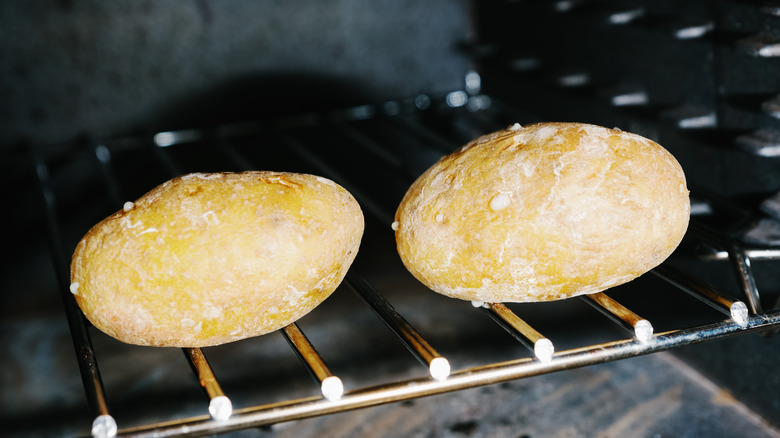
As we've explained, moisture is the enemy of the crispy baked potato. Common tips that people will often give you to make the absolute most of your baked potatoes, such as rubbing them with oil or pricking them with a knife, often don't work unless there's adequate airflow around the potatoes.
Rack baked potatoes have tight, cracking skins, thin and crispy, yet still easy to chow down on. Tray baked potatoes in the meantime have soft, chewy skins, which can be tough and unpleasant to eat. All that condensed moisture can also affect the interior of your baked potato, too. Trapped moisture results in slow evaporation, preventing that light, fluffy texture, perfect for soaking up copious amounts of butter. Ovens rely on radiant heat, which works best if the entire surface area of a the potato is exposed. For the best results, place your potatoes directly on the oven rungs, or on an oven-safe cooling rack. Space them apart — if you let them touch, you'll run into that same condensation problem. Dry your potatoes thoroughly and keep the oven between 400 and 425 degrees Fahrenheit.