

Apple Juice Is The Liquid Gold Your Slow Cooker Pulled Pork Is Missing
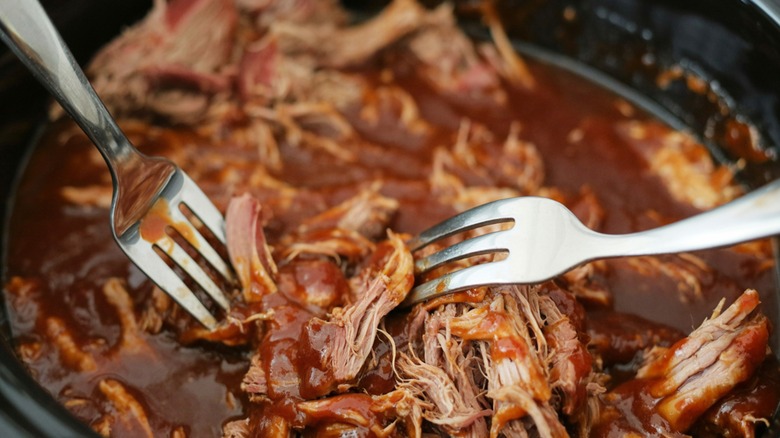
Pork and apple is a pairing made in culinary heaven — a time-honored combination of fatty, rich, savory meat and the sweet, subtly tangy fruit that is as versatile a pairing as it is delicious. From sausages stuffed with pork meat and sweet apple, to a luscious grilled pork chop topped with a caramelized Granny Smith chutney, just about every combo you could think of works — you could even grate apple into a coleslaw and serve it with your favorite barbecue dishes (or hot dogs!).
But there's one pork and apple pairing that might just top all the rest — and it's a lot more subtle than you'd think. The next time you make pulled pork, make sure you have some apple juice on hand! Adding it to your pulled pork braise makes for an upgrade in flavor and texture, as it slowly reduces during the cooking process, leaving behind a gentle acidity and a deep caramelized sweetness that blends with the rendered pork fat to create a glossy, flavorful result. This swap works exceptionally well with tangier, vinegar-forward barbecue sauces, the sweetness of the apple juice balancing out the sharpness of the sauce, while its subtle acidity echoes and elevates that of the vinegar.
It doesn't make the pork taste of fruit — that's not the goal here. Rather, the apple juice works to enhance the natural flavors of the pork, and also happens to pair wonderfully with barbecue sauce! It also helps to keep the pork tender, its natural acidity and sugars protecting the meat's texture during its slow cooking process.
How to swap in apple juice for the best slow cooker pulled pork

The prep should take you all of 10 minutes, while the slow cooker will take care of the rest. As you might expect, then, adding apple juice is also an extremely easy swap. For a four to five pound pork shoulder, you should be using about a cup of liquid — which might not sound like all that much, but more than does the job in the slow cooker. If you were braising the pork (using, perhaps, a more traditional method) on the stovetop or in the oven, you would need a little more. The slow cooker is excellent at concentrating and retaining moisture, though, so needs a little less help in that department.
The ratio you use when replacing the broth is entirely up to you, and really depends on how you like your pulled pork to taste. This video shows Chowhound's recipe for the perfect slow-cooker pulled pork, but you can definitely customize this recipe. If you prefer things a little on the sweeter side, with a real intense apple aroma and a powerful tangy punch, use a one-to-one ratio — i.e. replace the whole thing with apple juice. For a slightly subtler finish (and in our opinion, a more mature, complex palate), use a ratio of half broth or stock, and half apple juice. This will make sure that the final braise turns out subtly sweet, yet still intensely savory. If you are using apple juice, consider adding a touch more salt, and add a touch of apple cider vinegar towards the end of the cooking process to keep things balanced. Pour the apple juice around the meat (not on it, so as not to wash off any seasoning) and cook as you would normally — we find around eight to 10 hours on a low setting works best.
How to fine-tune your pulled pork for the best results

Once your pulled pork is cooked, you might be tempted to let it have a nice, long rest in its cooking liquor — surely that would be a sure-fire way to stop it from drying out, right? Well, somewhat counterintuitively, no. Letting your pork sit in all that liquid can actually have the opposite effect, causing it to leach all that lovely juiciness into the pot, leaving you with tougher meat. Instead, give your pork a rest outside of the pot, and while you are, focus on turning those cooking juices (and apple juice!) into a delicious, glossy sauce. If you like your pulled pork on the thinner side, reserve the juices and spoon them back in gradually once you've shredded your pulled pork, a little at a time until you reach the consistency you're looking for.
If you prefer a little more thickness, perfect for that sticky barbecue plate or pulled pork sandwich, consider reducing the juice down into a lovely, thick, sugary barbecue sauce. Just get it into a pan on medium to low heat, and stir frequently to stop it from catching. As you do, some of the liquid from the cooking liquor will begin to evaporate, causing the sauce to thicken up, in turn intensifying the flavors to create a rich sauce that you can toss with your shredded pork for a truly indulgent dinner. To kick things up a notch, add a dash of Worcestershire sauce.