

Don't Throw Out Your Pasta Water — Freeze It Instead
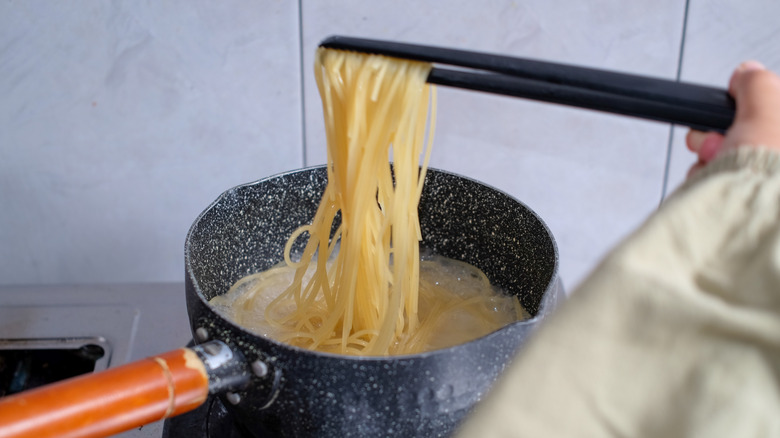
Any good home cook worth their salt knows that pasta water is liquid gold — but more often than not, it still ends up going down the drain. That cloudy liquid that gets left behind after boiling pasta might not look terribly exciting, but it's one of the most versatile byproducts in cooking, used to thicken and emulsify sauces. Pasta water can be kept in the fridge for later use — and it turns out, it can also be frozen. Freezing it makes it go from a once-per-meal ingredient into something you can reach for anytime you need.
Because it's full of starch and salt, pasta water helps sauces cling, emulsify, and taste more complete. In fact, just a splash can loosen a tight sauce without just thinning it out the way plain water would. And if you freeze it, that same functionality is preserved, as long as the water was properly seasoned to begin with. Using the right amount of salt for your pasta water is essential — not just for the pasta you're cooking it in, but for whatever dish that water also ends up in. The freezing part is straightforward; just let the pasta water cool completely, then pour it into ice cube trays or small freezer-safe containers. Ice cubes of pasta water are ideal for sauces, since you can add them one at a time as you need them.
How to use frozen pasta water
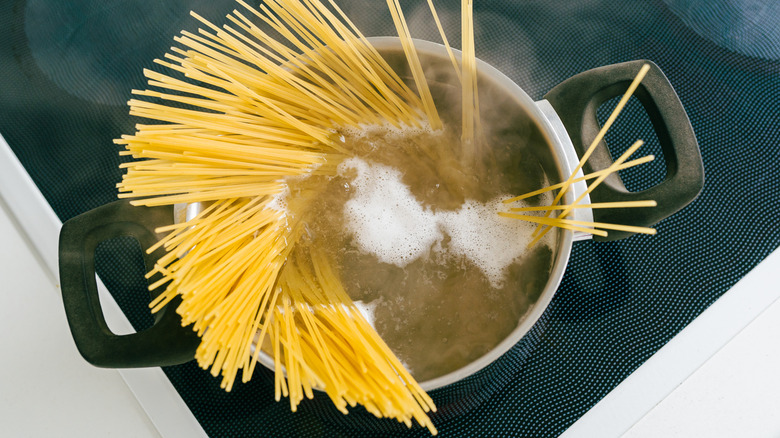
Frozen pasta water is going to be a winner when you put it in sauces, especially any pasta sauces that need a little extra help coming together. Simply drop a cube or two into a pan of sautéed vegetables, pesto, or even gravy, and let it melt as you toss the pasta. The starch will help each pasta noodle get covered in sauce to create a glossier finish. It's also a useful hack for reviving leftovers or using as a soup base.
That said, pasta water can't be substituted for fresh water in every situation. As it already contains salt and starch, only use it for dishes where you want to add more thickness and flavor, not as a substitute for water. Storage matters here, too. It will freeze well for up to six months, but after that, flavor and freshness decline. At the end of the day, freezing pasta water isn't just about saving scraps for the sake of it — it's a way of keeping a useful cooking tool on hand for any sauce-related emergencies. It only takes a little forward thinking for that leftover liquid to improve future meals instead of simply disappearing down the drain.