

Meet Chislic: The Classic South Dakota Bar Snack Locals Can't Get Enough Of
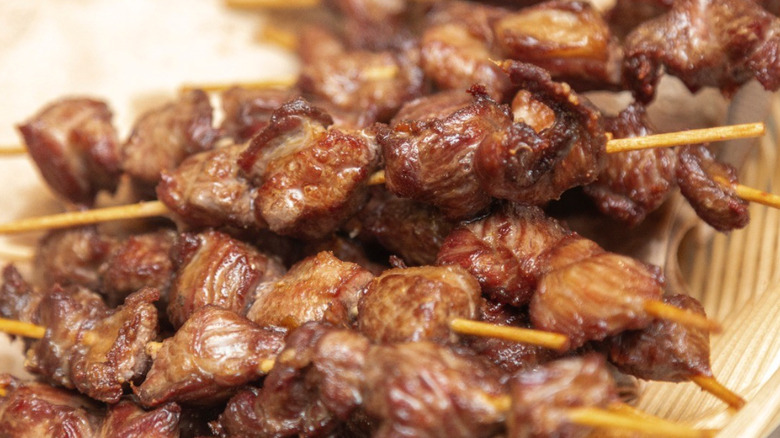
If you walk into a bar or casual restaurant anywhere in South Dakota, chances are pretty good you'll see chislic on the menu. For those who have never heard of it, it's pretty easy to describe. Chislic is cubed meat — traditionally lamb or mutton (one meat that needs to make a comeback in America) — that's simply seasoned, fried or grilled, and served hot on skewers or with toothpicks. It's unfussy, bite-sized, and pairs well with cold beer, which explains how it became a staple in taverns across the state.
Chislic has roots in Eastern European immigrant communities, particularly German Russian settlers who arrived in the Dakotas in the late 19th century. One particular immigrant named John Hoellworth, a German Russian from Crimea, has been credited as the person who brought it to South Dakota. Although considering its simplicity, it's argued other migrants from similar communities were probably also making it. By the mid-20th century, chislic started to appear in South Dakota bars, where its shareability and easy preparation made it a go-to for both bar owners and customers.
In 2018, the state legislature officially named chislic South Dakota's official nosh (referring to an old German word for snack), cementing its cultural status. This also makes South Dakota one of the relatively few states to have an official snack: Others on the list include New York (yogurt), Illinois (popcorn), and South Carolina (boiled peanuts — a salty gas station snack that was once a survival food).
How chislic is typically served
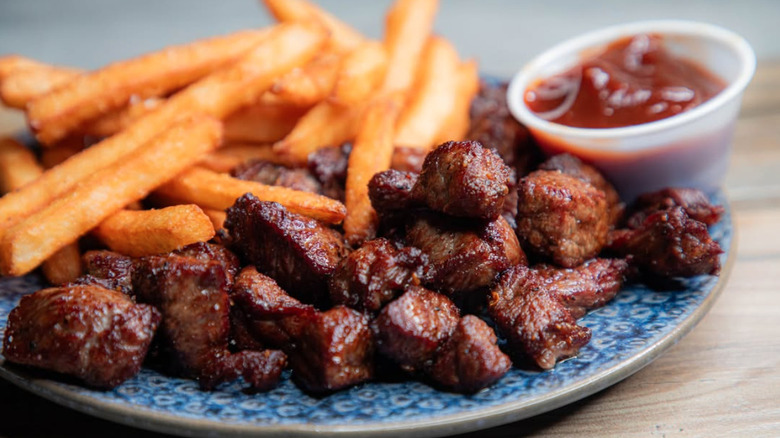
The town of Freeman is cited as a chislic hub, and it's more common in the southeastern South Dakota area (including Sioux Falls). Although chislic started as bar food, it's now more ubiquitous and can be found in various locations. Unlike some fried bar snacks, chislic isn't battered, so the focus stays on the meat itself. It's most often accompanied by plain salt, crackers, or hot sauce, though some bars might offer sides like toast points (triangular toast slices) or dipping sauces.
Chislic is something you can easily pull together at home. Start with meat, cut into bite-sized cubes, lightly season with salt, garlic, celery salt, or black pepper, and then either deep-fry or grill until browned but still tender inside; the meat can be cooked on a skewer or without one. (The original Russian version of the dish was fire-grilled, not fried, though.)
Inevitably with a dish this widespread, there are many variations out there. Most notably, beef has taken over from lamb as the main chislic meat (you may also see bison or venison chislic around). Naturally, some cooks experiment with marinades or spicier and more complex seasonings, though purists might argue that overcomplicating chislic misses the point. On the other hand, some argue it's too simple to be particularly interesting since it isn't necessarily the star of the show, but an accompaniment to cold beer and good conversation. Yet with something this simple, there's also room to play around with your recipe.