

The Difference Between A Rump Roast And Pot Roast
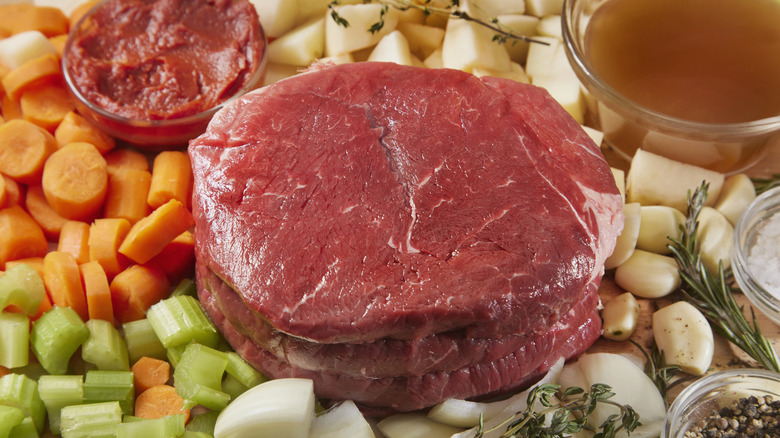
For all the vast and varied beef options a person can make at home or order at a restaurant, there sure are a few that almost seem to overlap. A porterhouse and T-bone might appear pretty similar to the naked eye, for example, though the former has a bigger size requirement. Likewise, a skirt and flank steak are similar, but the latter is larger. And the difference between rump and pot roasts can be easy to lose track of, too. You just have to remember rump roast refers to the location of the cow (upper backend), while pot roast refers to a cooking method (typically low and slow).
More precisely, the rump or bottom round roast is butchered from the animal's hindquarters. The heavily exercised region is accordingly lean, meaning the rump portion is less tender than something marvelously marbled like New York strip or ribeye. Unlike those wonderfully fatty cuts, rump roast takes a lot longer to achieve acceptable tenderness. This actually makes it an excellent candidate for the pot roast treatment.
Pot-roasting a rump roast at home
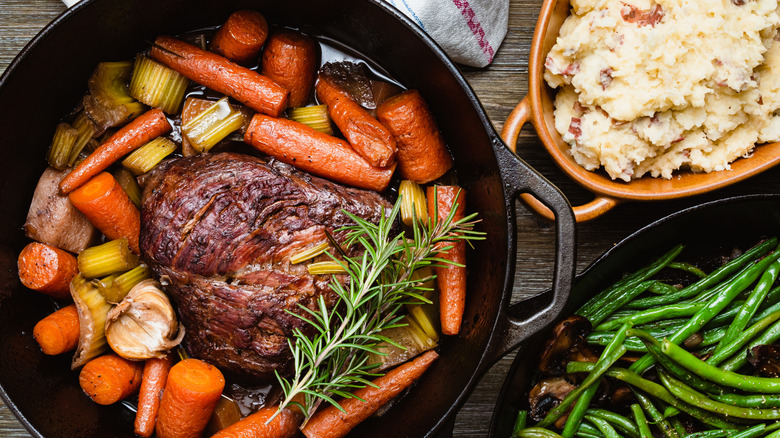
If you're skeptical about its posterior position, take comfort in knowing rump was Julia Child's preferred pot roast cut, so there is already a huge precedent for success. It should be fairly easy to source from your local supermarket, sold as a single hunk of meat weighing a few pounds, fit for serving a small group or ensuring leftovers. It's also less expensive than many other cuts, but you can get it to taste top-quality with a little time.
The oft-cited low-and-slow method is your best bet for rump-based pot roast success. The hearty rump cut can stand up to a bit of herbs and seasonings, so you can be liberal with rosemary, thyme, bay leaves, garlic, and onion. Some home cooks like to brown each side of the roast first for more flavor, then pour in a braising liquid like red wine (which helps deglaze those glorious browned bits) and add root vegetables like potato or turnip for extra heartiness.
When oven roasting, expect a 3- to 4-pound roast to achieve peak tenderness in three to four hours at 325 degrees Fahrenheit. The pot itself, whether it's a Dutch oven or a deep roasting pan, also makes it a little easier to remember pot roast refers to the preparation, while rump roast refers to the protein. Then, no matter how you season or supplement your beef, or which vessel you use to cook it, you'll have a legitimate and tasty rump pot roast to enjoy.