

How This Prohibition-Inspired Cocktail Became A Beloved Florida Staple

Throughout history, whether in the hands of an important figure or a casual sipper, cocktails have been part of some fascinating stories. This is evidenced in the legacy of recipes — such as the old fashioned, which gained its name as an abbreviated request for cocktails to be made the traditional way — or through a close association with famous figures, such as Teddy Roosevelt's love for the mint julep. Similarly, the rum runner's backstory is an acknowledgement of history, though this history conflicts between legend and publication in whether it originated in Florida during the 1970s or decades earlier in New Orleans.
According to liquor lore, the rum runner as we know it was first created by John "Tiki John" Ebert in the 1970s at the Holiday Isle Tiki Bar in Islamorada, Florida. Ebert was faced with offloading the bar's surplus of spirits and mixers. One day, he assembled a cocktail with some grenadine, two kinds of rum, banana liqueur, blackberry liqueur, pineapple juice, and lime juice. He named the concoction rum runner as a playful nod to those who kept booze flowing into speakeasies during Prohibition.
The cocktail's name was perfect since Florida was an easy smuggling point into the U.S. given its close proximity to the Bahamas, where alcohol was still legal. In an area of the Atlantic Ocean called Rum Row, ships anchored 3 miles offshore, meeting with smugglers who'd sneak product stateside via Key West and Florida's mainland.
John Ebert's rum runner might not be the original
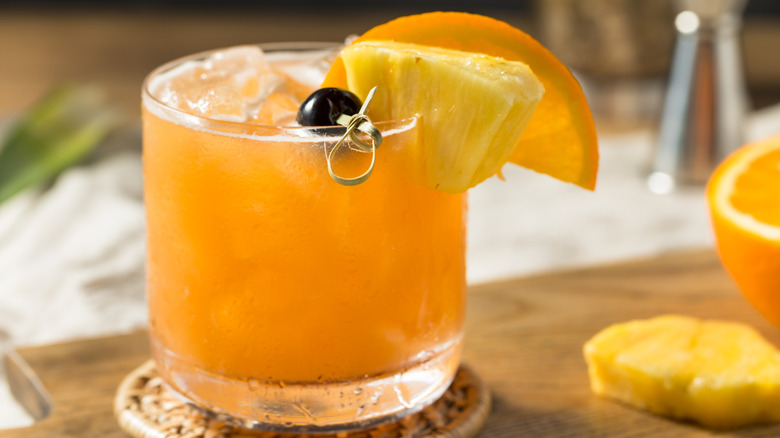
Although most libation experts connect the rum runner to Florida, this isn't its first appearance in cocktail history. One rum runner cocktail actually first appeared in the 1930s, in the pages of Stanley Arthur's "Famous New Orleans Drinks and How to Mix 'Em." Admittedly, there are two points to acknowledge here. Most importantly, Arthur's rum runner uses pineapple juice, lime juice, bitters, sugar, and a single rum, making it closer to a traditional daiquiri than today's recipe. Secondly, while the book features several of NOLA's favorite recipes, many, including the mysterious sidecar cocktail, didn't originate in the Big Easy. This certainly doesn't negate the rum runner's Floridian origins, but it does mean it's more likely that Tiki John tweaked and popularized the recipe rather than inventing it.
If you want to make your own take on the rum runner, there are several ways for anyone to adjust the drink. Those wanting to swap its tart citrus zest for something sweeter can substitute the lime juice with orange juice. For something with a warm and comforting flavor for cooler seasons, switching the traditional light and dark rums for spiced and coconut rums introduces earthy spices and a uniquely tropical sweetness. Home mixologists can also blend strawberries into a frozen rum runner, which nicely amps the drink's tartness while maintaining its Floridian spirit (the fruit is a product of the state). Further, using sweeter, white strawberries could even elevate its tropical flavors.