

The Vintage Kitchen Appliance That Changed The Game Then Disappeared Forever
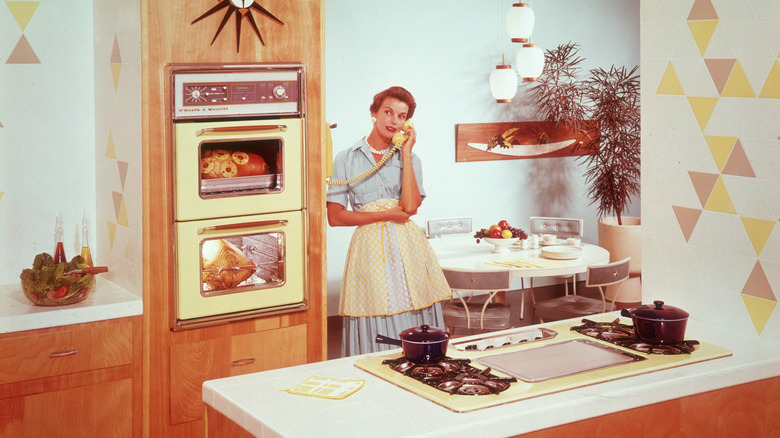
We pride ourselves on our modernity; self-driving cars, fridges that can basically read our minds, and all sorts of devices our ancestors couldn't have imagined. But in many cases, the groundbreaking seeds of innovation were planted decades ago — and often, these OGs have been all but forgotten. In other cases, as modern as we think we are today, the most futuristic inventions of all belonged to our grandparents generation. Case in point? They just don't make modern appliances nearly as awesome as they used to.
One example of this? The precursor to the modern toaster oven. Familiar with the once-revolutionary G.E. Toast-R-Oven? Yeah, we didn't think so. But this totally forgotten appliance of the '50s paved the way for basically all modern toaster ovens to this day.
The 1956 Toast-R-Oven functioned on a much smaller scale than all-powerful toaster ovens, but it did it first. This sleek, chrome countertop appliance did the basic toasting on top, and functioned as a baby oven on the bottom with a slide-out drawer. This could be used to keep toast warm, or function as a very mini oven of sorts — producing melty cheese toast or open-faced sammies. According to vintage ads for the appliance, the oven portion could also be used to keep up to six pieces of toast warm. It might not sound like much today, but for the time, this "upstairs versus downstairs" approach, shuttling heat up and down to toast or warm food, was totally newfangled.
Later versions came with increased functionality
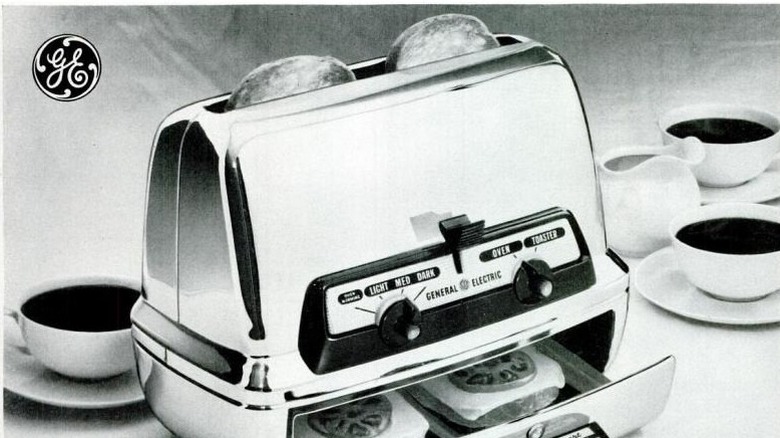
GE prides itself on a pattern of cutting edge innovation. So while the original Toast-R-Oven got the basic tasks of both toaster and oven done, GE continued to roll out updated models with ramped-up functionality. Over the decades, later upgrades brought the appliance much closer to the horsepower of a many-function modern toaster oven, which can basically act as a standalone oven.
A 1960s version of the Toast-R-Oven featured "picture window" glass in the front, for visibility into what you were baking. And with this model, bake you could. By then the appliance was built to direct the internal heat either up, and came with a controllable thermostat to bake at an exact temp. No longer only good for warming or melting cheese, the later version could cook frozen meat, roast potatoes, or bake cookies at up to 500 degrees Fahrenheit. Subsequent versions featured even more bells and whistles than the '50s model had — like a broil setting and room for four pieces of toast.
Itching to get your hands on this forgotten gem of the appliance world? You might be lucky enough to stumble upon a shiny piece of appliance history on the resale market — Facebook marketplace, eBay, etc., or perhaps a yard sale in a lucky break. And if you do find one, like most vintage toasters, odds are good it'll still be kicking – and maybe even running circles around anything modern and plastic you could buy at an appliance store today.