

The Potato Cooking Method That's Melt-In-Your-Mouth Tasty
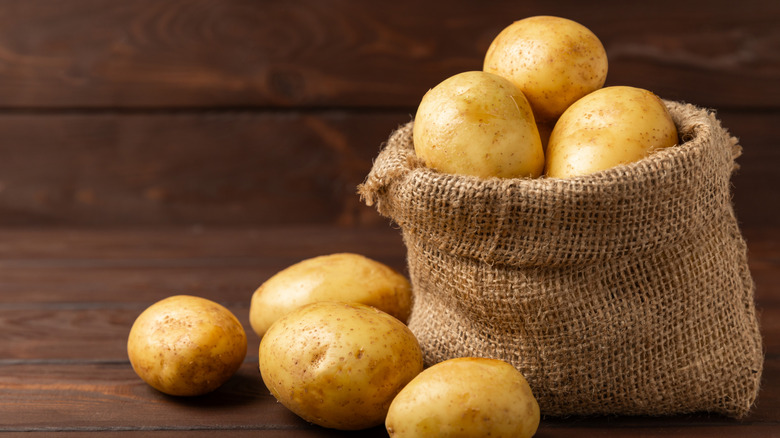
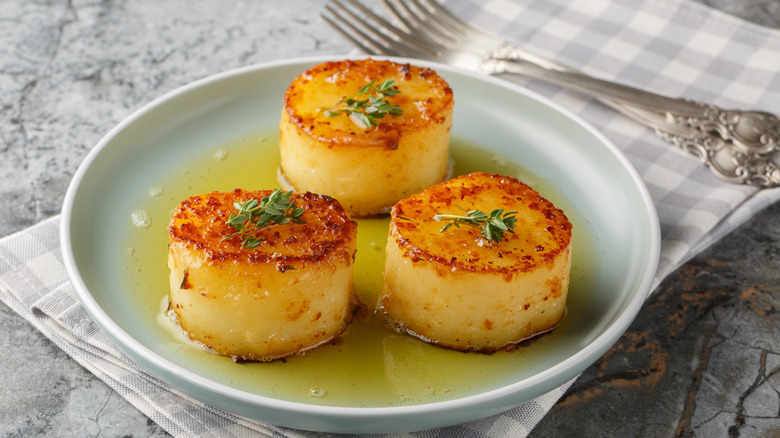
Potatoes are not only shockingly nutrient-dense (hello, potassium, vitamin C, and folate), but they also seem delicious no matter how you prepare them. From the universally popular french fry to cowboy-style baked potatoes draped in spicy chili, they're excellent at soaking up flavors and becoming a vehicle for pure deliciousness. This is especially true of fondant potatoes, which leverage the humble tuber's spongelike qualities to create a craveable, brown crust that envelops a creamy, fluffy, flavor-packed center you'll dream about.
The term "fondant potatoes" comes from the French recipe pommes de terre fondantes, which literally translates to "melting potatoes," which is apt, as they literally melt in your mouth. Though this French cooking technique takes a fair bit of time, it's not complicated, and the results are well worth the effort. Potatoes are sliced into thick discs to withstand the long cooking time, tossed in seasoned fat, and roasted until they're crispy golden on the top and bottom. After that, it's just a matter of oven-braising them in a combination of chicken broth, lemon juice, and fresh herbs until they're not just fork-tender, but velvety. You'll know they're done because they'll have soaked up all that deliciously herby, lemony broth.
Making fondant potatoes the right way
Though making your own melting potatoes is a fairly simple, two-step process, French food is so tasty because it uses the freshest ingredients in the right combinations. In particular, choosing the right kind of potato is crucial because high-starch varieties like russets and Idaho potatoes are more prone to falling apart when cooked. Instead, stick to dense, waxy Yukon golds, which are more likely to hold their shape through the long cooking process. If you have trouble finding Yukons, look for potatoes with a similar texture.
It's also important to use high-quality chicken stock, since that's the main flavoring for these potatoes. Homemade is generally best, as it's fresher and usually has a richer flavor. However, your favorite store-bought brand will also impart lots of flavor, especially if you opt for using fresh lemon juice over bottled. Similarly, fresh herbs impart a more subtle, nuanced flavor than dried herbs, as dried herbs can become bitter after being heated for so long.
One of the benefits of this recipe being so simple is that you can play with the flavors a bit. If you believe (as we do) that pickles and potatoes are a match made in heaven, you might try swapping the lemon juice for dill pickle brine. It may also be interesting to ditch white potatoes altogether to make luscious, melting sweet potatoes as an updated take on the usual sweet potato casseroles traditional to holiday feasts.