

Why Slow Cookers Are Great For Baking The Moistest Cakes At Home
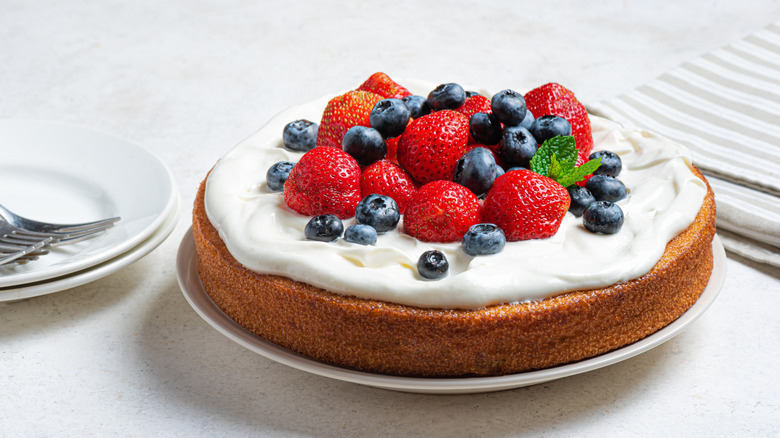
Though cakes are definitely on the list of foods you'd never think to toss in your slow cooker, using this appliance to bake makes sense when you consider it's basically a miniature, self-contained oven. Plus, most slow cookers are made to maintain temperatures between 170 and 300 degrees Fahrenheit. This makes them ideal not only for simmering spicy slow cooker beef chili to savory perfection, but also for creating the perfect microclimate for slow-baking beautifully moist, tender cakes.
Slow cookers are designed to cook dishes gently over long periods, aided by the robust insulation provided by the ceramic insert and the concave, moisture-recycling lid. It's almost like baking your cake in a steam oven. While baked goods are prone to drying out and becoming crumbly in conventional, cavernous ovens, that's extremely unlikely in a slow cooker. Instead of evaporating, the moisture condenses on the underside of the lid, forming vapor that cushions your cake and seals in flavor.
Using your slow cooker instead of an oven also means you can "set and forget" your dessert to focus on making high-protein, three-ingredient cottage cheese frosting. Making a slow-cooker cake is essentially the same as making a conventional one. Just throw together your favorite cake recipe or mix, pour it into a parchment-lined slow cooker, and bake on the low setting. Most cakes take about three hours, so be sure to start it early so it's ready when you need it.
What to know before making a slow cooker cake
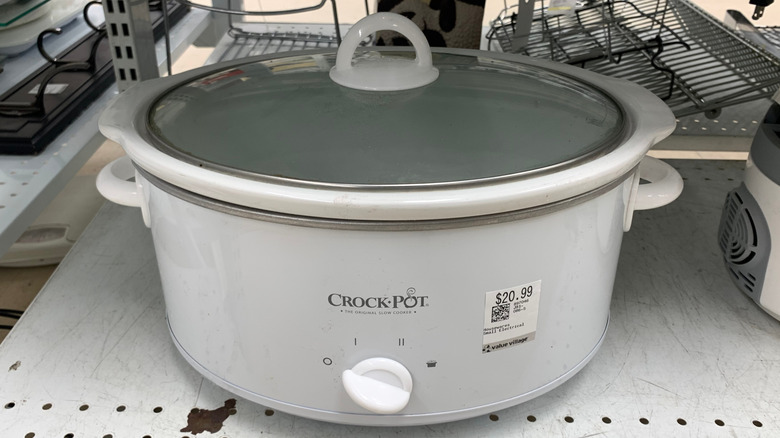
While there are plenty of advantages to baking cake in a slow cooker, there are some downsides that you'll want to consider before taking the plunge. The first issue with slow cooker cakes is their shape. Typically, cakes are either tidy rectangles or perfect circles, but your slow cooker will always produce an oval-shaped cake. This doesn't affect the taste, but if presentation is important, you'll need to consider how to decorate or plate it. One option is to precut the cake into individual square slices to disguise the original shape, though you can also lean into the shape with decorations by turning it into an Easter egg, football, or any other oblong item.
The other issue with slow cooker cakes is that long cooking times can sometimes result in burnt edges. To prevent this, it's a good idea to stick to a parchment liner rather than pouring the batter into a greased slow cooker. The fat from the grease will get hot and start to "fry" the edges of your cake. This can be delicious if it's just a little crisp, but not so great if it scorches. If that does happen, try using a very sharp knife to cut away a thin layer from around the edges of your cake. Meanwhile, parchment paper not only protects your cake from burning, but also makes it easier to slide it out of the insert and onto the cooling rack when it's finished baking.