

A Simple Way To Remove Rust From Stainless Steel Sinks And Appliances With What You Have On Hand
We may receive a commission on purchases made from links.
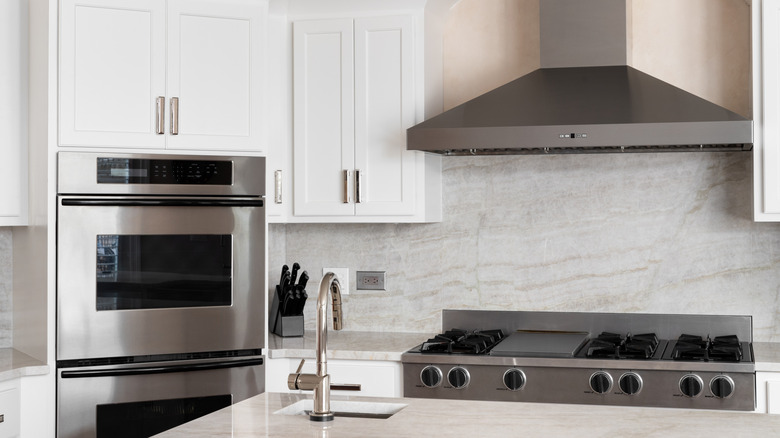
When it comes to choosing durable, sanitary, and aesthetically pleasing materials for your kitchen, experts and novices alike agree that stainless steel reigns supreme. After all, Food Network's own Pioneer Woman, Ree Drummond, chose stainless steel for her kitchen island counter not only because it pairs beautifully with a range of different decor styles, but also because it's nonporous and easy to clean — most of the time.
Though stainless steel's high chromium levels make it extremely resistant to rusting, deep scuffs and scratches can capture enough moisture to create the right conditions for the dreaded red menace. However, rust spreads much more slowly on stainless steel than other types of metal, meaning you can usually get rid of it with the help of a few household items — namely Dawn dish soap and a little baking soda. Many people already use Dawn dish soap to degrease grimy cabinet doors, so it makes sense that this cleaning powerhouse is also great at lifting and removing surface rust stains.
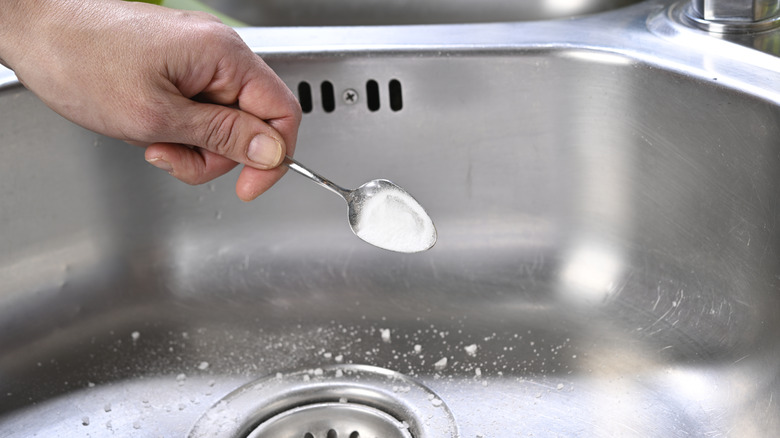
If your rust stain looks a little more widespread than a few flecks of red, you'll need to add some scrubbing power to the Dawn in the form of baking soda, which acts as a gentle abrasive. Simply mix the soap, baking soda, and a little water together to form a paste, and smear it evenly over the rusted area. Let it sit for about 15 minutes, then rub it away with a lightly abrasive sponge like a ScotchBrite pad or Scrub Daddy.
How to know when the rust has gone too far (and how to prevent it)
It's important to note that this cleaning hack only works on small areas of surface-level rust. If your stainless steel sink, appliance, or kitchen tool has a fairly large rust spot that's very hard to remove, this may mean the rust has expanded below the surface. For instance, if you're cleaning a cookie sheet with a stubborn rust stain larger than a quarter, odds are it's already rusted through and is unsafe to use. The same goes if you find rusty areas with holes starting to form in them. At that point, it's no longer possible to remove the rust, and it's best just to replace the item.
Fortunately, you can prevent this issue from becoming so severe simply by taking good care of your stainless steel items. Though they're fairly hardy, it's best to stick to cleaning products rated for safely cleaning stainless steel, so be sure to read the labels on your favorite cleansers and disinfectants. It's also important not to let moisture pool or sit for too long on stainless steel surfaces, so be sure to dry your bowls and cookie sheets before putting them away.
Additionally, avoid drying stainless steel with paper towels, as the rough fibers can etch the surface over time. Instead, dry the inside of your sink or freshly disinfected oven with a microfiber cloth. The much softer texture is less likely to scratch, with the added bonus of leaving your stainless steel surfaces shiny and polished.