

The Best Greens To Use For A Cozy, Warm Salad
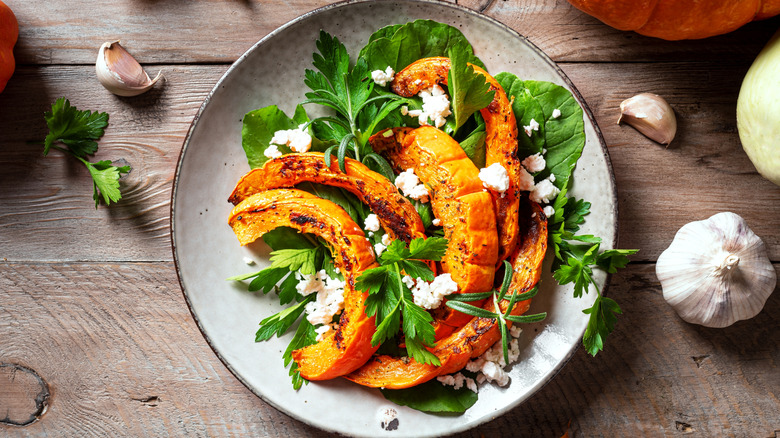
While a salad is typically thought of as a cold dish, warm versions of this meal are just as delicious. Making a warm salad is an easy way to make a bagged salad feel like a full meal, or add a new recipe to your arsenal that's perfect for winter. Still, not every green can stand up to the heat levels of a freshly grilled chicken, or remain satisfying after a quick toss in a bowl with some sautéed peppers. To avoid an unsavory plate, it's important to know which greens work best for a warm, cozy salad. We sat down for an exclusive chat with Megan McCarthy to find out which options fit the bill.
McCarthy, an edible garden chef at the Atlanta Botanical Garden, founder of Healthy Eating 101, and a Have A Plant ambassador for The Foundation for Fresh Produce, says hearty greens are the best choice for a warm plate. This includes options like arugula, spinach, and escarole, among others. "Baby kale and young chard work especially well — they soften just enough without collapsing," McCarthy said. "Even romaine surprises people: It loves a little warmth and keeps its gentle crunch."
There you have it: Greens like kale and spinach work great in warm salads. Still, that doesn't mean their flavor or textural profile won't change when introduced to heat. While this might feel like a disappointing realization, McCarthy says that this is actually one of the best things about crafting warm salads.
Temperature isn't the only thing that changes with this dish
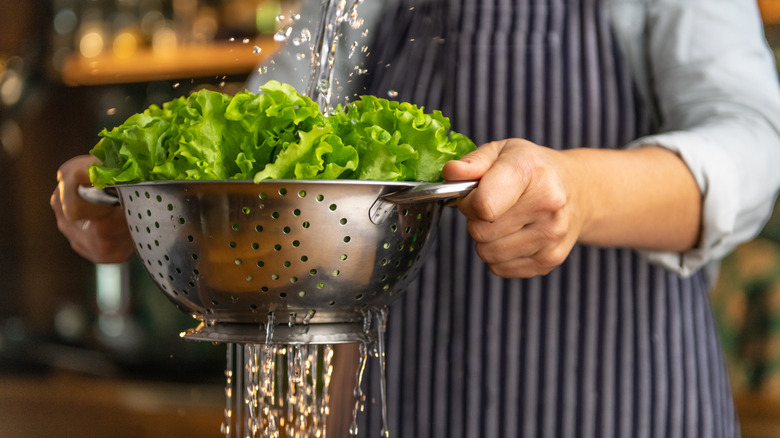
Tossing fresh greens with some warm ingredients doesn't just mean new temperatures. Making a salad warm can also introduce you to a whole new side of your favorite greens. "Heat softens their bitterness, makes earthy greens taste sweeter and rounder, and coaxes out natural aromas you don't notice when they're cold," Megan McCarthy said.
In other words, when you toss cold arugula with some warm, roasted veggies, from sweet potatoes to zucchini, it might actually taste even more peppery and delicious. Kale and spinach can turn from bitter to earthy and warm, and escarole from sharp to mellow. This phenomenon is actually backed up by science, as our perception of taste changes based on the temperature of our food. It's why roasted vegetables taste sweeter, and it works for salad dressings too. "A splash of warmth also helps dressings bloom — garlic gets gentler, citrus gets brighter, and vinegar takes on a smoother edge," McCarthy said.
The best way to assemble a warm salad
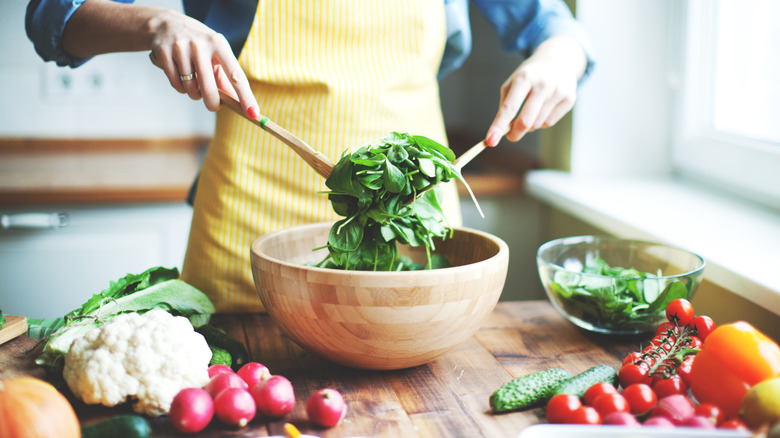
If you're eager to try a warm salad, there are a few different ways to make one. First, prepare the warm ingredients for your salad, whether it's simmering your lentils or rice, or roasting your carrots or parsnips. You can even make your salad more satisfying like the French do and warm your dressing, but avoid heating the actual greens. Most greens are too tender to heat directly. They will wilt too much in a pan or on a baking sheet and will become too soft to enjoy. Sure, you can grill romaine or sauté spinach, but most other greens will end up ruined.
We suggest adding warm ingredients to your greens instead. With this process, know that timing is absolutely everything. For the best results, add your warm ingredients to a salad just before serving so the greens gently wilt rather than grow completely limp. This applies to warm salad dressings, too. "Dress lightly at first, toss, then add more if needed. Warm dressings spread fast," Megan McCarthy said.
Be mindful about how you add your ingredients to greens, too. "Place warm roasted veggies like roasted sweet potatoes or cauliflower or warmed grains like farro or quinoa on top so the greens wilt gently instead of collapsing," McCarthy said. With this in mind, your salad will have a beautiful balance of textures, tastes, and temperatures alike.