

The Range Hood Sizing Rule That'll Make Or Break Your Kitchen's Look
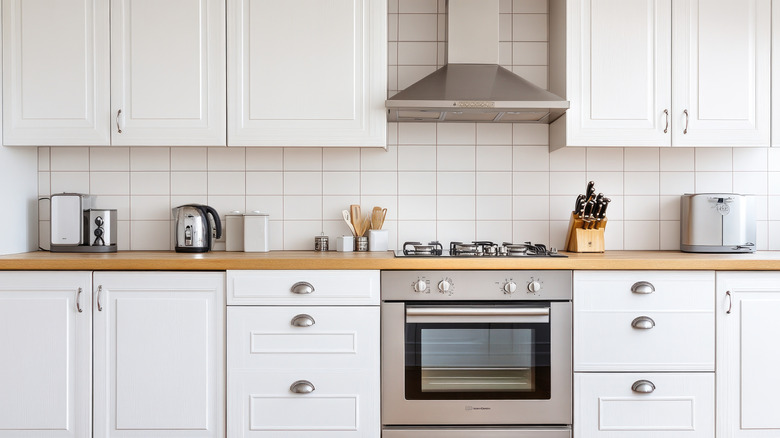
Possibly the greatest challenge to remodeling any kitchen is walking the delicate balance between creating aesthetic appeal and adhering to safety standards. Kitchens are full of hazards, from sharp knives and graters to boiling liquids and open flames. It's really no wonder Martha Steward herself advises us to keep a customized first aid kit in the kitchen. There are also standards governing the minimum safe distance between outlets and water sources, as well as a handful of guidelines to ensure your range hood is working efficiently.
Though range hoods are often more utilitarian than decorative, they're an essential component of kitchen safety. Their job is to quickly vent hot, moist air from your space, putting them high on the list of ways to keep your kitchen cooler in the summer. This mechanism also keeps your kitchen cleaner, ensures you don't overheat, and can help pull smoke out of your kitchen in the event of a culinary disaster. Of course, all of this is provided your range hood is the right size for your cooktop.
Ideally, your range hood should be slightly larger than your cooktop to ensure the entire cooking surface gets adequate ventilation. A range hood that's too small may struggle to keep your kitchen clean and comfortable, while an oversized hood can become an unintentional focal point that distracts from the carefully planned decor in the rest of your kitchen. Typically, a range hood with about 3 inches of overhang on either side of your stovetop is plenty.
Determining the best range hood for your kitchen
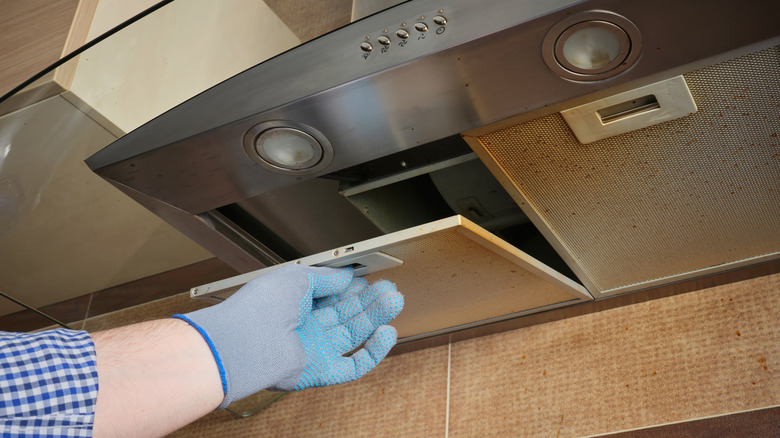
When choosing a range hood for your kitchen, sizing is just one important metric. In addition to making sure your range hood is large enough, you should also check the British thermal units and cubic-feet-per-minute ratings on each model you're considering. BTU refers to the amount of heat your stovetop is capable of emitting. The BTU rating on a range hood indicates how much heat it's capable of venting from your kitchen. That means the BTU rating on your range hood should be higher than the maximum BTU capabilities of your cooktop and oven.
CFM measures the amount of air your range hood can move per minute. Higher CFM ratings mean more powerful ventilation, indicating how hard your range hood has to work to clear your space. Hoods with higher BTU ratings also have a higher CFM, so if you have a larger kitchen with a big cooktop, both numbers should be fairly high. However, if your kitchen is smaller with a standard four burners, you can likely stay safe and cool with lower ratings.
Of course, these ratings can also limit the styles of range hoods you have to choose from, possibly leaving you with just utilitarian options. Fortunately, it's pretty easy to create a stunningly beautiful range hood cover with reclaimed wood. This lets you embrace both fashion and function.