

The Common Red Flag To Know About When Buying Frozen Veggies
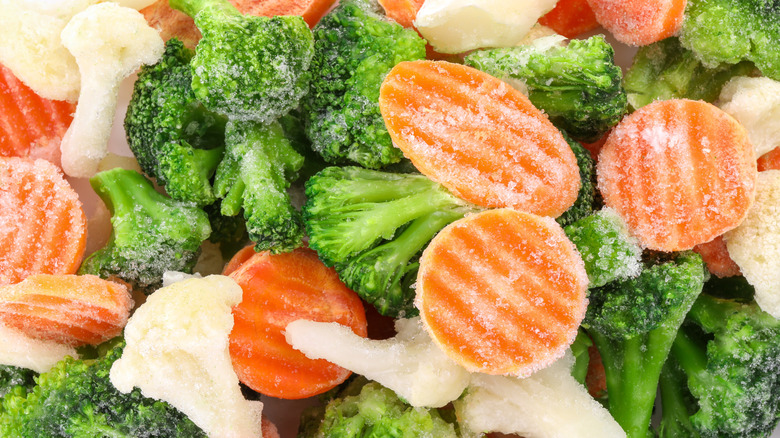
When it comes to fresh versus frozen veggies, it might be hard to tell which is better. Fresh just sounds more appealing and nutritious, doesn't it? In reality, they have almost the same nutritional value, so if you're looking for longevity, frozen is a better option to buy — especially if it's flash-frozen. However, aside from knowing which vegetables you should never buy frozen, it's important to steer clear of those with pieces that are clumped together.
This usually happens when food is thawed unintentionally — probably during transport — and then tossed into the freezer again, causing frost to form. The frost typically acts like a glue that attaches itself to the moisture on other vegetables, making it hard to separate each one unless thawed. But at this point, thawing will promote bacterial growth.
Given evidence of improper handling in clumped frozen vegetables, it's highly likely that the quality and texture aren't at their peak. Buying a pack that has formed a block also negates the convenience of frozen vegetables, which is the ability to reach for a serving without the extra steps, like chopping, peeling, and, at times, washing. If frozen vegetables are packaged in an opaque bag, you can always get a feel of the contents to see if they've clumped together.
How to ensure your frozen veggies remain fresh
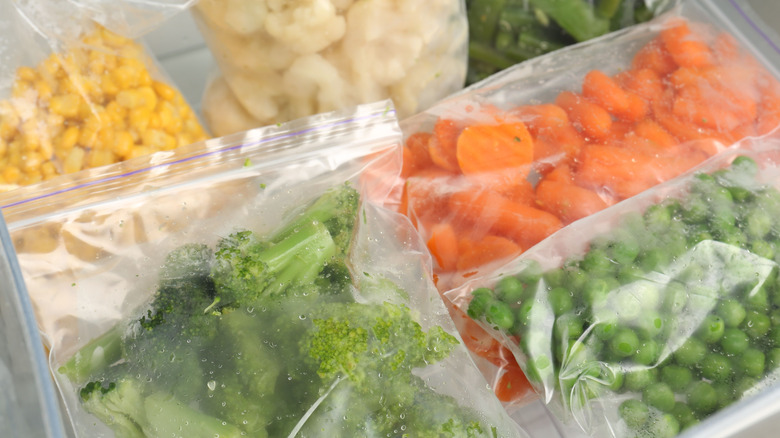
While frozen vegetables last longer, they don't last forever, so proper precautions should still be observed when handling them. After purchasing them from the store, it's best to toss them in the freezer again as soon as you can. Meanwhile, whenever you want to use them for stir-frying recipes or salads, make sure you're defrosting them properly. This means submerging them in cold water or using the defrost mode on your microwave.
Storing frozen vegetables in the refrigerator can also thaw them, but this will take longer. Ideally, put them in the night before you're planning to cook them. If your vegetables have been defrosted, it's best to consume them immediately rather than refreeze them, as germs that were kept dormant by the freezing method might multiply again.
Another key step to ensure your frozen vegetables remain fresh is practicing proper storage, which also helps ward off freezer burn, especially when you've already opened the original packaging. The formation of ice crystals and any shriveled appearances are clear signs that your food is freezer-burnt. While you can still consume freezer-burnt vegetables, expect the quality to take a hit. Go the extra mile by using smart storage fixes to save your food from freezer burn so you can enjoy vegetables at their very best for longer.