

The Best Types Of Oil To Cook With When Using A Wok
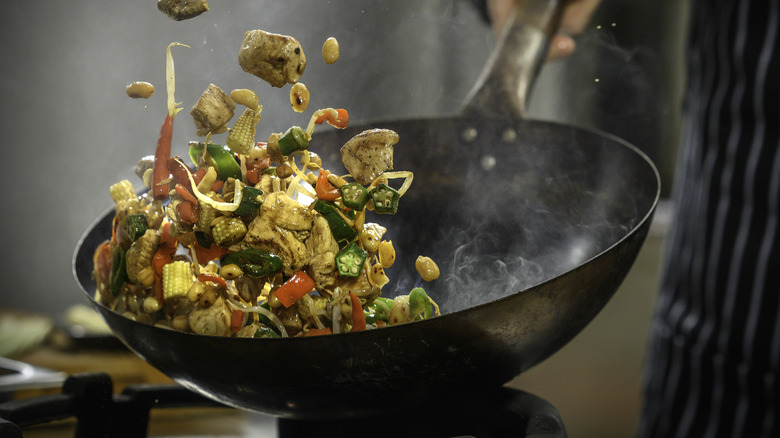
A wok is a common sidekick to many Asian meals. It's the go-to weapon of choice for flavorful stir-fried plates, and you can even use a wok to impart a smoky essence into dishes. But to fully maximize the use of this dome-shaped pan, you have to know the best type of oil to accompany your cooking. To get expert insights, Chowhound spoke with Shirley Chung, Chinese-American chef and owner of Ms Chi Cafe. Chung (who is also on Instagram at @chfshirelychung and Facebook at chefshirleychung) exclusively shared, "The best oils for wok cooking are the oils with high burning points such as rice oil, avocado oil, and grape seed oil." With smoke points starting around 490, 480, and 420 degrees Fahrenheit consecutively, these options allow you to create a variety of dishes with no worries.
Admittedly, cooking with a properly seasoned wok can have a slight learning curve. Something as simple as choosing oil might sound tricky and limiting, but it doesn't have to be. Peanut oil also has a high smoke point, and once it meets the wok, its flavors can often be almost undetectable. It's an especially popular healthier option for deep fried meals, due to its nutritious appeal. Soybean oil, corn oil, and vegetable oil can all work, too. As long as you keep your options to high-burning-point oils, you should have little to no issues.
The exception to the rule
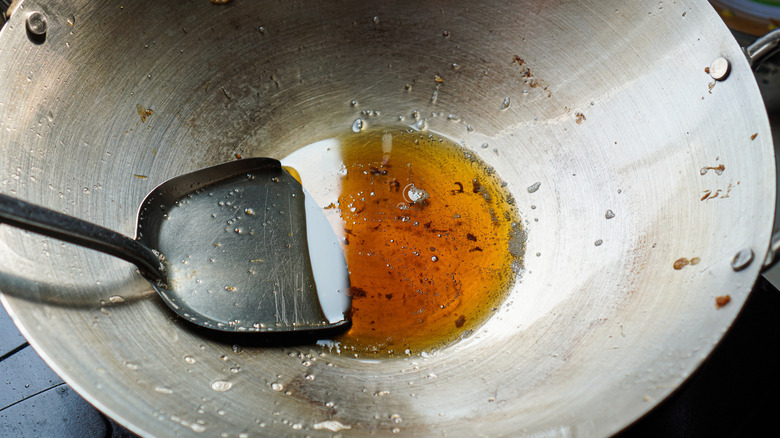
If you've tried your hand at Chinese cuisine, you'd know a dash of toasted sesame oil — which has a low smoke point — can make the dish even better. Cooks who specialize in Chinese cuisine use it generously in stir-frying or as a cherry on top of a savory meal — but how do they manage to do it? Chung shares a trick on how to incorporate it, while still introducing the flavor-rich notes of sesame oil into a wok: "You can add some high burning point but neutral tasting oil like rice or grape seed oil to sesame oil at a 50/50 ratio to stabilize it and help to raise the burning point without diluting the flavor of sesame." While it seems like a great party trick that will solve all your wok-cooking woes, Chung also warns that it's not a one-size-fits-all solution. Avoid using the technique with other flavored oils, like chili oil, as the small particles in the oil could burn. When in doubt, save them for the finishing touch before serving.
It might seem trivial, but the smoke point is a big deal in the kitchen. Using oils that are best for low to medium temperatures in high-temperature wok cooking will cause them to burn, which will not only ruin your food, but also produce a foul odor. Health wise, oil can oxidize, producing harmful compounds like acrylamide — which some scientists believe can be a potential carcinogen, though more research is needed. So prioritize oils especially made for high-heat action for safe and delicious wok cooking, and you'll have nothing to worry about.