

The Big Problem With Dark Upper Kitchen Cabinets (And How To Easily Fix It)
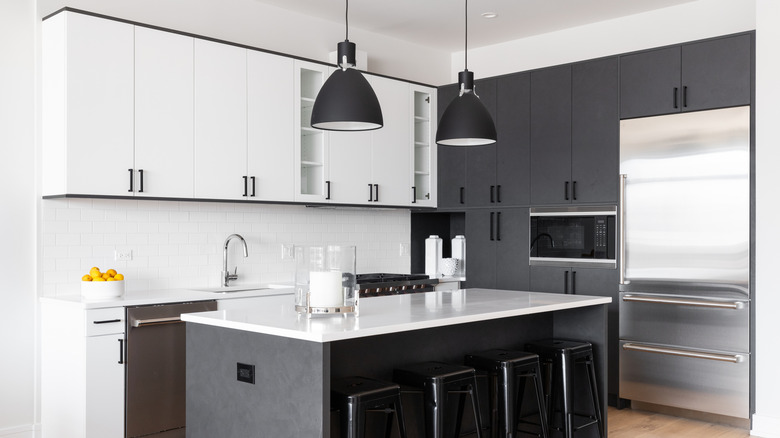
Though many home cooks would like to have huge, beautiful, sweeping kitchens, many of us have to settle for limited counter space and mobile islands sized perfectly for smaller kitchens. However, less room doesn't mean your kitchen can't be stylish and cozy — provided, of course, you choose wisely when it comes to your cabinet colors. Regardless of how much you love the idea of deep cobalt blue dark walnut cabinets, dark cabinetry is notorious for making already small kitchens feel cramped and depressing.
This is especially true of dark upper kitchen cabinets. Dark base cabinets might end up making your space feel grounded and cozy with the right styling, but dark uppers are almost always a mistake. Black, navy, or dark cherry upper cabinets can make your kitchen feel top-heavy and unbalanced, not to mention the uppers are closer to your kitchen's overhead lights. Darker colors tend to suck light in making your kitchen feel gloomy and suffocating. Blond oak, white, or light gray uppers, on the other hand, reflect light back into the space, making it feel brighter and more welcoming.
In fact, the combination of light uppers with dark base cabinets may be a match made in heaven, as it can make your kitchen feel cozier and more spacious simultaneously. Bold, sophisticated, modern cabinet colors like charcoal gray or chocolate brown base cabinets feel sturdy and warm while white or pale mineral blue uppers bring bright, airy, breathable lightness — not to mention this combo is very visually striking.
How to mix and match dark and light cabinet colors
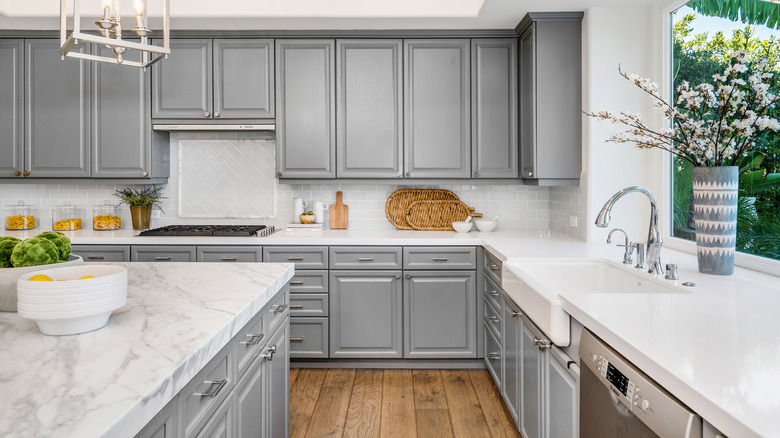
If you love the look of uniform cabinet colors, lighter finishes and stains are the way to go. Bright uniformity from top to bottom creates a cohesive look with a fresh, comfortable atmosphere. You can also accessorize with darker shades in your wall art, an accent wall made with a beautiful vintage sheet, and textiles like curtains and table runners. A few dark touches in an otherwise bright room can prevent it from feeling sterile.
However, if you're willing to mix and match, you won't have to choose between that saturated dark sage green finish and the warm satin-gloss ivory — you can have both. Greens blend especially well with warm whites and pale beiges, evoking the feeling of being outdoors. Fans of bold color can try a combination of deep navy blue on the bottom with a light, buttery yellow on the uppers. With careful styling, this duo could look like a modern take on the classic French country kitchen.
There is, of course, also the option to go two-tone. Black and white are a classic pairing for a reason — they're timeless, clean, and go with almost everything. You could also replace the white with a light, heathery gray if you want your space to feel cool and clean. A dark, wintry pine finish on the base might match beautifully with celery green uppers, or you could go for black-stained oak on the bottom and salted oak on the top.