

Prevent Your Homemade Pickles From Falling Flat With One Easy Fix
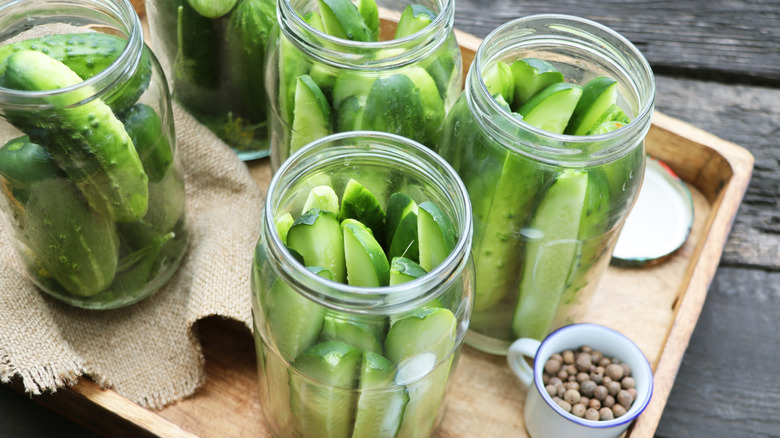
Pickles are perhaps one of the tastiest and most versatile condiments known to humankind. Likely originating at least 4,000 years ago in Mesopotamia, we've been adding pickled veggies of all shapes and sizes to soups, stews, sandwiches, and mezze boards, discovering that roasted potatoes and pickles are a match made in heaven, and even sprinkling chopped pickles on vanilla ice cream to create a surprisingly delicious dessert. Though grocery stores sell some decent brands, many people believe (usually correctly) that homemade versions still reign supreme, because it allows you to use the freshest ingredients and all of your preferred flavors.
While the basic steps to making homemade quick pickles (aka refrigerator pickles) are relatively straightforward, there's also a handful of common mistakes first-time picklers make that can ruin even the most carefully prepared batch of briny deliciousness. In fact, you can have all the right equipment, surgically clean jars, invest in a box of pickling salt, and still produce pickles that taste like little more than cold, heavily salted vegetables that are also somehow disappointingly bland.
If your pickles don't deliver the tangy, mouth-puckering punch you expected, it's likely because you opened the jar too soon. The most important ingredient in pickle-making is time, as the acids in the vinegar extract flavor from the veggies, herbs, and spices fairly slowly. So, if your latest batch tastes flat, the fix may be to chuck it back in the fridge to let the flavors develop for another day or two.
How long is long enough for pickles to pickle?
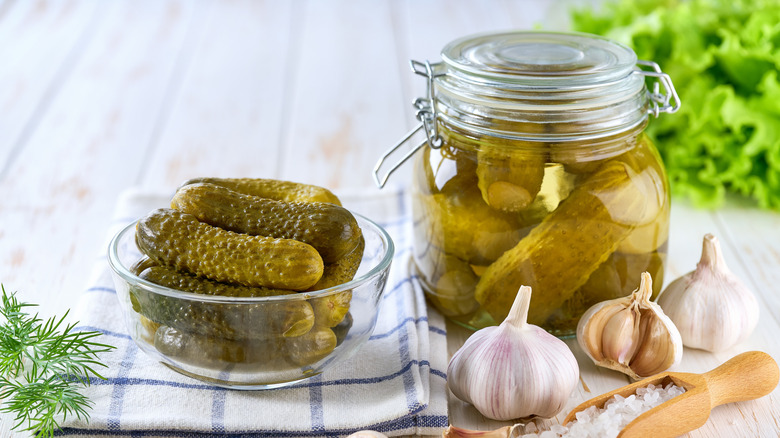
When making pickles for the first time, it's usually a good idea to use a recipe to get a feel for things like the right ratios of ingredients and flavors, along with the best way to prep your veggies. However, making pickles is equal parts art and science. While science can dictate the best technique for creating the crunchiest pickles you've ever had, art comes into play on realizing that every jar of pickles you make will be just a little bit different.
That means brining times may be slightly different than your base recipe dictates. For instance, a quick pickle recipe may state that they're ready in 24 hours, but if your taste test is lackluster, it's okay to let them sit for another day or two. The same goes for shelf-stable fermented pickles that need weeks for proper pickling. It might even be a good idea to make a sacrificial "taste test" jar to open after the shorter end of the recommended pickling time. If the test jar tastes flat, it's safe to say the rest need more time to ferment.
Taste-testing and exercising patience are particularly crucial when pickling hard veggies, like those typically found in giardiniera such as carrots, cauliflower, and green beans. They'll likely need a bit more time than classic cucumber pickles to reach that perfect stage of tangy al dente, so use your best judgement and test with a clean fork if you're unsure.