

5 Tips For Making Refreshing, Perfectly Blended Wine Slushies At Home
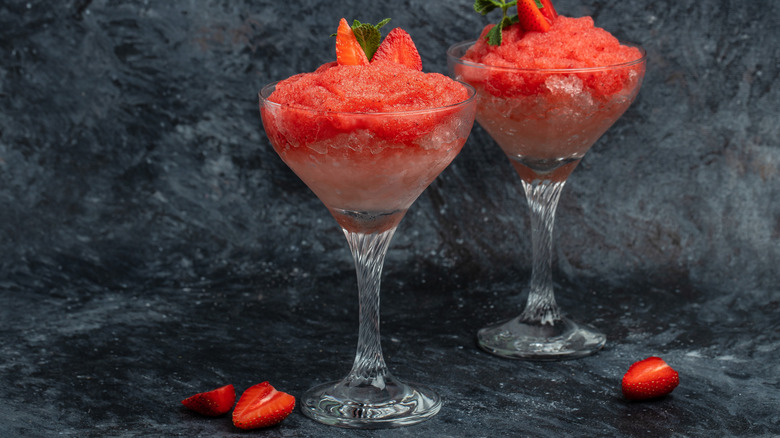
Wine slushies are a fun way to spice up a cocktail party or liven up a nightcap drink. They're easy to prepare in batches — all you need is a decent blender – and they're often lower in alcohol due to the necessity of keeping that frozen texture, which makes them great for group gatherings. But, as with any frozen drink, there actually is a wrong way to prepare them (hint: too much alcohol).
Robert Hoffman, the beverage director at Lucky Charlie in Brooklyn, New York, and Oscar Simoza, director of spirits at BCB3 Hospitality, both gave Chowhound some exclusive tips and tricks for ensuring your next wine slushie is restaurant quality. For example, when you prep a wine slushie, it should have the right flavor balance. Additionally, the type of fruit you use matters, and while sugar is good, you don't want it too sweet or you lose out on tasting all of the ingredients.
Stick with the right ratio
Step one of preparing the best wine slushie is following the right ingredient ratio. Oscar Simoza says the ideal ratio is 1 cup of wine to 1 cup of fruit to 1 cup of ice. The fruit adds flavor while its sugar balances the slightly bitter flavor of red wine or complements the sweetness of white wine, depending on which you use.
The type of ice you use affects the drink's blending time and helps form the slushie's texture. Large, thick ice cubes take longer to crush; if your refrigerator has a crushed ice setting, use it so your blender doesn't have to work as hard to turn it into slushie ice (crushed ice is also perfect for tropical cocktails). If you only have cubed ice but want to turn it into crushed ice, add it to the blender by itself at first to crush it slightly before adding in the fruit and wine and blending them all together.
Find the right ingredient balance
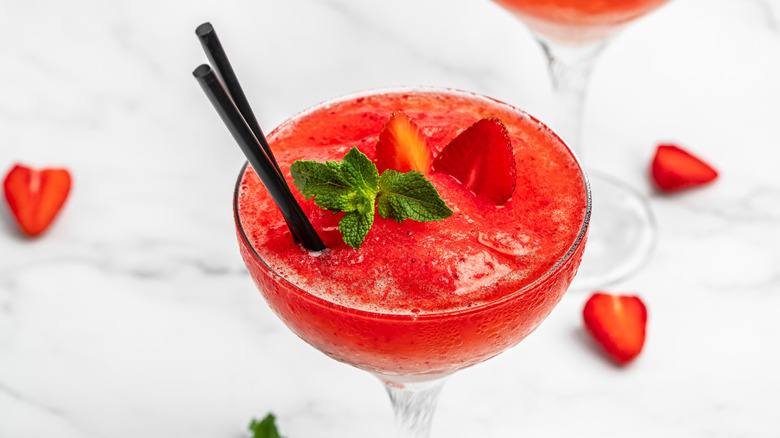
The ingredient ratio is paramount, but you must still properly balance the ingredients; it makes all the difference in how your slushy turns out. So, when building the drink, understand how each flavor works together. "Treat them like cocktails, not adult snow cones," Oscar Simoza says. "Balance matters. Use actual fruit (not just syrup), and don't be afraid to add a little lemon juice for brightness."
While it might be tempting to make your wine slushie as sugary as possible, it should have the same flavor balance that any standard cocktail would. If you're using a sweeter wine, such as a moscato, minimize how much sugary syrup you add. For a full-bodied, dryer wine, such as a chianti or a Bordeaux, add some sweeter fruits and syrups to properly balance the drink. Fruit, some lemon juice for acidity, and a little simple syrup for sweetness all work well together. Pay attention to the flavors and undertones of the wine, too, to understand what types of fruit and syrups can enhance and balance that wine's notes.
Use frozen fruit instead of fresh fruit
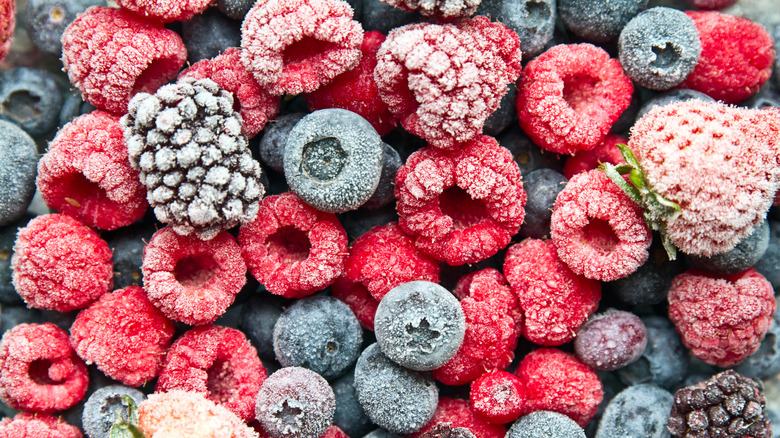
When creating that perfect slushie ratio, measure out frozen fruit instead of fresh fruit. "I'd always recommend a frozen fruit in a home slushie, as it helps hold the texture and keeps your drink more solidified than 'fresh' fruit," Rob Hoffman told Chowhound. For ease, frozen fruit is sold in bags in the grocery store's freezer section. You should be able to find frozen berries, cherries, and tropical fruits, such as mango and pineapple. If you want other types of fruit that aren't available bagged, you can purchase them and freeze them yourself prior to making the slushies.
Oscar Simoza also mentioned that "using frozen fruit is superior — it keeps flavor while adding texture, so you need less ice." This also equates to a less watered-down drink; you can sip it slowly and not worry as much about the flavor diluting as the drink warms up. If you're looking for an ultra-simple wine slushie idea, Simoza suggests a blend of frozen strawberries and rosé.
Don't use too much of any standard-alcohol spirit
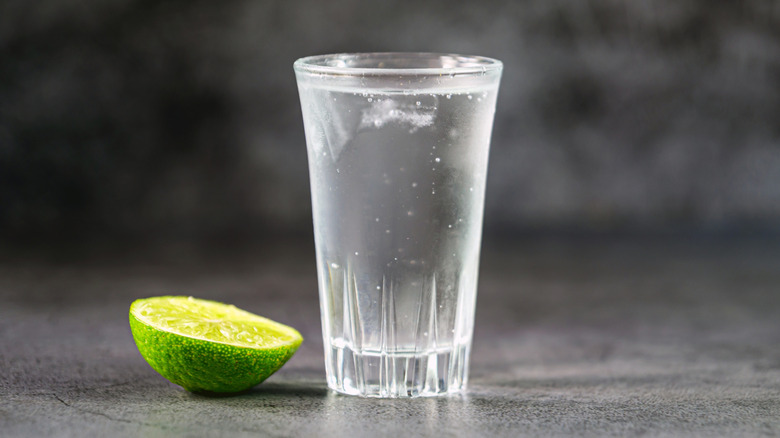
A wine slushie should be made with wine, but you can certainly add other liqueurs or spirits to help build flavor. However, Rob Hoffman and Oscar Simoza warn about adding too much of any standard-proof spirit, such as vodka or gin. "Its freezing point is much lower than wine," Hoffman says of standard spirits, meaning too much can make your slushie watery. Vodka's freezing point, for example, is minus 10 degrees Fahrenheit; no matter how long you keep it in a standard at-home freezer, it won't freeze over.
All you need is ½ ounce to 1 ounce of a standard-proof spirit per serving to get that added flavor without affecting the texture, according to Simoza. "Any more and you lose the slushiness (and gain chaos). Add it at the blending stage, but after the first pulse, so it integrates cleanly without over-dilution." To limit standard-proof alcohol, stick with just wine or opt for flavorful liqueurs, such as triple sec or limoncello. "Adding a low [alcohol by volume] aperitif or liqueur can definitely work," Hoffman said.
Sugars can help the drink's consistency
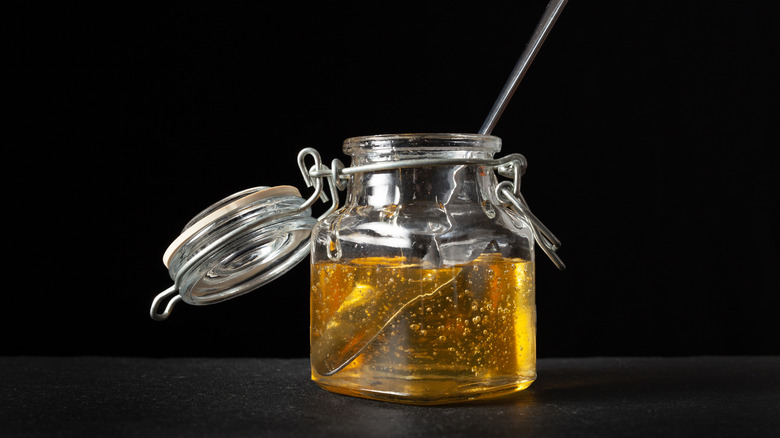
A little sugar helps balance any spirit or dry wine. "Adding a couple ounces of 1:1 simple [syrup], agave, or flavored syrups, or even a splash of fruit juice in a mix per bottle of wine, can definitely help improve your chances of success," Rob Hoffman said. However, he notes that sugar works well for another reason: It helps the slushie keep its texture.
Texturally, the sugar helps the slushie stay in slushie form — even if you put the drink back in the freezer — because sugar has natural anti-freeze properties. It prevents water molecules from properly sticking together so they can't form as well into ice cubes. This is great if you want to prep the slushie slightly ahead of time and still keep it cold without having it freeze solid. Grab a bottle of agave syrup from the store for effortless flavor, or make an easy homemade simple syrup with a 1:1 ratio of sugar and water.