

How Much Pot Roast Per Person You'll Need To Feed Your Dinner Party
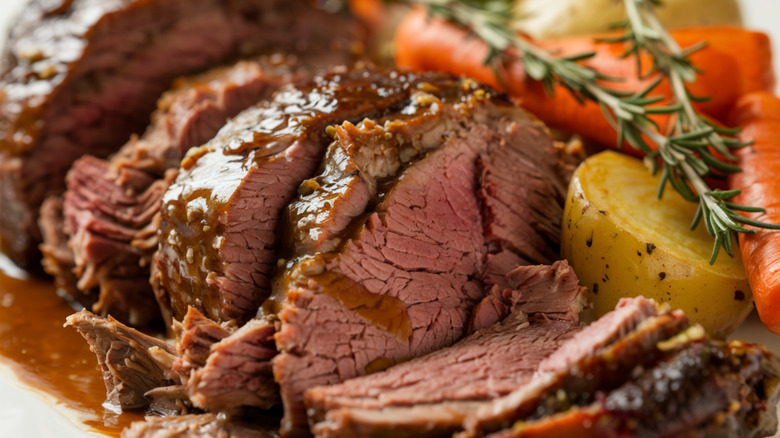
For holidays and special occasions, it's often a delight to guests when you serve a hearty, celebratory pot roast. But parties nor pot roasts come in the same shapes and sizes. So when planning your feast, it's good practice to estimate the amount of meat each guest will likely eat in order for you to purchase and prepare a roast that can feed everybody.
To determine the optimal size roast to make, there are a few variables to take into account. For each individual, a reasonable portion is about ½ pound of meat if your guest is an average eater and you include sides, such as vegetables and potatoes. For a more generous portion per person, you may want to serve ¾ to 1 pound of meat. Consider that a certain amount of revelry might also encourage guests to ask for seconds (or thirds), and if you're serving fewer side dishes, you'll need to make up for it with larger portions of meat.
To accommodate for other culinary tasks you might be doing to get ready for your gathering, choose a convenient way to cook the roast. A pot roast will turn out well when cooked slowly in the oven, but you might prefer the ease of a slow cooker. For even more convenience, ditch the slow cooker and use an Instant Pot for a quicker way to make your pot roast.
How to choose the best size for flavorful pot roast
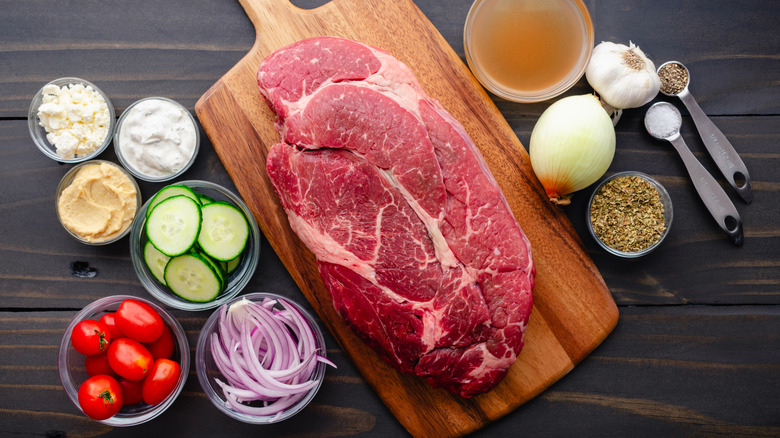
What size roast should you purchase? Figure out how many guests you'll be entertaining, multiply that number by the meat's ideal serving size, and you'll have an approximate weight for the pot roast you'll serve. But allow for some wiggle room. Another thing to consider is how much the roast shrinks when cooking. In general, a pot roast loses about 15% to 30% of its weight during cooking. When you purchase your roast, factor this in when choosing the raw weight.
The cut you buy depends on the kind of roast you plan to cook. One of the tips for cooking pot roast is choosing a cut that has a lot of marbling, which consists of flavorful fat and contains ample connective tissue. This tissue becomes gelatin when cooked, making the roast flaky tender. Generally speaking, you want a chuck roast, beef brisket, or round roast.
When you are ready to cook your roast, there are seasonings that work best for pot roasts that you'll want, including thyme, rosemary, bay leaves, salt, and pepper, along with aromatic vegetables, such as onions, carrots, and celery. To give your pot roast more flavor with minimum effort, consider adding a splash of balsamic vinegar or even a packet of dried French onion soup mix, or cook your roast in beef broth instead of water.