

Get The Most Out Of The Chiles Growing In Your Garden With This Tasty Tip
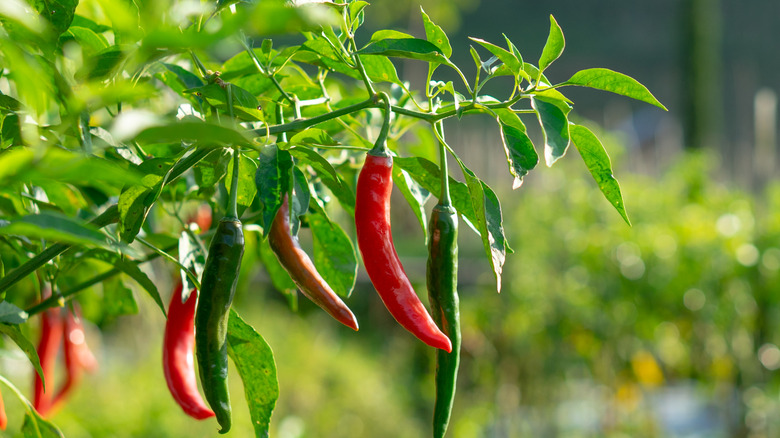
If you're growing chiles in your garden, get the most out of your harvest and reduce food waste by eating not only the spicy fruits of your labor, but also the plant's leaves themselves. Chile plant leaves are regularly used in a number of Asian cuisines, like those of South Korea and the Philippines. They taste a little sweet and a little bitter, with just a hint of warmth rather than sharp, chile-like heat. With chlorophyll as one of their main flavor compounds, they also have a notably "green" taste.
If you're going to be hungry soon, a stir-fry with chile leaves is the way to go. Pluck a bunch of them (smaller stems are more tender than the thicker ones), blanch them in an ice bath, and stir-fry with seasoning and sauces. The simplest version involves only garlic cloves, oil, and a pinch of sugar to balance bitterness. For an alternative take, go for soy sauce or fish sauce, garlic, sesame oil, and chopped red chiles.
Alternatively, there are several soups that use chile leaves, which tend to be broth-based rather than creamy. For instance, the traditional Filipino food tinolang manok, a chicken soup, can feature chile leaves in place of the more common malunggay leaves. Hot soup and stir-fry dishes ensure the chile leaves are heated thoroughly, making them easier to digest by reducing their alkaloid content.
Are chile leaves safe to consume?
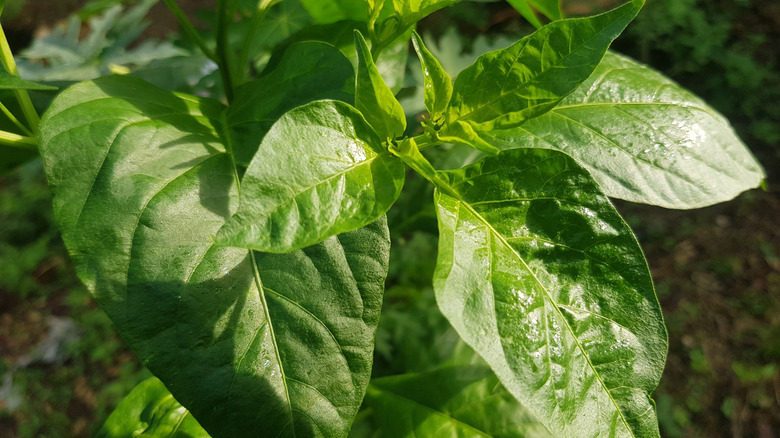
Chile peppers are members of the nightshade Solanaceae family, along with eggplants, tomatoes, potatoes, and more. Some nightshades do produce large amounts of alkaloids like solanine and are thus toxic — think deadly nightshade (belladonna) and tobacco. However, the leaves of the Capsicum genus (your typical chile pepper) aren't particularly high in these compounds. That's how folks around the world consume them with delicious impunity.
If you're growing bell peppers or that spicy favorite, the jalapeño, you may indeed give their leaves a try via boiling, sautéing, or stir-frying. Being a member of the Capsicum annuum species, their leaves are edible. Capsicum frutescens (Tabasco pepper) also has edible leaves. Bird's eye chiles are another example of this tasty species. Its foliage can be cooked up and enjoyed as the main event, but it's also used as a coloring agent in Thai green curry paste.
That doesn't mean all nightshade leaves are safe to eat. Potato leaves are toxic, as they're high in solanine and another alkaloid called chaconine. Ditto for the leaves of eggplants and tomatoes — don't eat them, either raw or cooked. But, aside from ornamental pepper leaves (the jury's still out on the solanine levels in those), your Capsicum pepper foliage is good to cook up and enjoy.